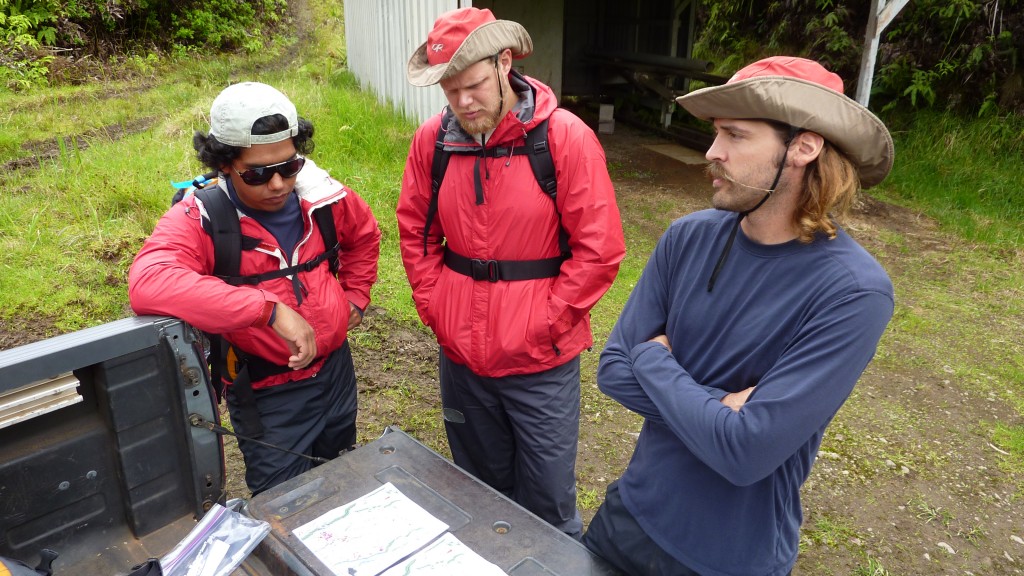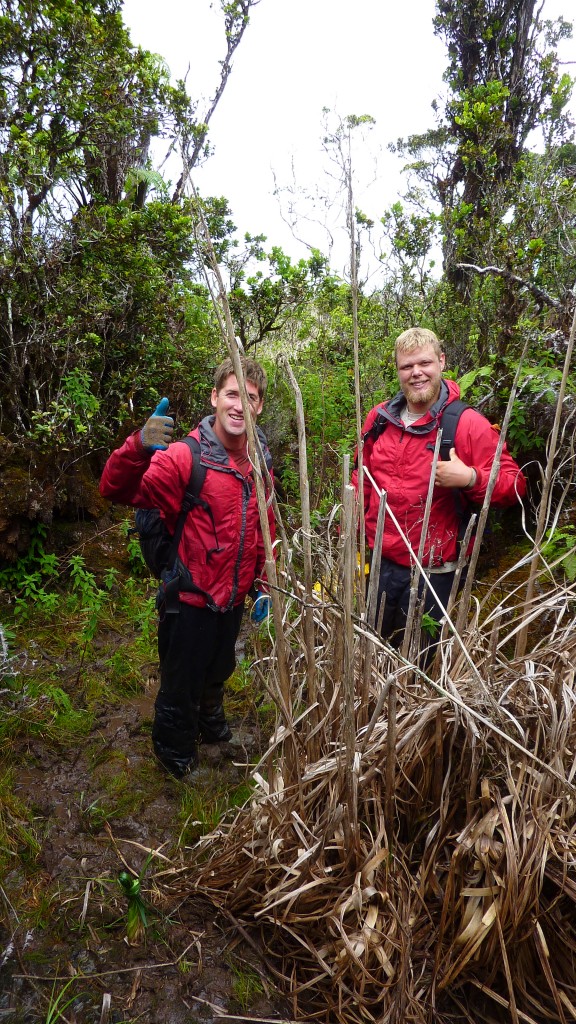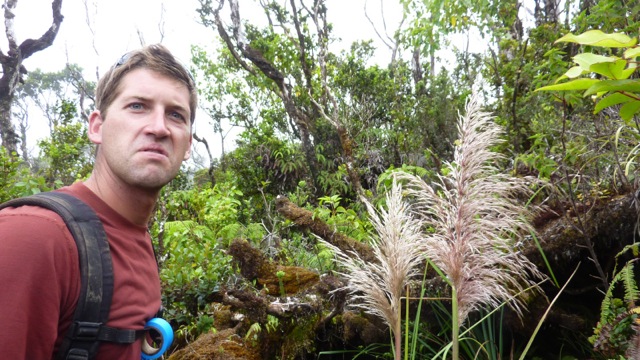
In the final installment of the “Pampas Gone Wild” series, we’ll cover some of the key identification features of pampas grass that differentiate it from the native sedge, Carex. These features can also be used to identify immature pampas in other habitats.
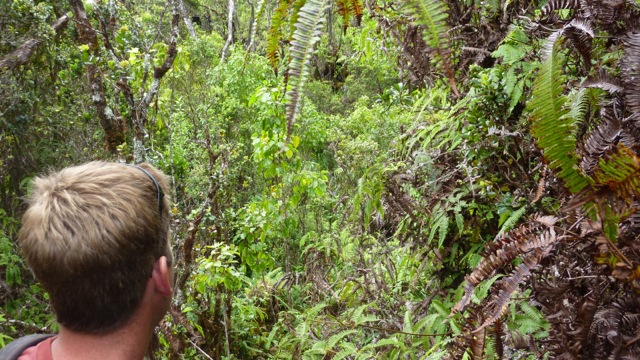
There’s an immature pampas grass in this photo…any guesses?

Zoom in for a closer look.
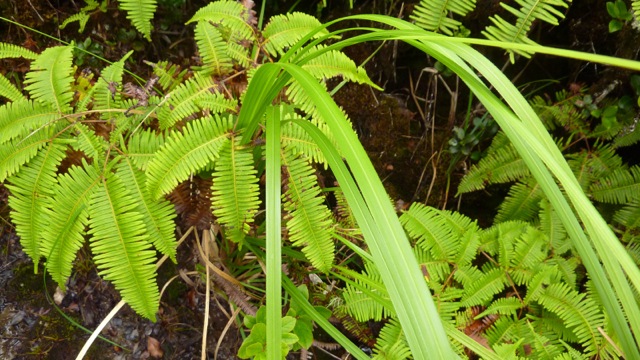
A young pampas closely resembles a native sedge, Carex. First look for the flat leaf of pampas.

Compared that with the "corrugated" leaf of Carex.
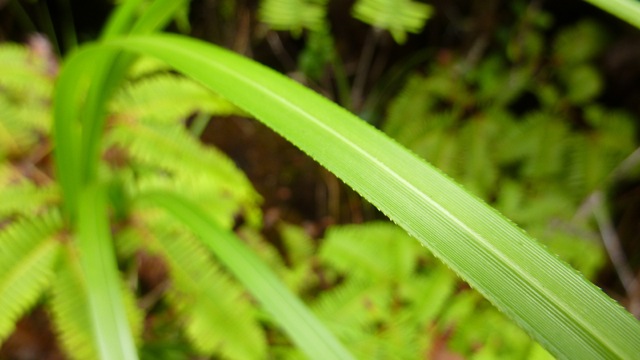
Another key feature of pampas is the razor sharp serrated leaf edges, shown clearly in this photo. This feature is easy to find by running your finger carefully along the edge, even on very young seedlings.
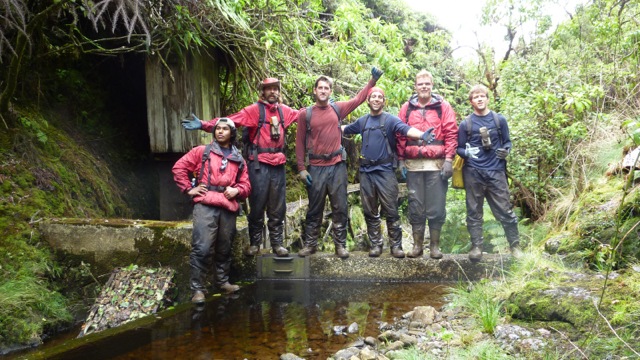
This series was brought to you with the help of the above members of the MISC field crew, Summer 2011: Paul Gonzalez (SCA), Brooke Mahnken (GIS and Data Specialist), Chris Radford (Crew Leader), Matt Fairall (SCA), Frank Ritenour (SCA), and Abe Vandenberg (Field Crew and Outreach). Thanks for your good and muddy work out there!
If you think you have seen a pampas grass in Hawaii, please contact your local Invasive Species Committee. Many Mahalos!