Invasive Ant Response
Invasive Ant Detection and Control
Program Goal: MISC’s Little Fire Ant (LFA) Program prevents the spread and establishment of little fire ants on Maui, emphasizing early detection and rapid response to eliminate individual populations.
Status: MISC is monitoring and treating nearly 30 incursions across Maui. Known LFA infestations are currently concentrated to Hāna, Ha‘ikū, Huelo, and Waihe‘e—but the species can establish populations anywhere people transport them. Since 2009, MISC has successfully eliminated LFA from seven locations and prevented island-wide establishment.
Why Control LFA?
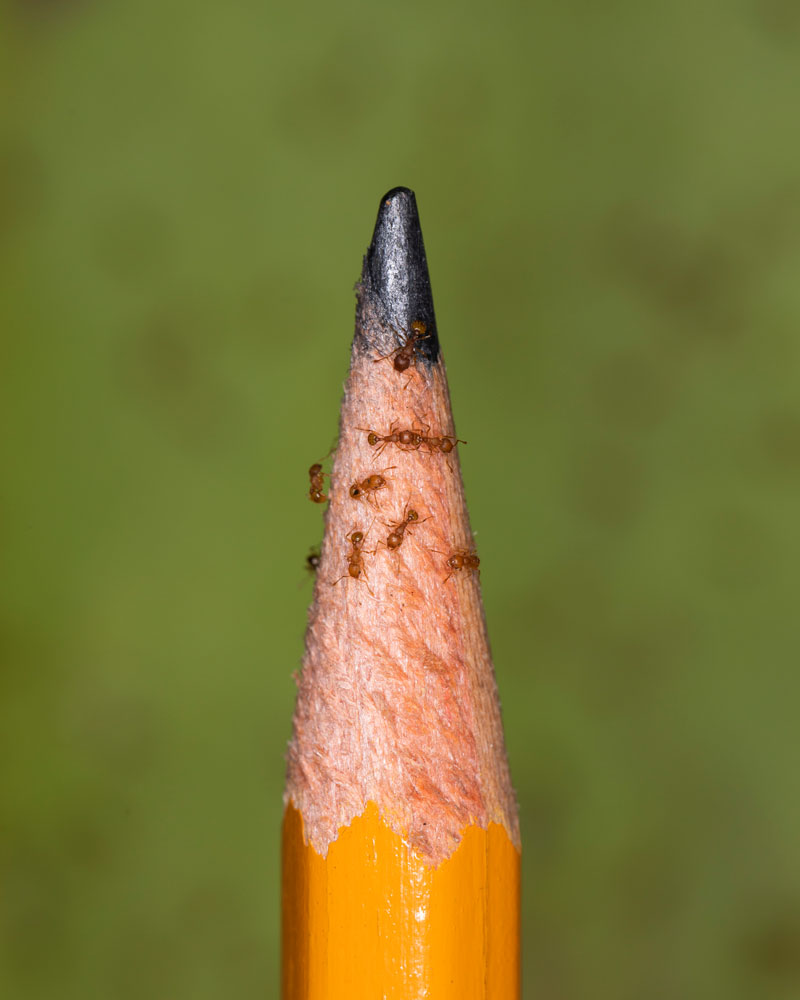
- Deliver painful stings, leaving welts that can last for weeks.
- Can blind pets when stung repeatedly in the eyes.
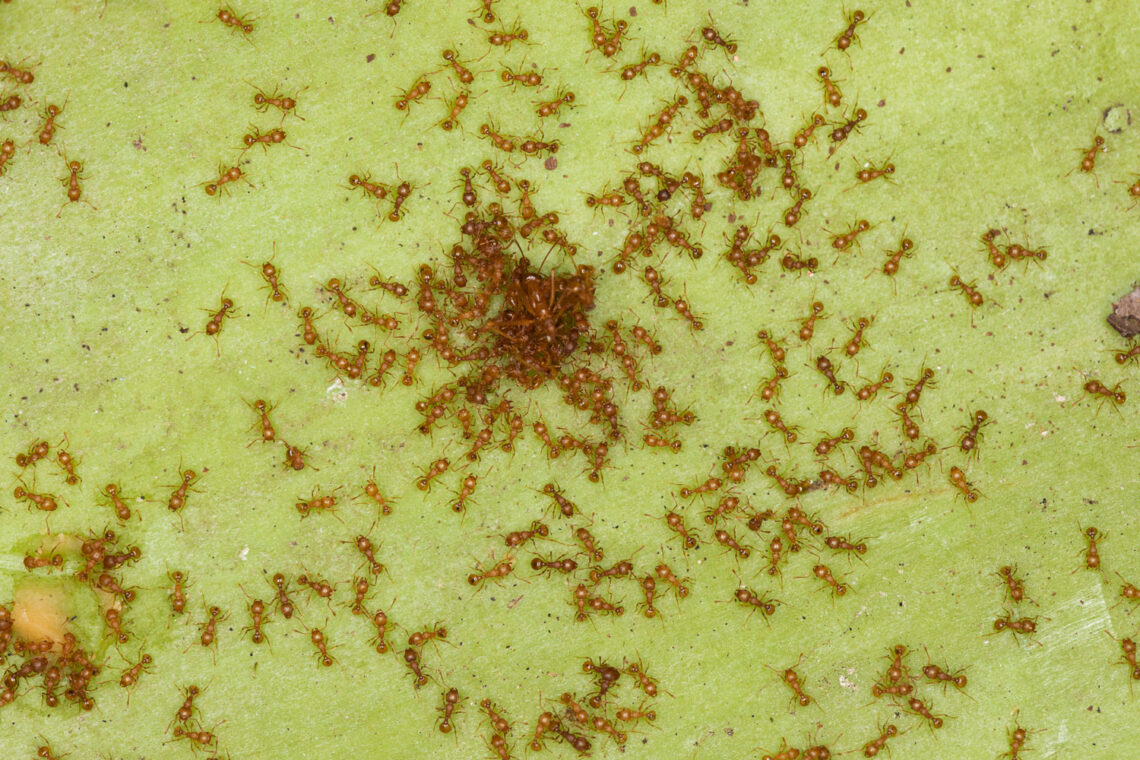
- Form dense supercolonies that cover the ground into the tops of the tallest trees.
- Drives out other insects and animals from infestation area.
- Promotes agricultural pests like aphids and scale insects.
- Pose a significant threat to agriculture, human health, endangered species, and Maui’s native ecosystem.
- Impacts on outdoor recreation: ants can rain down from trees onto hikers and hunters and invade beach parks and other recreational areas.
- Eradicating established populations is a time consuming and data intensive process.
Program History & Evolution
- 1999: Little fire ants discovered on three properties in Hawaiian Paradise Park near Hilo on Big Island.
- 2007: 56 known populations on Big Island. The number of affected properties exploded thereafter, reaching 4,500+ by 2010 and 6,400 in 2012. (Vanderwoude et al 2016)
- 2009: First detection of LFA on Maui in Waihe‘e. An interagency task force was formed to create an eradication plan which included delimitation, outreach, and treatment.
- 2013: The second detection of LFA on Maui was not until 2013, when several hapu‘u logs imported from Hawai‘i Island for the nursery trade were found to be infested.
- 2013 – 2024: New sites were discovered on Maui at a rate of approximately two per year.
- 2024-2025: The rate of new LFA infestations began to grow exponentially, with nine new infestations discovered from early 2024 to early 2025.
- Current Status (as of June 2025): 12 infestations in treatment, 9 infestations undergoing monitoring, and 7 infestations eradicated.
How We Respond
Strategy:
MISC uses many tools to support the effort of control of LFA on Maui.
Public Awareness
Public awareness is key to stopping the spread of little fire ants on Maui. Community members have reported 80 percent of all LFA infestations on Maui. MISC supports public outreach efforts through community events, social media, and campaigns like Stop the Ant Month and Hawai‘i Invasive Species Awareness Month.
LFA Detector Dog
Freddie is MISC’s Little Fire Ant Detector Dog. Freddie helps field crew with delimitation (finding the edges of an infestation), monitoring treatment sites, and verifying sites where no LFA have been detected. He was trained at the Craig A. Murray Dog School in Queensland, Australia and came to MISC in May 2024. Learn more about our Detector Dog program.
Data
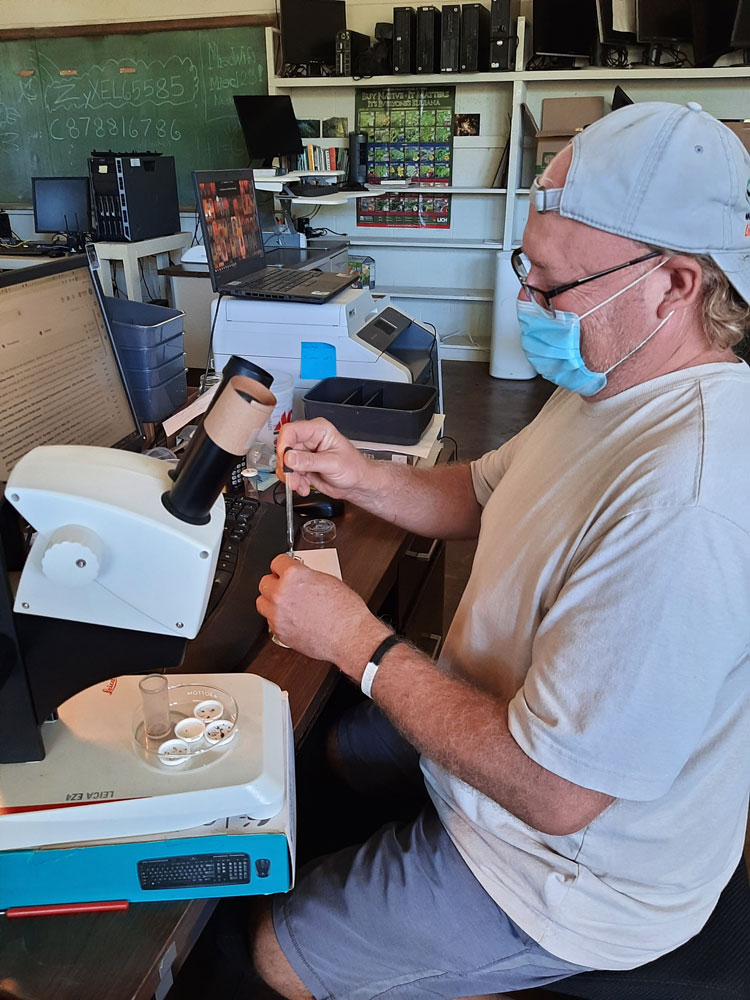
Data is essential in treating LFA populations. GPS points, maps, and innovative technology all contribute to the surveying, tracking, and monitoring of LFA on Maui.
Collaborations and Partnerships
MISC works closely with the Hawaiʻi Ant Lab, Hawaiʻi Department of Agriculture, Hawaiʻi Invasive Species Council, and the County of Maui to successfully do this work. Due to these collaborations, MISC’s LFA work has been the most successful in the state in controlling and eradicating LFA populations.
Treatment
Treatment for LFA varies by site. How we treat depends on factors such as size, terrain, fresh water sources, or homes. Our little fire ant treatment is different from pest control. Pest control companies reduce density, whereas our objective is to eliminate all ants.
Each site is unique, from homes with a garden to a forest with a stream. Treatment “prescriptions” consider the characteristics of each infestation. Since eliminating every single ant is our goal, treatments are every six weeks with surveys every six months.
While the treatment formula may vary by site, we use the same products consistently.
Insect Growth Regulator (IGR):
One treatment tool is the use of an IGR called methoprene, which acts as a birth control for LFA queens. The IGR is mixed with a gel bait. Ants are social insects that almost obsessively share food with one another. When forager ants find the bait, they bring it back to their queen and nest mates. If fed IGR consistently, the queen will stop producing eggs and the colony will eventually die off.
The timeline for treatment varies. Typically, an infestation is treated every six weeks for a year. After one year we conduct follow up surveys to see how effective the treatment was. The survey identifies any “hot spots” where LFA persist. This process allows us to narrow our treatment focus to areas with stubborn colonies that have avoided succumbing to the first year of treatment. One no LFA are detected in follow up surveys, the site is monitored for five years. If no ants are found after five years, it is considered eradicated.
Aerial Treatment
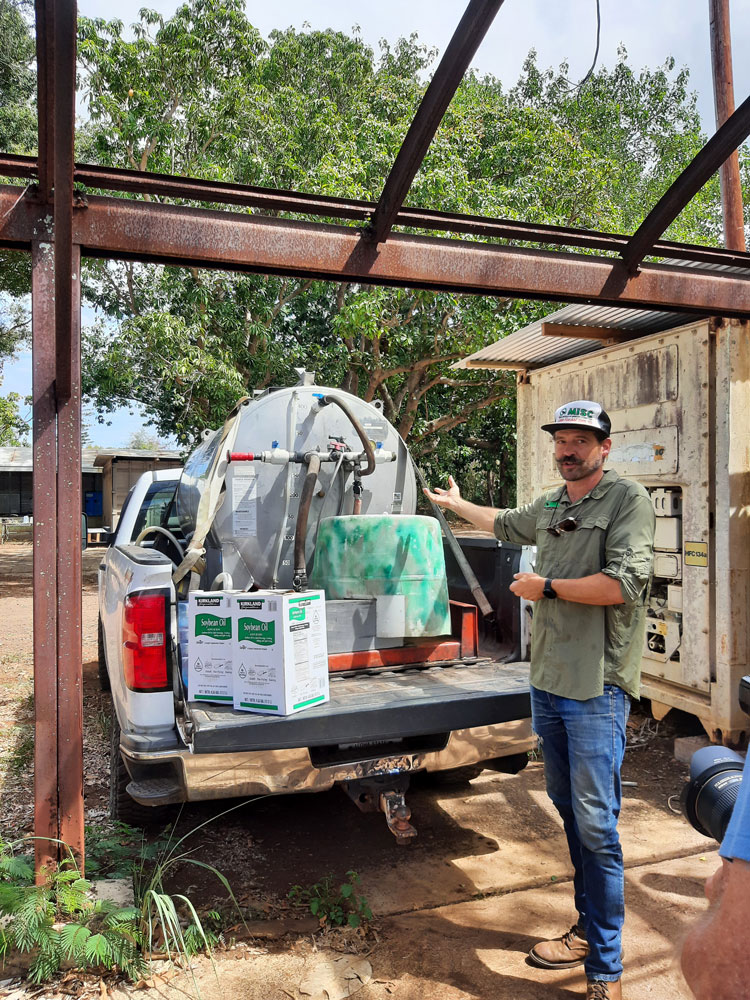
Aerial treatment is a valuable tool when treating large areas or infestations in rugged terrain. MISC may utilize helicopters or drones for aerial treatment when ground treatment is not practical. For example, infestations with impenetrable hau or large swaths of tall trees can be difficult or impossible to treat effectively from the ground. Additionally, large sparsely populated sites may be more efficiently treated from the air versus by ground.
Ground Treatment
Ground treatments are the standard procedure at smaller sites (usually less than ten acres) and in areas that are close to homes and waterways. Crews typically apply the bait via backpack sprayers or, if the site is small enough, using handheld spray bottles.
Ground treatment is typically used near homes and waterways. Crews apply treatment via backpack sprayers, ‘coloring in’ the infestation area.
Treatment Timeline
Detection:
If LFA are confirmed on your property, the first step is to verify how big the infestation is. MISC’s field crew will conduct a survey at the site to ‘delimit,’ or outline, the infestation area.
Treatment:
Treatment usually consists of a non-toxic insect growth regulator (IGR) applied every six weeks for six months, followed by a toxicant treatment every six weeks for six months. This standard approach will be customized for each property and may vary based on unique factors such as the presence of agricultural crops or streams.
Post Treatment:
After one year of treatment, MISC staff complete a comprehensive survey of the infestation area to determine how effective treatment was. If any little fire ants are found in the survey area, treatment resumes in hot spots until zero LFA are detected.
Monitoring:
Once no LFA are detected, the infestation site goes into the monitoring phase for five years. Numerous surveys are conducted during this time to test for LFA. If LFA are found, treatment resumes. If no LFA are found within the five-year monitoring period, the site can be deemed eradicated of little fire ants.
Results and Progress
We know from years of experience that our treatment techniques work. As of June 30, 2025, 16 sites have been eradicated or are in the five-year monitoring phase.
MISC was the first organization in the world to effectively use a helicopter to treat a little fire ant infestation. Close to Hāna, the Nāhiku site held Mauiʻs largest infestation of 175 acres in extreme terrain and dense vegetation. Staff couldn’t survey and treat it in the traditional way with backpack sprayers, so they needed to get creative. MISC obtained a special use permit to conduct aerial operations using a non-toxic gel bait developed by the Hawaiʻi Ant Lab on Hawaiʻi Island. Staff used a helicopter long line “spray ball” filled with bait to strategically spray areas with positive LFA. This innovative work has proved successful. As of June 2025 no LFA had been detected in the area in more than two years, and it has now transitioned to the monitoring phase.
Resources
- Request a LFA Testing Kit and Report LFA
- LFA Brochure
- “Invasion: Little Fire Ants in Hawai’i,” A 2014 documentary by Maui Invasive Species Committee
- “Fire: Little Fire Ants in Hawaiʻi,” A 2016 update documentary by the Maui Invasive Species Committee
- Little fire ant updates from the Hawaii Invasive Species Council
- “How to Test for Little Fire Ant” video
- Spot the Ant. Stop the Ant website
- The Hawai’i Ant Lab
- Hawaii Department of Agriculture; Plant Industry Division
- MISC YouTube
- Monte’s Ant Encyclopedia
- Kiʻai Moku Articles
- Press Releases and Media
- Technical and Scientific Publications
Photo Credits:
- Header Photo – credit Zach Pezzillo