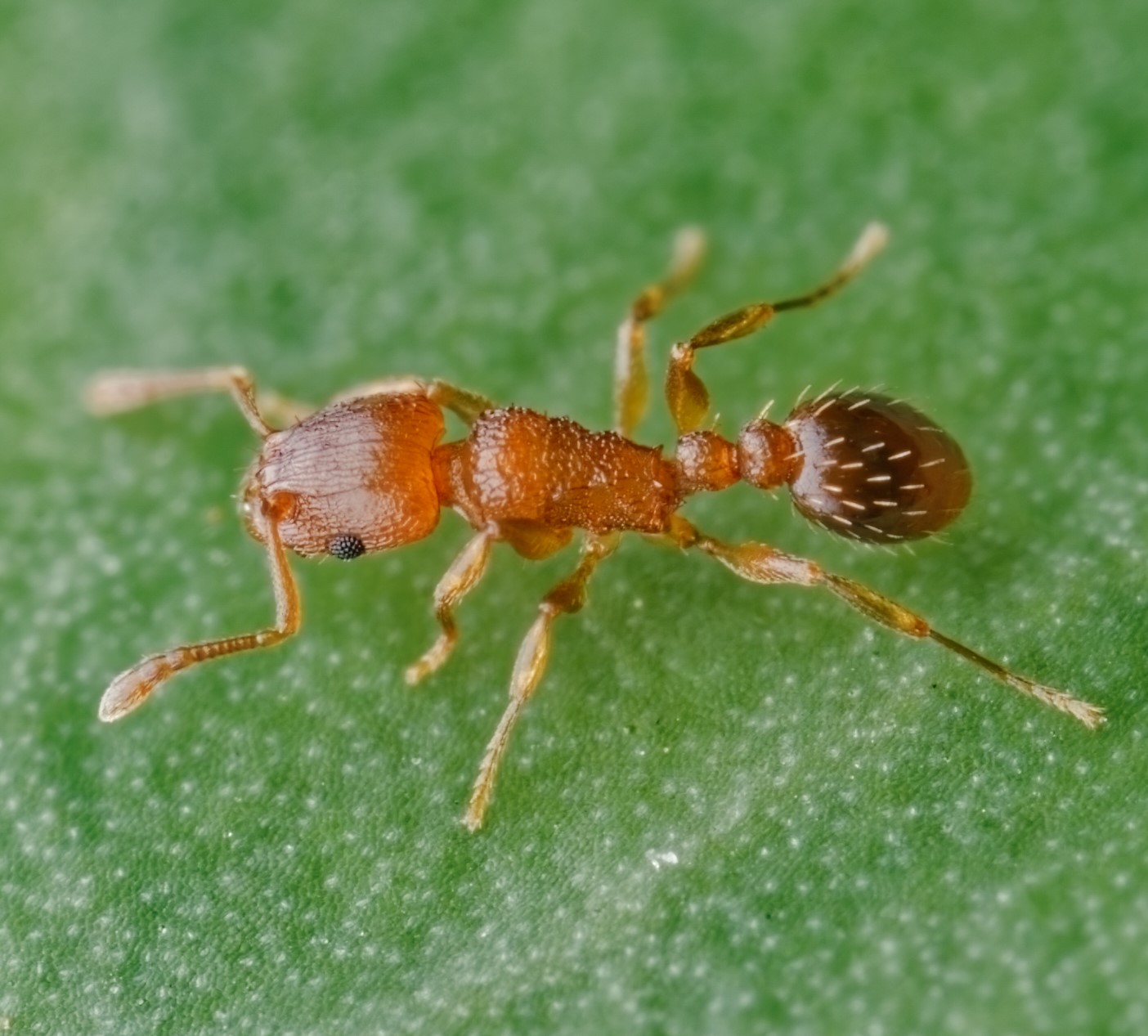
Confusing Yellow Pennant Ant
Tetramorium caldarium
Species Info General
Other common names include: Greenhouse Fierce Ant, Confused Groove-headed Ant
Tetramorium caldarium is a widespread and very common ant on Maui. It is one of the most commonly encountered species in the surveys that MISC conducts. At the same time, it tends to blend into the background without calling a lot of attention to itself. It tends to thrive in anthropogenically disturbed environments, rather than venturing into undisturbed forests and native ecosystems (Sharaf et al. 2024). “Despite its wide range, this ant is an inconspicuous and seemingly innocuous species that is poorly studied. It is often found in arid habitats and, in its native range, does not occur in shaded (e.g., forest habitats).” (Lubertazzi 2019). Ramage (2014) stated that “T. caldarium seems to prefer open and degraded environments” while Sharaf et al. (2022) reported that “The nesting habits of T. caldarium include soil, leaf litter or under stones where soil is rich in organic matter such as feces of domestic animals.”
Identification/Description
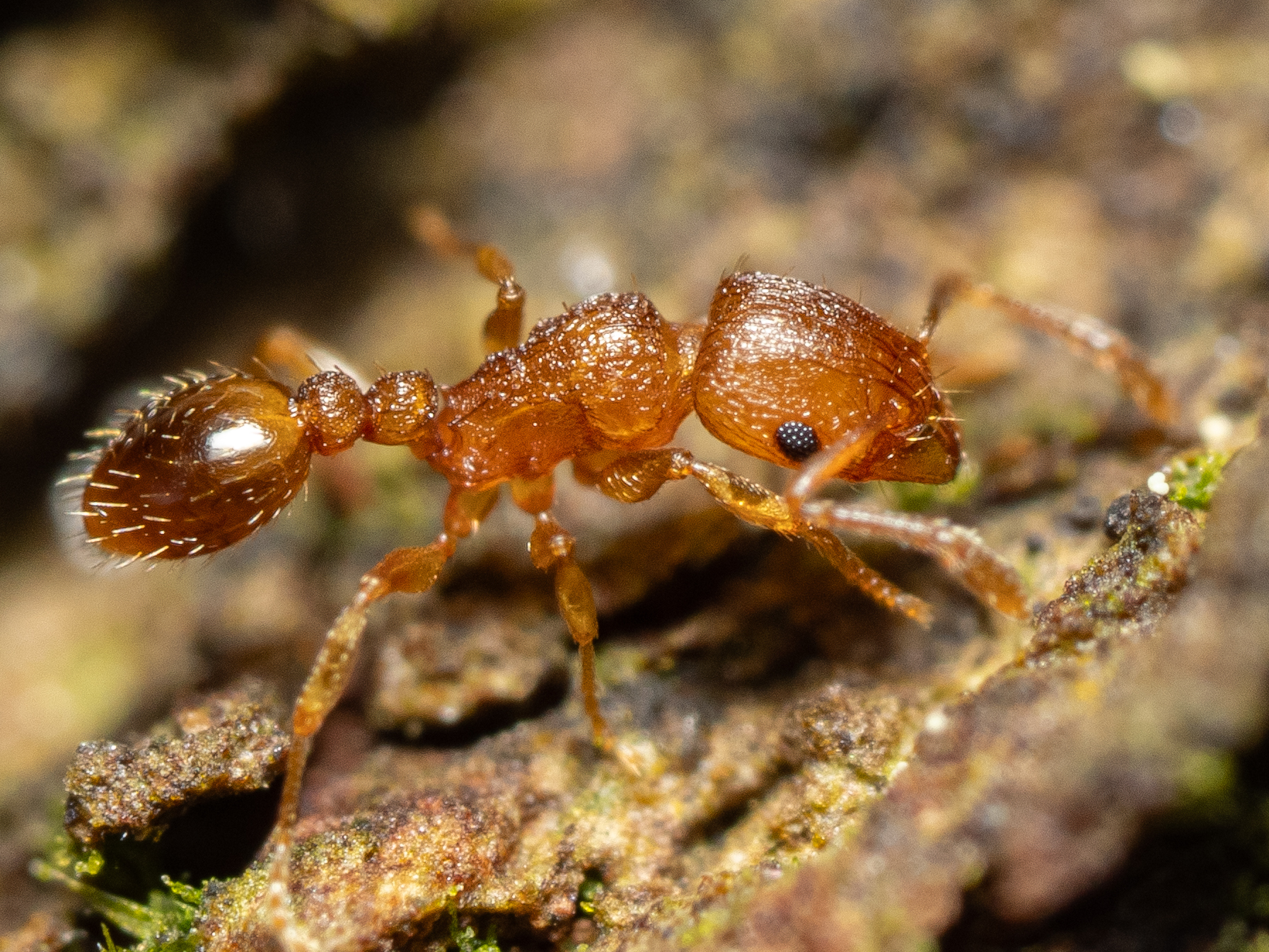
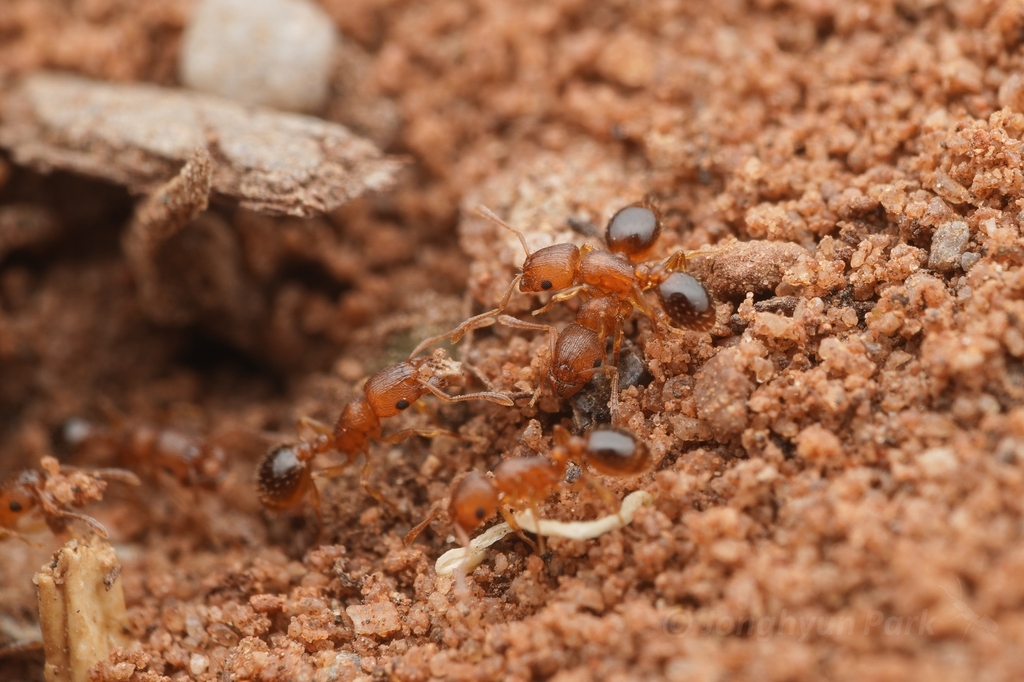
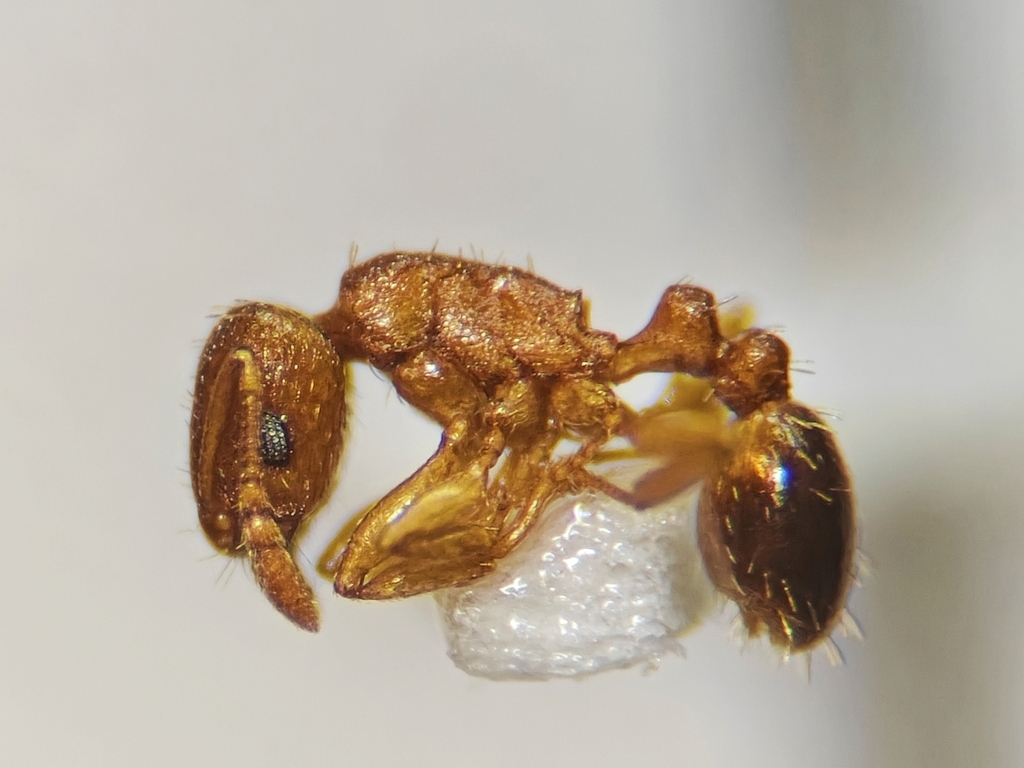
This ant is on the small side. It has a reddish coloration, and a gaster that leans toward dark brownish-black. As a small, reddish ant it might be confused with Little Fire Ants, but this species is not aggressive and reports of it biting or stinging people are practically non-existent. Though it is not really an indoor pest, it does recruit readily to protein-rich baits so it may be encountered at times in, say, a pet cat’s outdoor food dish.
Impacts
- This ant “is poorly studied” (Lubertazzi 2019), and little is known about its potential impacts.
History
- Though this ant wasn’t recorded in the Islands until 2007, it likely was present many decades earlier. It was long considered conspecific with Tetramorium simillimum, the Similar Yellow Pennant Ant. Indeed, telling the two species apart is not easy. As mentioned above it is very common on Maui. It has also been recorded on Molokaʻi and Kahoʻolawe (Starr & Starr 2011, 2012). Though it has not yet been officially documented on Lānaʻi, it is undoubtedly present there as well.
Resources/References
- Tetramorium caldarium – AntWiki
- Lubertazzi, D. 2019. The Ants of Hispaniola. Bulletin of the museum of Comparative Zoology 162(2): 59–210.
- Ramage, T. 2014. Les Fourmis de Polynésie française (Hymenoptera, Formicidae). Bulletine de la Société entomologique de France 119(2): 145–176.
- Sharaf, M R., Wetterer, J. K., Mohamed, A. A., Georgiadis, C., Nasser, M. G. & Aldawood, A. S. 2024. Filling gaps in global myrmecology: ants of the Kingdom of Bahrain (Hymemoptera: Formicidae). Journal of Natural History 58: 41–44, 1705–1786.
- Sharaf, M R., Wetterer, J. K., Mohamed, A. A. & Aldawood, A. S. 2022. Faunal composition, diversity, and distribution of ants (Hymenoptera: Formicidae) of Dhofar Governorate, Oman, with updated list of the Omani species and remarks on zoogeography. European Journal of Taxonomy 838: 1-106.
- Starr, F. & Starr, K. 2011. New arthropod records from Maui Nui.Bishop Museum Occasional Papers 109: 35–42.
- Starr, F. & Starr, K. 2012. New Arthropod Records from Maui, Molokaʻi, and Lānaʻi. Bishop Museum Occasional Papers 112: 39–42.