Coconut Rhinoceros Beetle (CRB) Resources and Response
We need your help to stop the spread of coconut rhinoceros beetles (CRB) on Maui.
July 2026 – Recent detections suggest there may be a breeding population on Maui, though no larvae or breeding site has been identified yet. Maui Invasive Species Committee, Hawai‘i Department of Agriculture and Biosecurity, and Maui County are working together to survey, set and check strategic detection traps, and respond to community reports — but we need your help.
2026 Maui CRB Timeline
- September 2023: Single dead adult CRB found in bagged mulch in Kahului.
- November 2023: 17 larvae found in dead coconut crown in Kihei. That population was eradicated, and no adult CRB was ever found.
- April 1, 2026: Single dead adult CRB found in trap near Kahului Airport. Maui’s first CRB detection since 2023.
- April 7-13, 2026: Three dead adult CRB found in detection traps at Kaunakakai Harbor, Molokai Airport, and off Maunaloa Highway, Molokai.
- June 4-8: Five dead adult beetles found in detection traps in Waikapu, Maui.
We all must work together to prevent the spread of CRB across Maui Nui.
Prevent Spread: Managing Green Waste and Breeding Materials
Green waste management is the most effective way to prevent the spread of CRB.
At this time, it is critical to properly manage your green waste and regularly check CRB breeding material for larvae.
CRB breeding material includes:
Green waste
- Do not dump green waste or let it accumulate. Bring green waste to a processing facility to be chipped.
Mulch
- Regularly search mulch piles for large white larvae. Ensure mulch has been treated before transporting. More treatment info here.
Compost
- Regularly turn compost to check for CRB larvae. Hot composting is an effective treatment for CRB larvae. Ensure the entire compost pile has been heated to 131F before transporting. Learn more about treatment info here.
Dead trees (especially dead coconut trees)
- CRB nest in dead crowns of palms
Potting mix
- CRB can chew through plastic to nest in soil and potting mix.
Potted Plants
- CRB can hitchhike long distances in potted plants. Check for larvae after purchase, especially for plants cultivated on O’ahu, Kaua’i, and Hawai’i Island.
Stumps and Logs
- Check for boreholes or larvae in decaying stumps and logs, especially in coconut trees or palms.
Buy Locally
It’s equally important to source your garden materials locally. This limits the movement of breeding material to Maui from other islands where CRB are widespread. CRB are excellent hitchhikers, and their eggs, larvae, and pupa can be easily transported in things like potted plants and bagged soil.
Larvae Identification and Reporting
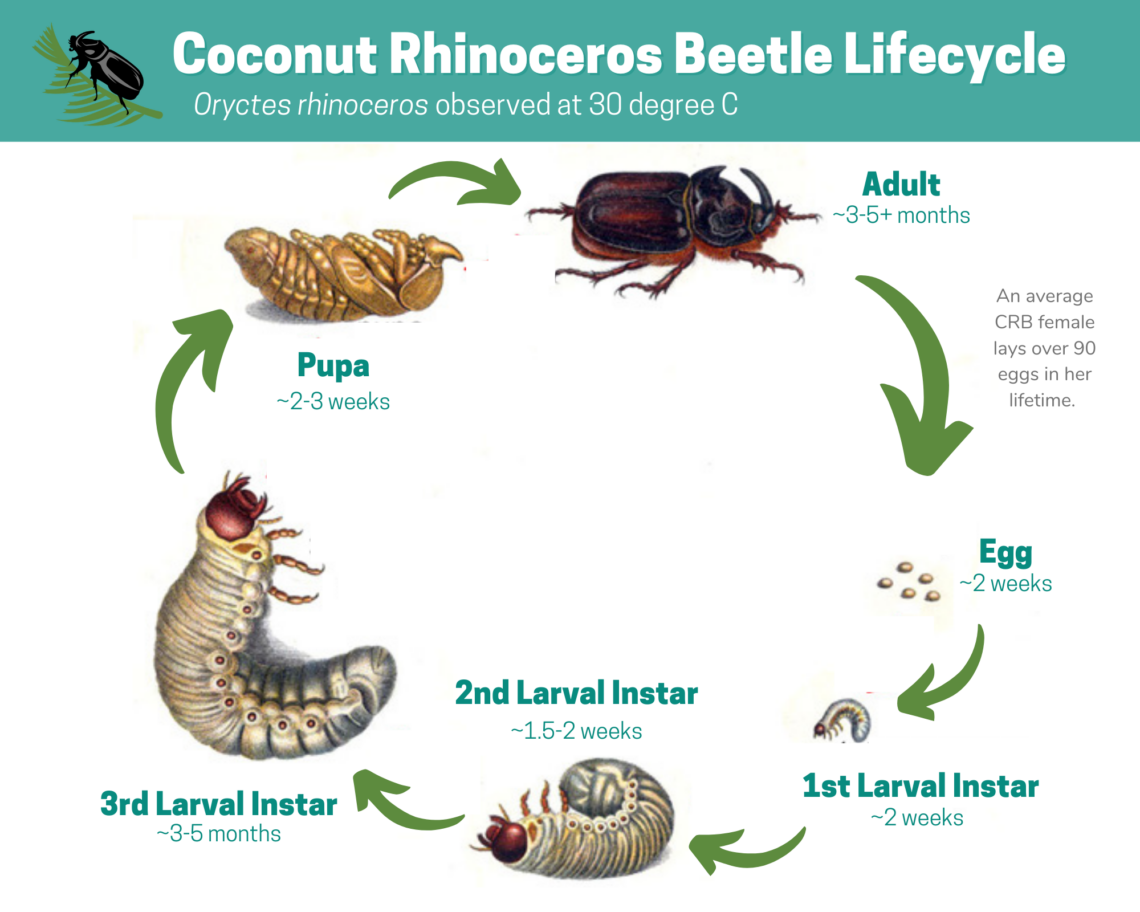
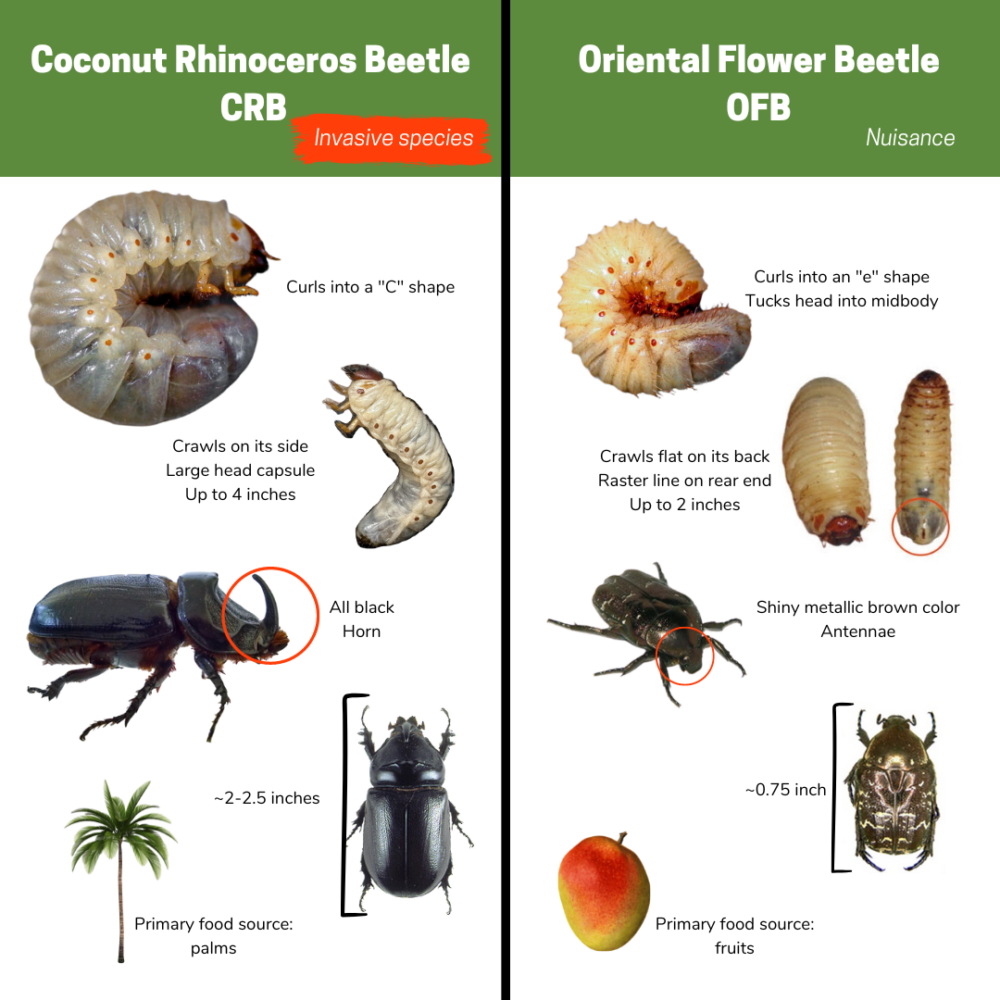
CRB larvae grow up to three inches before pupating. They crawl on their side and curl into a C-shape. Larvae can survive in most decaying plant material. CRB larvae spend roughly 5.5 months growing from egg to adult.
CRB larvae look very similar to Oriental Flower Beetle (OFB) larvae, a common fruit pest in the islands. OFB and CRB can occupy the same breeding material, but they have several key differences. OFB crawl on their back and curl into an e-shape. OFB larvae are significantly smaller than CRB larvae at the 3rd instar stage before pupating. OFB can be identified by their “raster line,” a brown line on the end of their abdomen (see photo below). CRB does not have a raster line.
If you find any suspect larvae, save it in a hard container with some of the material it was found it. Take a photo or video of the larvae with something for scale, such as a quarter. Note the time, date, and location where they were found. Report immediately to 643-PEST (7378) or 643pest.org.
Palm Damage
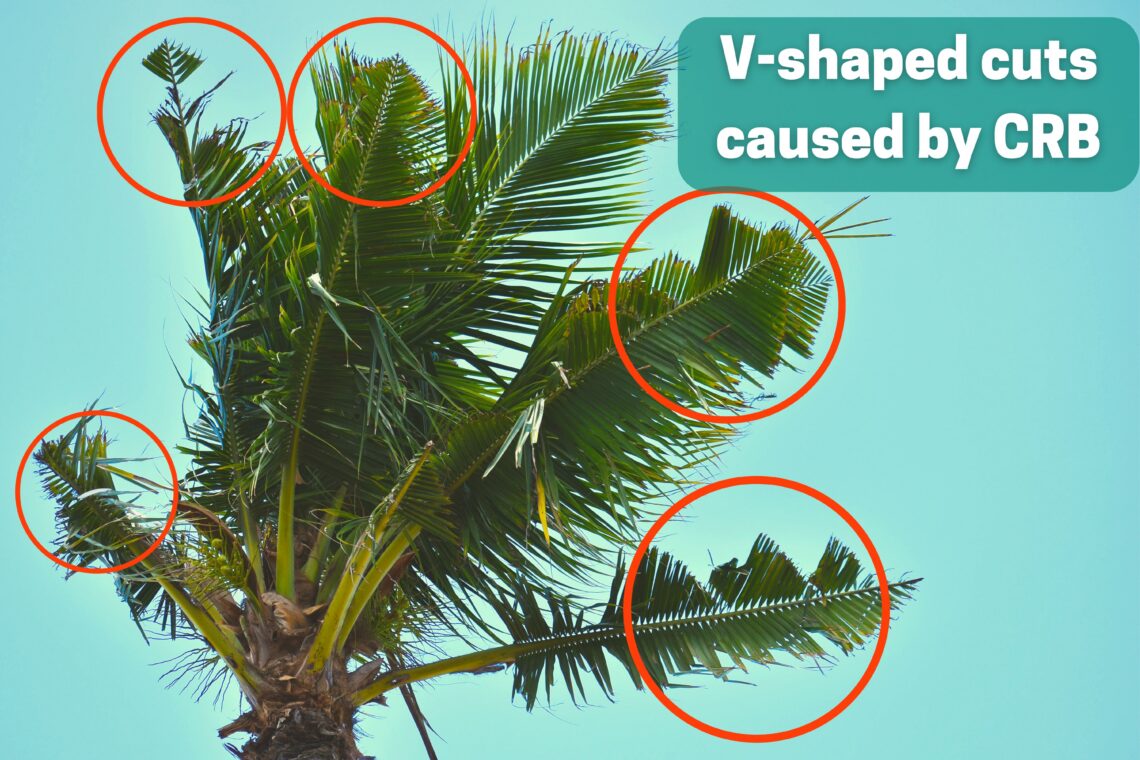
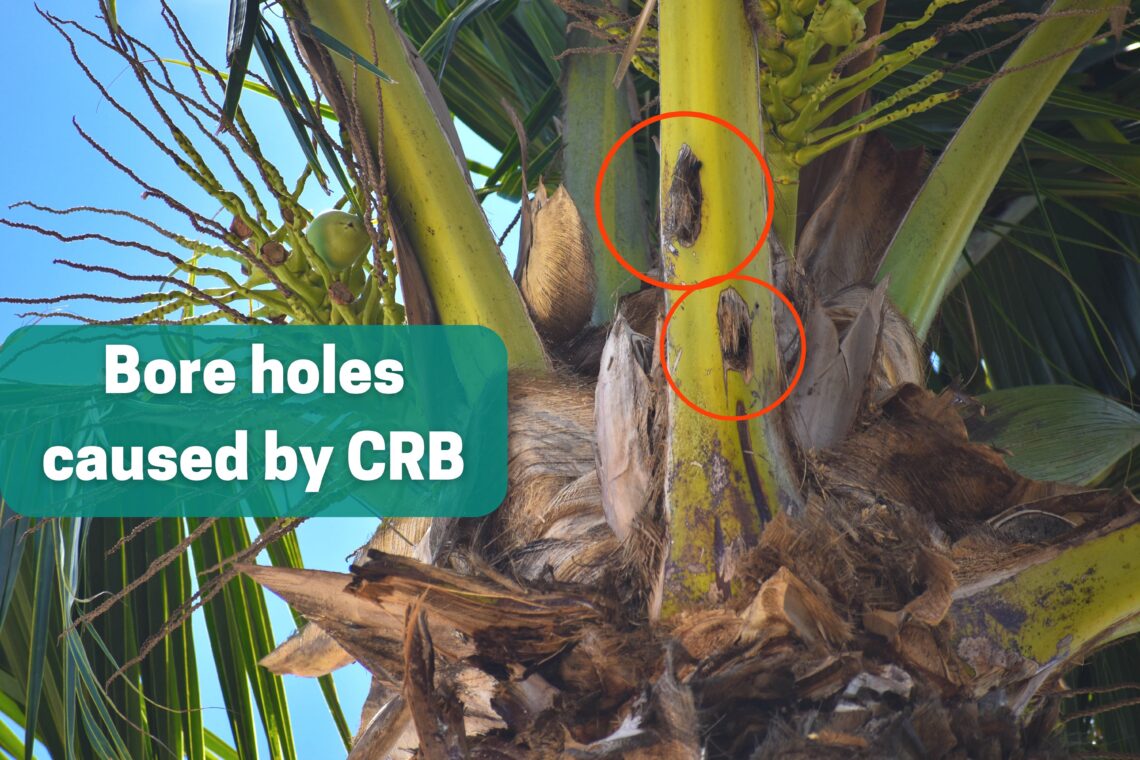
Continue to look for CRB damage on palms, such as v-shaped cuts and boreholes (examples below). However, it can take up to four months for damage to appear. The beetles are often gone long before damage becomes visible. While palm damage is an important clue, keeping CRB from spreading means eliminating larvae and breeding sites.
Report palm damage to 643-PEST or 643pest.org.
What’s At Risk
CRB puts Hawai‘i’s cultural resources, endemic species, food security, and way of life at risk.
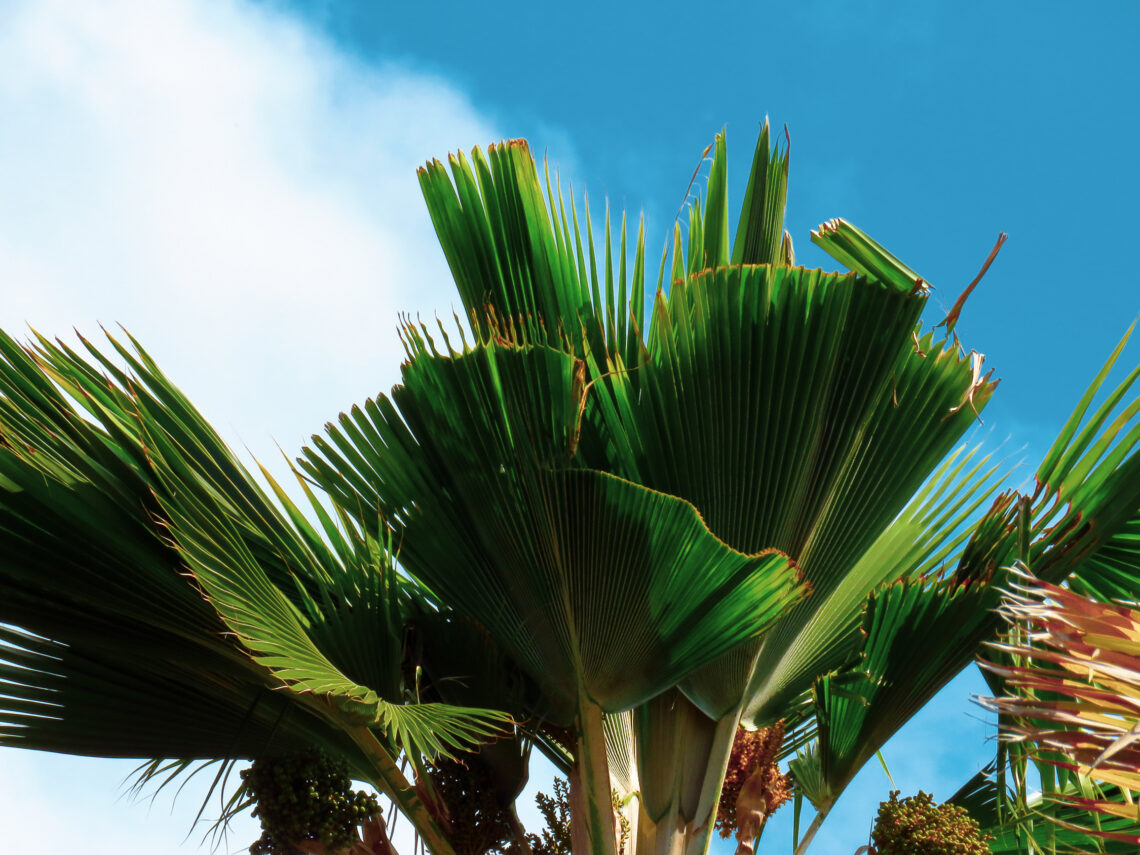
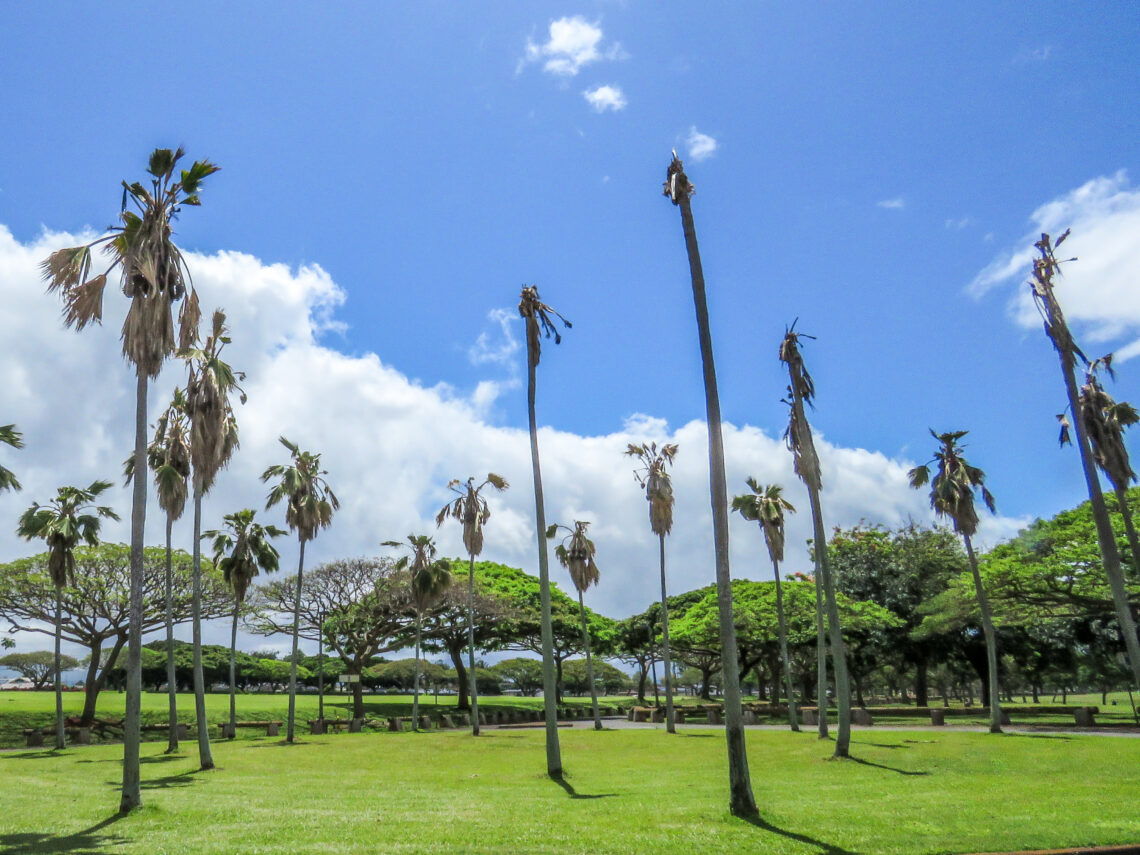
CRB primarily feeds on coconut palms, but preferred foods also include date palms, royal palms, and fan palms such as the endemic Hawaiian loulu. The beetles bore into the crowns of palms to feed on the sap, resulting in severe damage, infection, and death.
While some palms can survive years with CRB damage, loulu are especially vulnerable and extinction is a real threat. Secondary infections can kill loulu after just one CRB feeding.
CRB also puts food security at risk. Other CRB food sources include important crops such as kalo, banana, sugarcane, and hala.
Additional Resources
Courtesy of CRB Response
- CRB Residential Guide
- BMP for Tree Trimmers
- Maui Palms Quick ID
- Compost Processing Guidance
- CRB Damage Training Sheet