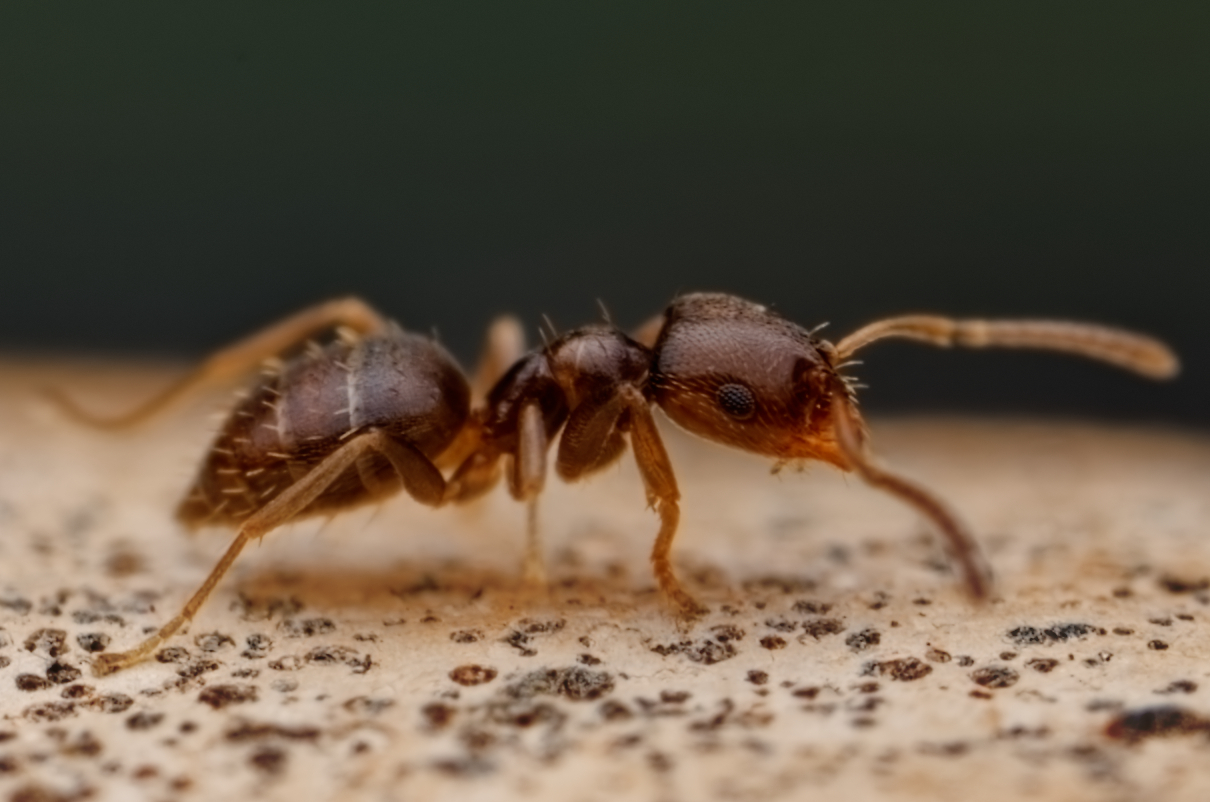
Seaside Rover Ant
Brachymyrmex cf. obscurior
Species Info General
Other common names include: n/a
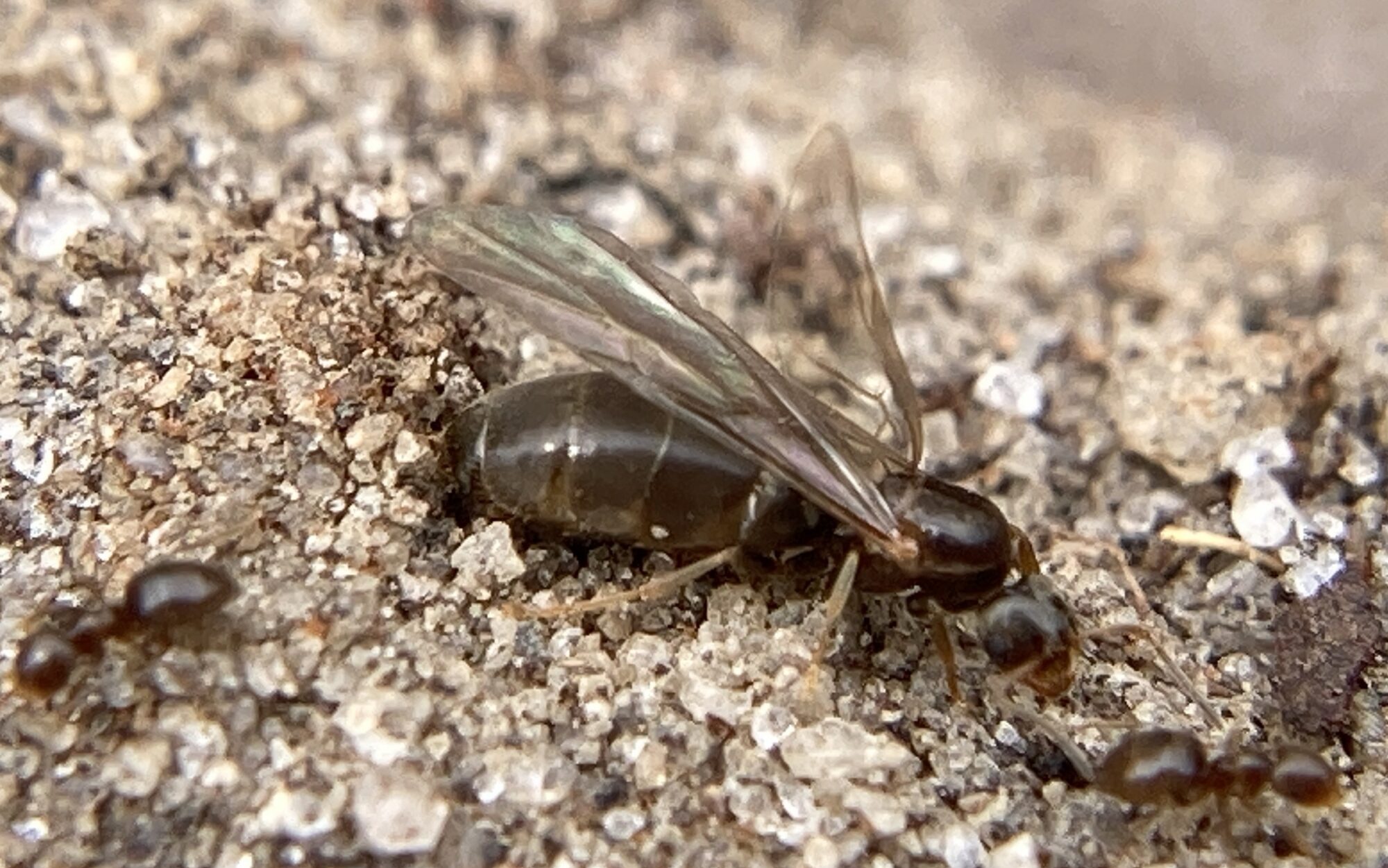
This relative newcomer to the Islands took the place by storm not long after its 1997 arrival. It is a very small ant of yards, beaches, fields and open spaces. Though it is quite common it is also usually inconspicuous. It becomes a much more obvious ant when it engages in its nuptial mating flights: this is when thousands of the newly hatched winged queens and males simultaneously emerge from their nests en masse over a large area and fly about in huge numbers in a mating frenzy. These mating flights can be relatively low to the ground, around the height of a human head – and you’ll want to keep your mouth shut if you inadvertently find yourself walking through such a cloud. Golf courses have been known to temporarily close during these nuptial flights due to how annoying it is to accidentally inhale the amorous ants while trying to walk across the greens.
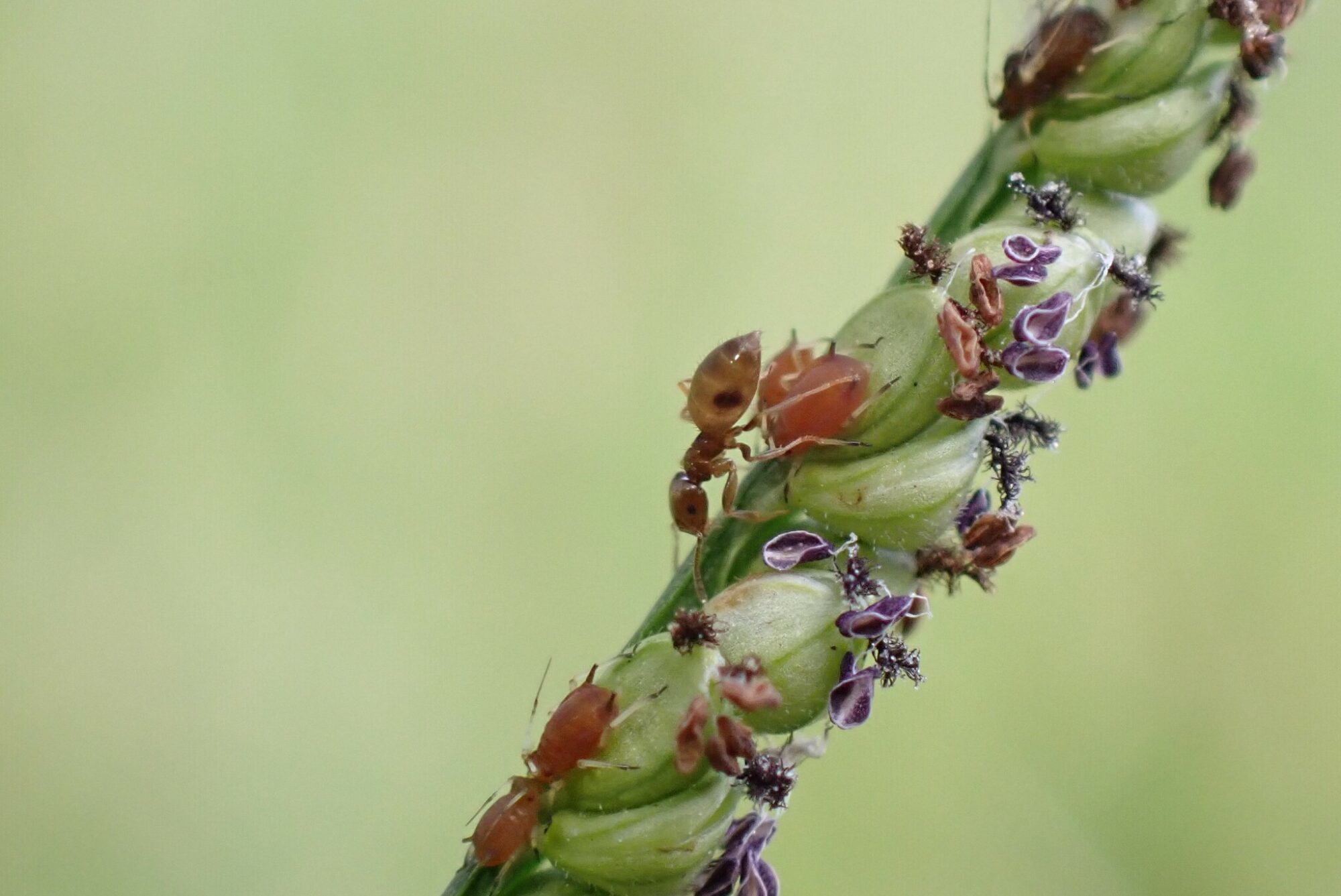
Seaside Rover Ants are extremely fond of the honeydew excreted by aphids and their relatives, with Smith (1936) writing that “The workers must feed largely if not almost exclusively, on honeydew.” Wolcott (1948) noted that there is “a long list of aphids, scale insects and mealybugs from which it has been observed to obtain honeydew”. Smith (1936) also wrote that these ants “form rather small colonies in the soil or in rotting logs and stumps, nesting by preference in more open areas”.
Deyrup (2017) made the following interesting comments about this species:
“Brachymyrmex obscurior in Florida is usually found in open sandy areas with sparse vegetation. It is one of the commonest ants in disturbed areas, including scruffy lawns, edges of mall parking lots, scuffed vegetation by the curbs of sidewalks, drought-stricken highway medians, and among the litter of gum wrappers and cigarette butts along the fences of playgrounds. It is seldom found in natural upland habitats such as sandhill and Florida scrub. All this fits the profile of an introduced species with a masochistic preference for the worst kind of disturbed areas, but obscurior is also abundant in beach and other coastal habitats. These natural habitats are as extreme and highly disturbed as the man-made habitats where obscurior occurs, and it is reasonable to assume that obscurior evolved as a coastal species.”
Though clearly fond of coastal areas, these ants can also be readily found at least as high as 3,000 feet elevation in Upcountry Maui.
Identification/Description
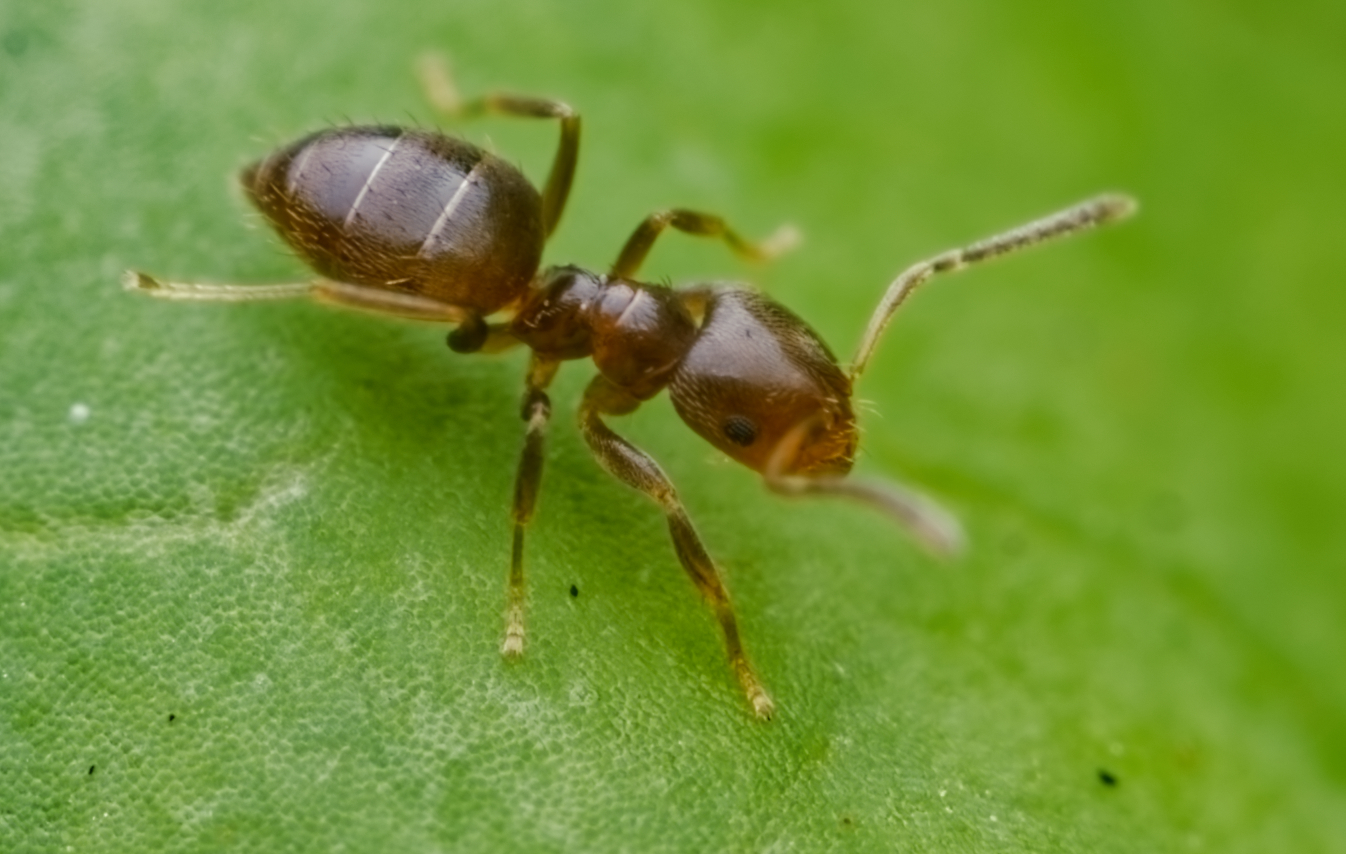
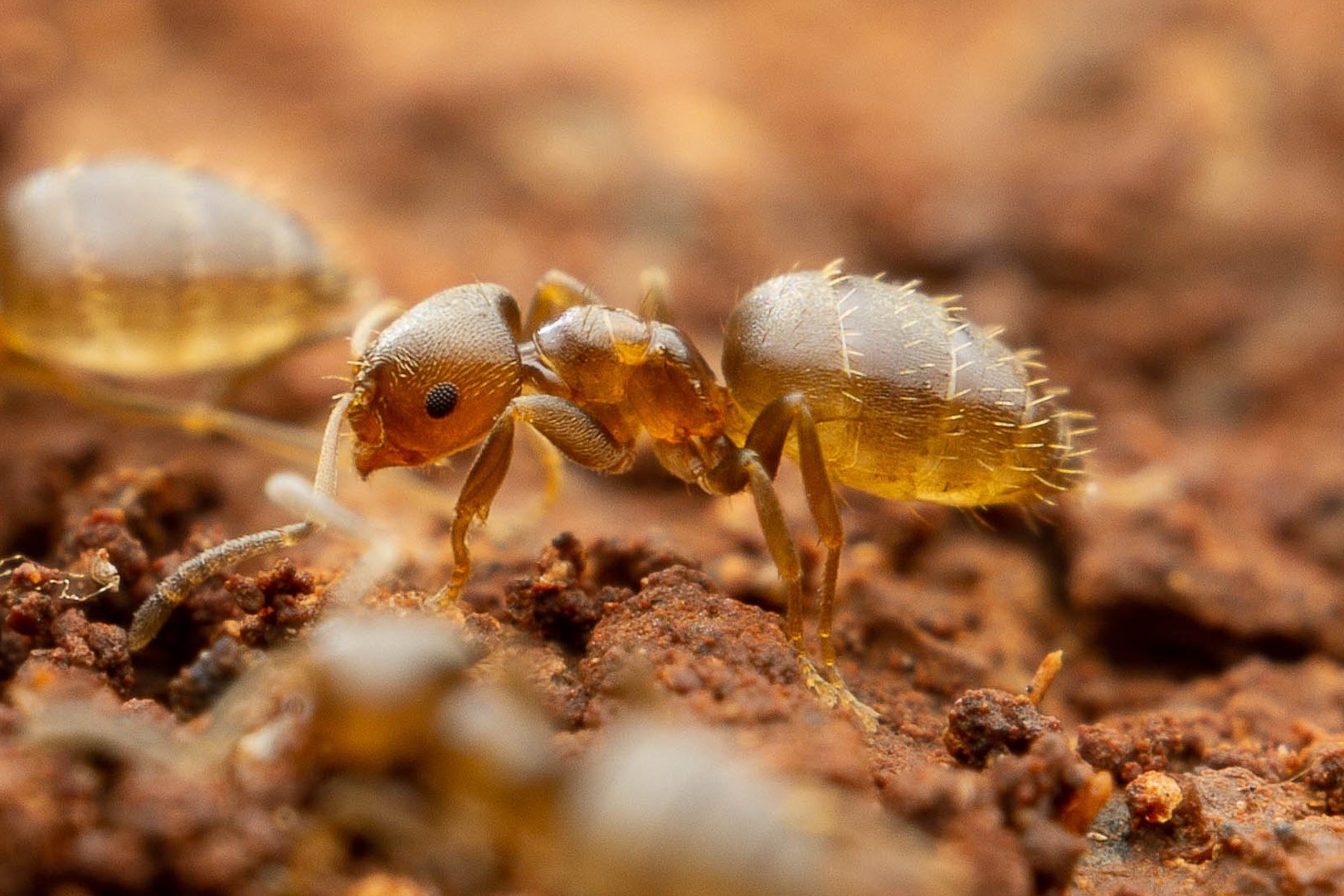
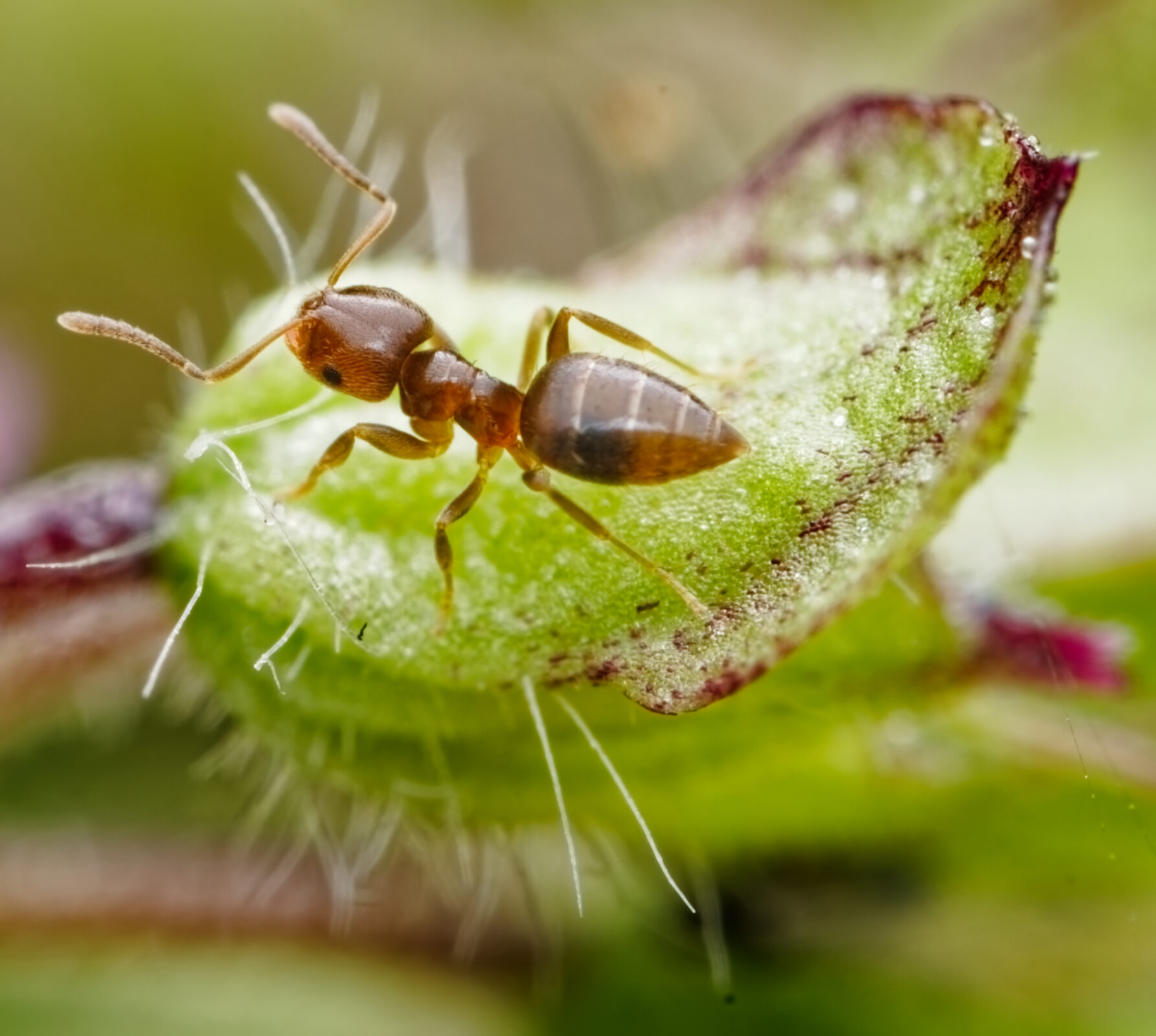
Though Wetterer & Wetterer (2004) state that Brachymyrmex obscurior “is extremely variable in size and color”, Huddleston & Fluker’s (1968) description of it as a “small, robust, brown ant” is a very good general description. It is certainly a very small, plump ant and Deyrup (2017) went so far as to describe it as “small but cute”. They can be found running about on the ground or up in the vegetation. It won’t bite or sting, but (as described above) its much larger queens and males may fly into your mouth if you’re not careful.
Impacts
- Though multiple authors reference this species’ fondness for the honeydew of homopterous agricultural pests such as aphids, it is not clear whether the presence of this ant actually leads to increased numbers of such homopterous insects.
- This species becomes a nuisance when it engages in nuptial flights, with swarms of winged queens and males flying about one’s face.
History
- A detection of this ant in the Islands in 1914 does not appear to have resulted in an established population (Swezey 1915; Krushelnycky, Loope & Reimer 2005). However, its detection here in 1997 was another story. That detection was on Maui, and it wasn’t long before this ant could be found just about everywhere in the state.
Resources/References
- Brachymyrmex obscurior – AntWiki
- Deyrup, M. 2017. Ants of Florida – Identification and Natural History. CRC Press, Boca Raton, Florida. 423 pp.
- Huddleston, E. W. & Fluker, S. S. 1968. Distribution of Ant Species of Hawaii. Proceedings of the Hawaiian Entomological Society 20(1): 45–69.
- Krushelnycky, P. D., Loope, L. L. & Reimer, N. J. 2005. The Ecology, Policy, and Management of Ants in Hawaii. Proceedings of the Hawaiian Entomological Society 37: 1–25.
- Smith, M. R. 1936. The Ants of Puerto Rico. The Journal of Agriculture of the University of Puerto Rico 20(4): 819–875.
- Swezey, O. H. 1915. [Entomological Program]. Proceedings of the Hawaiian Entomological Society 3(2): 84.
- Wetterer, J. K. & Wetterer, A. L. 2004. Ants (Hymenoptera: Formicidae) of Bermuda. Florida Entomologist 87(2): 212–221.
- Wolcott, G. N. 1948. The Insects of Puerto Rico – Hymenoptera. The Journal of Agriculture of the University of Puerto Rico 32(4): 749–975.