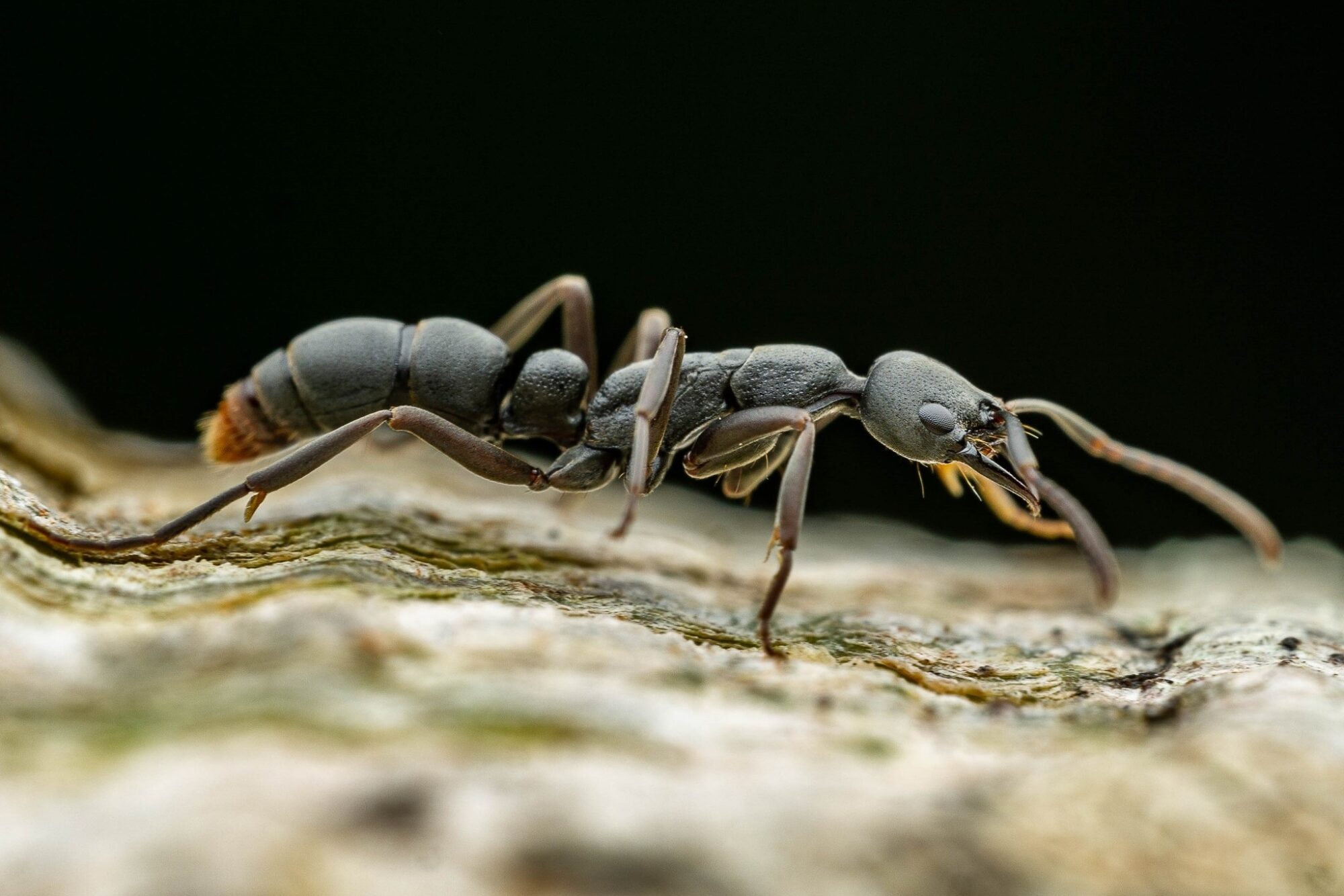
Sickle-tooth Ant
Leptogenys falcigera
Species Info General
Other common names include: n/a
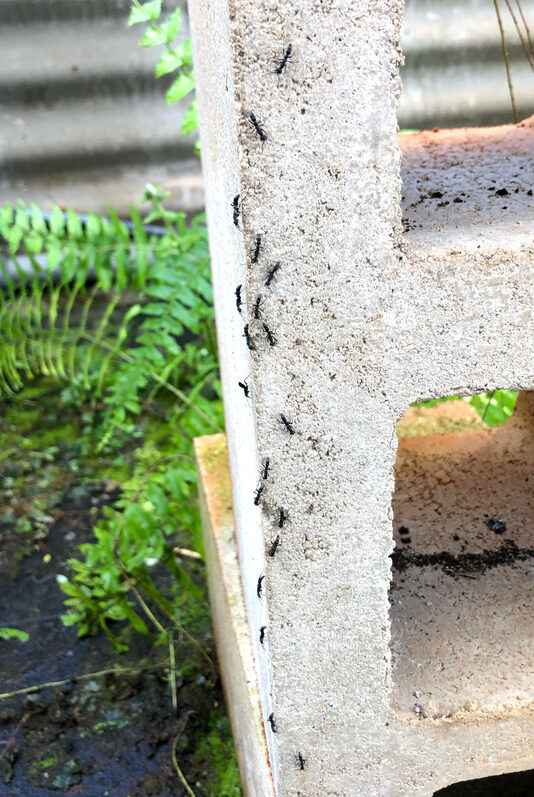
This very large black ant has been here for quite some time, showing up in the very first itemization of Hawaiʻi’s ants (Smith 1879). It “[a]ppears to be widely distributed over the lower elevations where rainfall is from less than 20 inches to more than 70 inches. Usually noticed as individual forms walking on the ground or tree trunks. Found nesting under rocks and in dead tree trunks.” (Huddleston & Fluker 1968). Phillips (1935) wrote that “Though more frequent in the dry areas, nests are occasionally found in moist districts, even in the wet highlands of the Forest Reserves.”
In the epic publication Fauna Hawaiiensis, written more than a century ago, Perkins had the following to say:
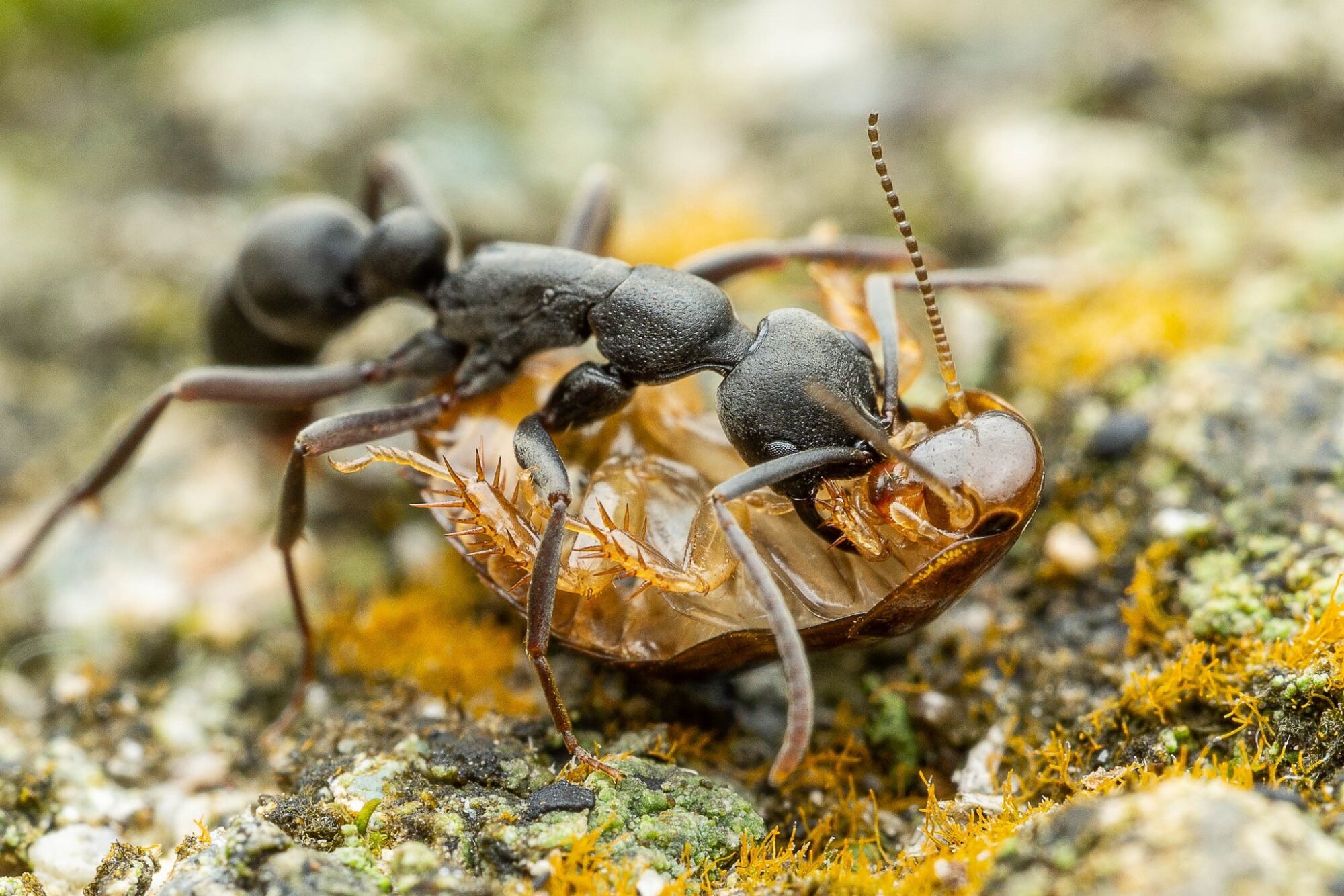
“Leptogenys . . . frequent[s] the lowlands and low mountain elevations. It nests both in tree trunks and dead wood, and in porous cavities of lava blocks. Its prey consists of Isopod Crustaceans, the remains of which are nearly always to be seen in heaps about or within the nest. It is fond of migrating from one spot to another, especially during the rainy season, and processions of these ants carrying their cocoons are a familiar sight in gardens in Honolulu. Sometimes we have found nearly every plant of a group of bananas to be occupied by colonies of the Leptogenys, these being disclosed when the leaves are stripped from the stem.” (Perkins 1913)”
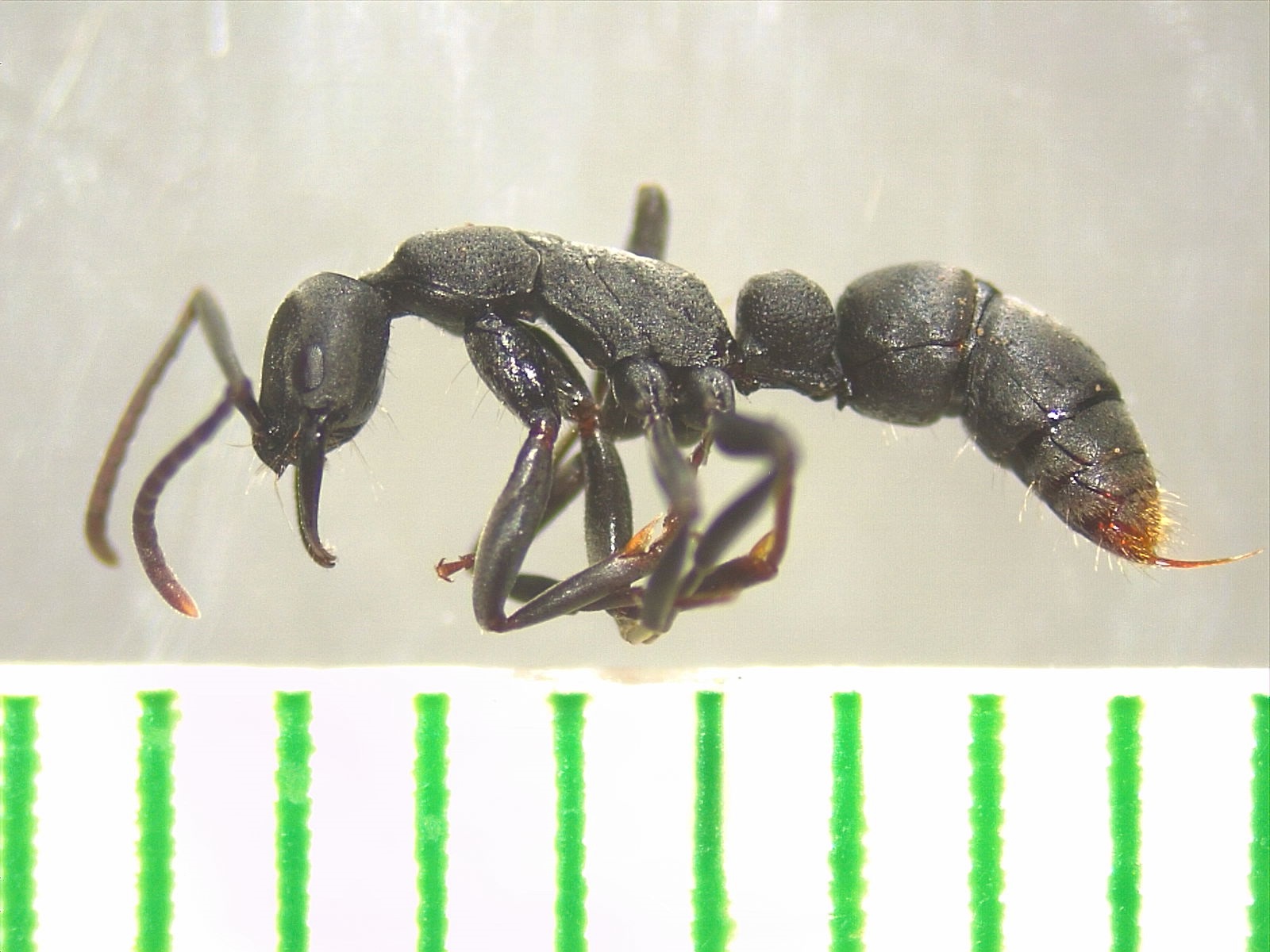
Wiilliams et al. (1931) expanded on Perkins’ description by saying that this is “an active and comparatively large, slender, black ponerine ant, 7 or 8 millimeters long, that feeds upon isopod crustaceans (sow bugs, armadillo bugs, etc.) and the remains of myriapods have also been associated with it. Its small colonies are to be found in dry soil in hollows of algaroba [kiawe] and other trees, behind banana leaf bases, etc., and are often recognized as such by the bleached remains of the land crustacean prey accumulated near the entrance to their nests. . . . Leptogenys may sometimes be seen travelling in single file . . .”.
Identification/Description
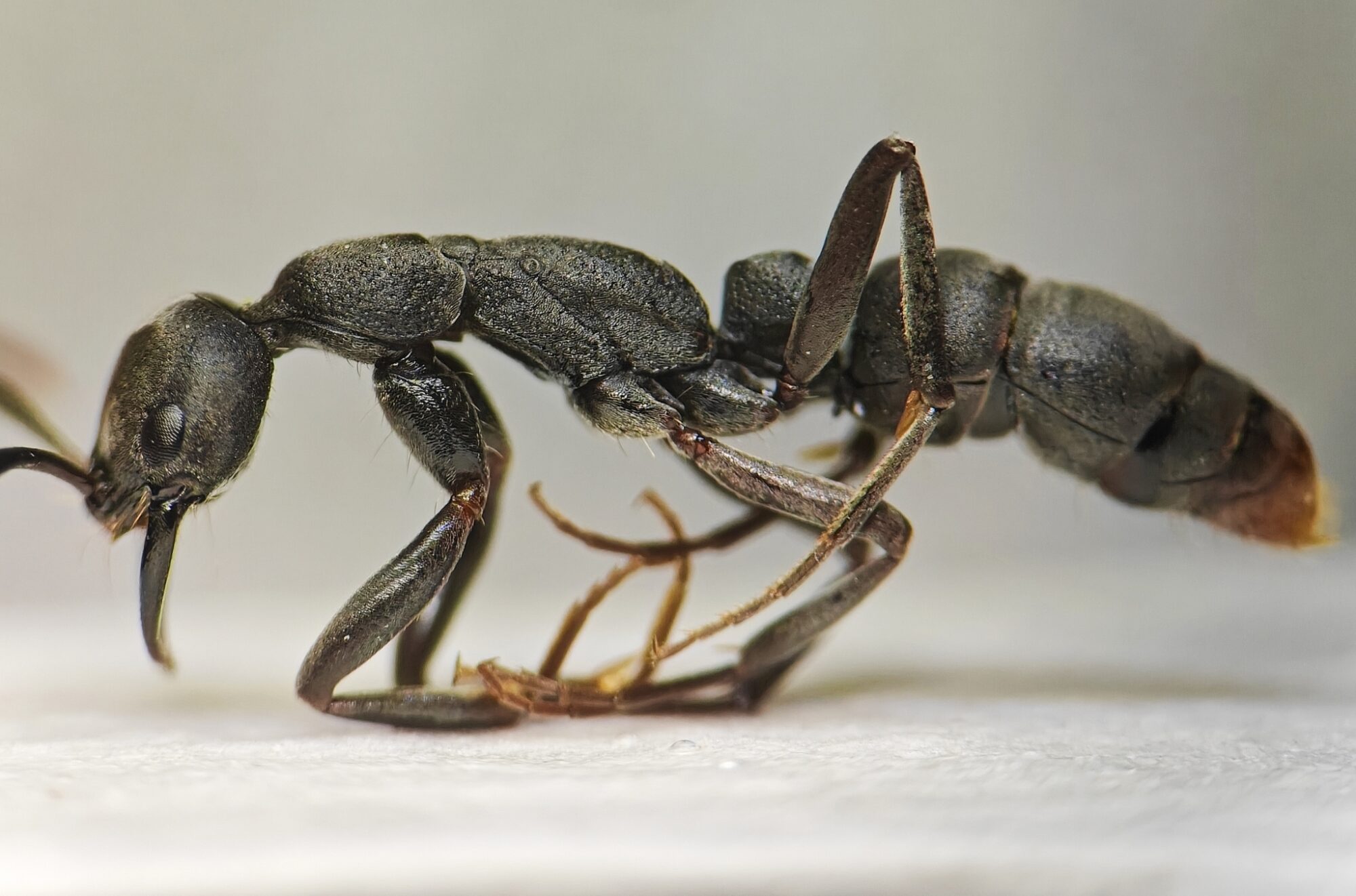
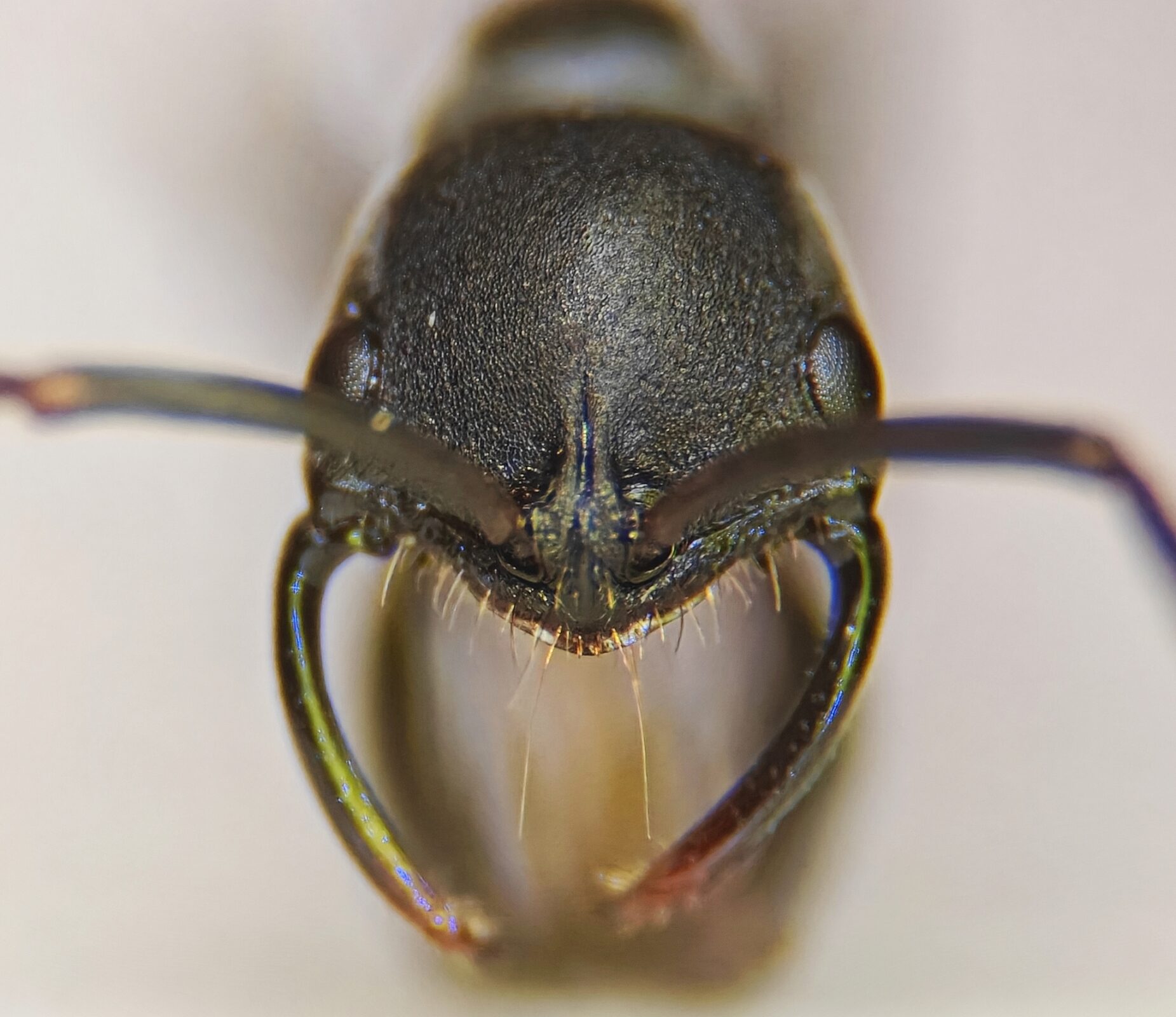
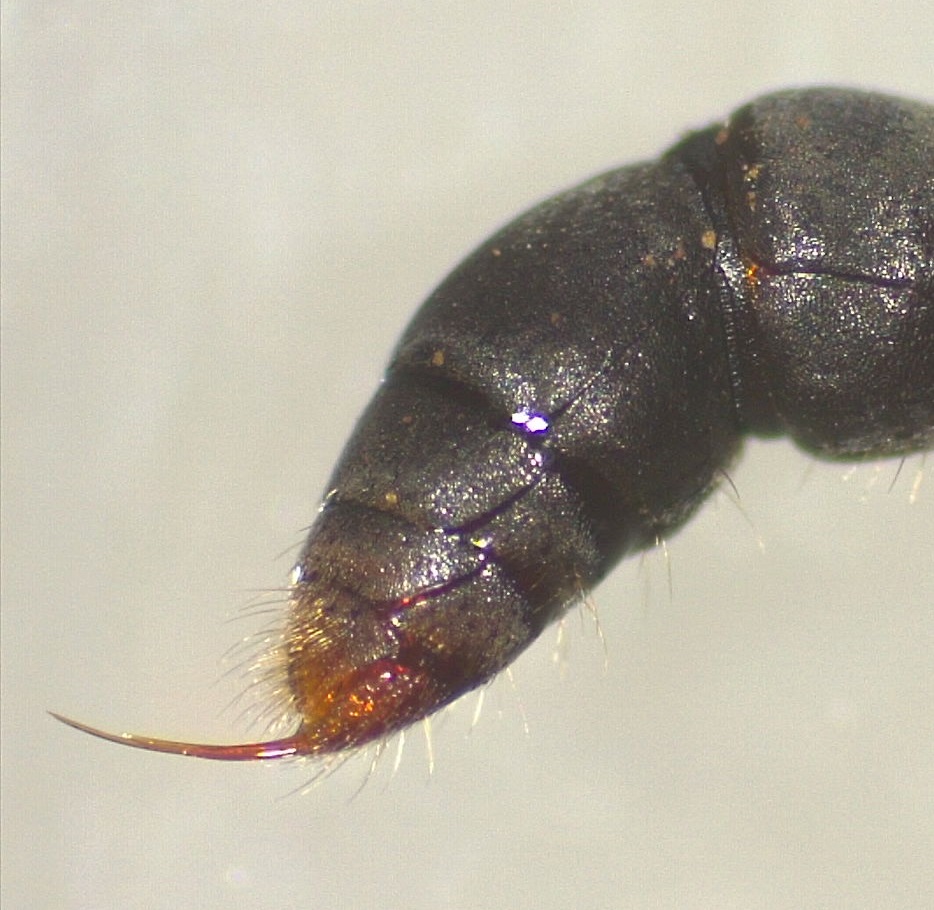
This long and very black ant skitters about on tree trunks, rock walls and sidewalks, often singly or in small numbers, and sometimes in processions that look quite orderly. Colonies tend to include just two or three dozen individuals. Phillips (1935) wrote that “Leptogenys ants have long, slender, wicked-looking mandibles, probably particularly effective in piercing the joints of crustacean armour.” This ant also sports a wicked-looking stinger, though there are no reports of it being wielded against humans.
Impacts
- Its large size and habit of nesting in the sheaves of banana trees and pineapple plants may lead one to think of it as an agricultural pest. However there doesn’t seem to be any evidence of detrimental effects owing to this ant’s presence.
History
- This ant was first noted in the Islands by the Reverend Thomas Blackburn on Oʻahu in the 1870s (Smith 1879). It was probably already distributed amongst all the main islands at that time. It wasn’t recorded on Kahoʻolawe however until 2003.
Resources/References
- Leptogenys falcigera – AntWiki
- Huddleston, E. W. & Fluker, S. S. 1968b. Distribution of Ant Species of Hawaii. Proceedings of the Hawaiian Entomological Society 20(1): 45–69.
- Perkins, R. C. L. 1913. Fauna Hawaiiensis – Introduction. Cambridge University Press, London. 1(4): 1–228.
- Phillips, J. S. 1935. The Biology, Distribution and Control of Ants in Hawaiian Pineapple Fields. Doctoral Thesis, University of Hawaii. 301 pp.
- Smith, F. 1879. Descriptions of new Species of Aculeate Hymenoptera collected by the Rev. Thos. Blackburn in the Sandwich Islands. The Journal of the Linnean Society (Zoology) 14: 674–685.
- Williams, F. X., Muir, F., Van Zwaluwenburg, R. H. & Swezey, O.H. 1931. Handbook of The Insects and Other Invertebrates of Hawaiian Sugar Cane Fields. Advertiser Publishing Co., Honolulu. 400 pp.