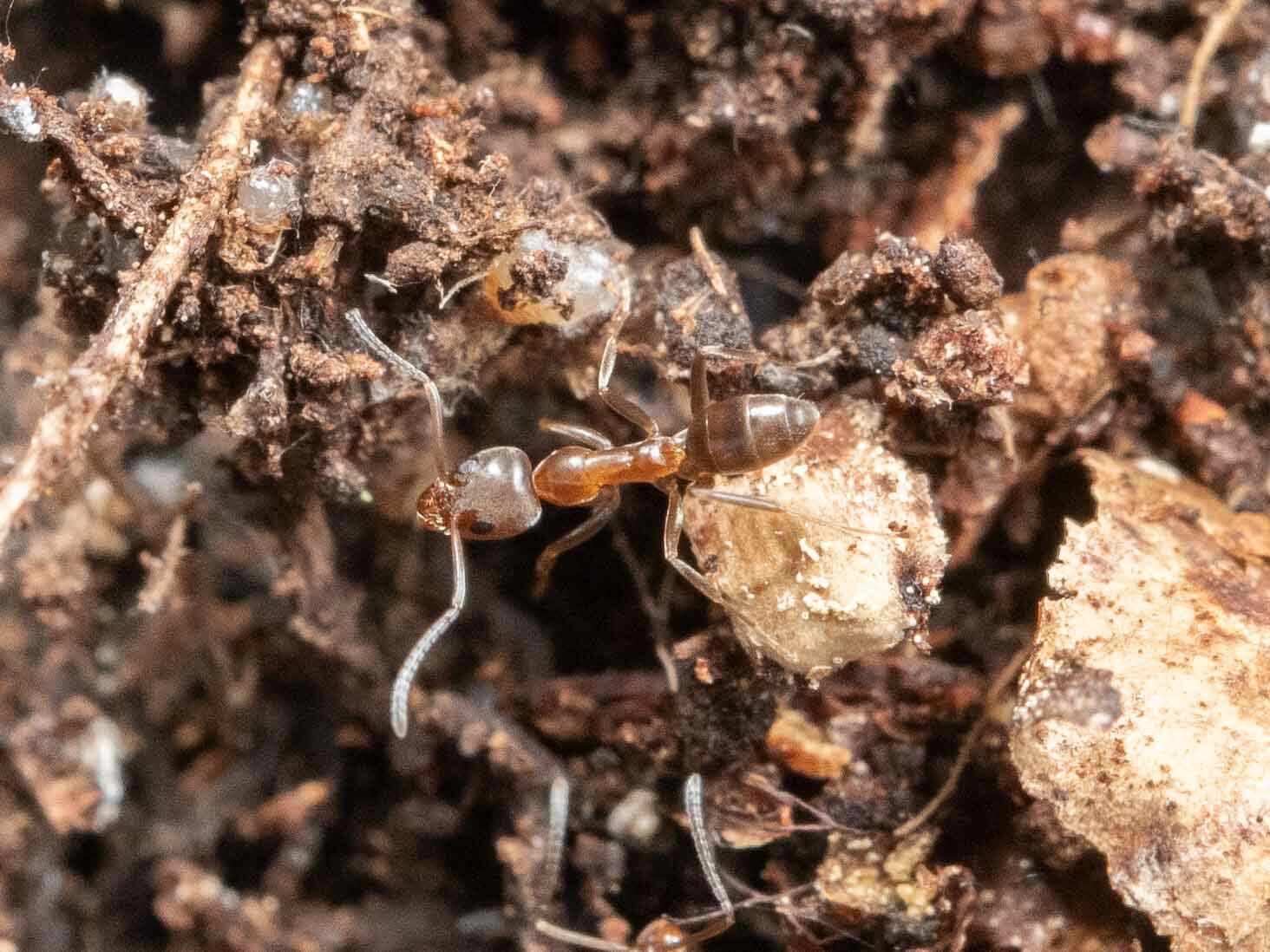
Argentine Ant
Linepithema humile
Species Info General
Other common names include: Sugar Ant, Brazilian Ant
This is an infamous invasive species deemed by Lowe et al. (2000) to be one of the world’s one hundred worst invasive pests, and one of the world’s five most invasive ants. On the U.S. mainland it is perhaps the most commonly encountered indoor pest ant from California to North Carolina and points south. Here in the Islands, though, it is unable to compete with the equally invasive African Big-headed Ant (Pheidole megacephala), which dominates from sea level to around 3,000 feet elevation. It is only above that elevation, where it becomes too cold for African Big-headed Ants, that the hardier Argentine Ant is able to thrive. Linepithema humile’s true threat here is to our high elevation native ecosystems and it is, indeed, a widespread and menacing pest in much of Haleakalā National Park (Krushelnycky & Reimer 1996). Among other impacts, it interferes with the native pollinators required to perpetuate our high elevation native flora because, as Krushelnyky & Reimer (1996) stated, “nothing with the predatory capability of ants helped shape native arthropod defense mechanisms.” Much effort has been put into studying this ant’s effects on native biodiversity, and in attempts to eradicate or at least mitigate its impact by controlling its numbers (Krushelnycky & Reimer 1996 & 1998, Krushelnycky et al. 2001, Krushelnyky, Loope & Joe 2004, Krushelnycky 2008, Krushelnycky et al. 2011, Krushelnycky 2019).
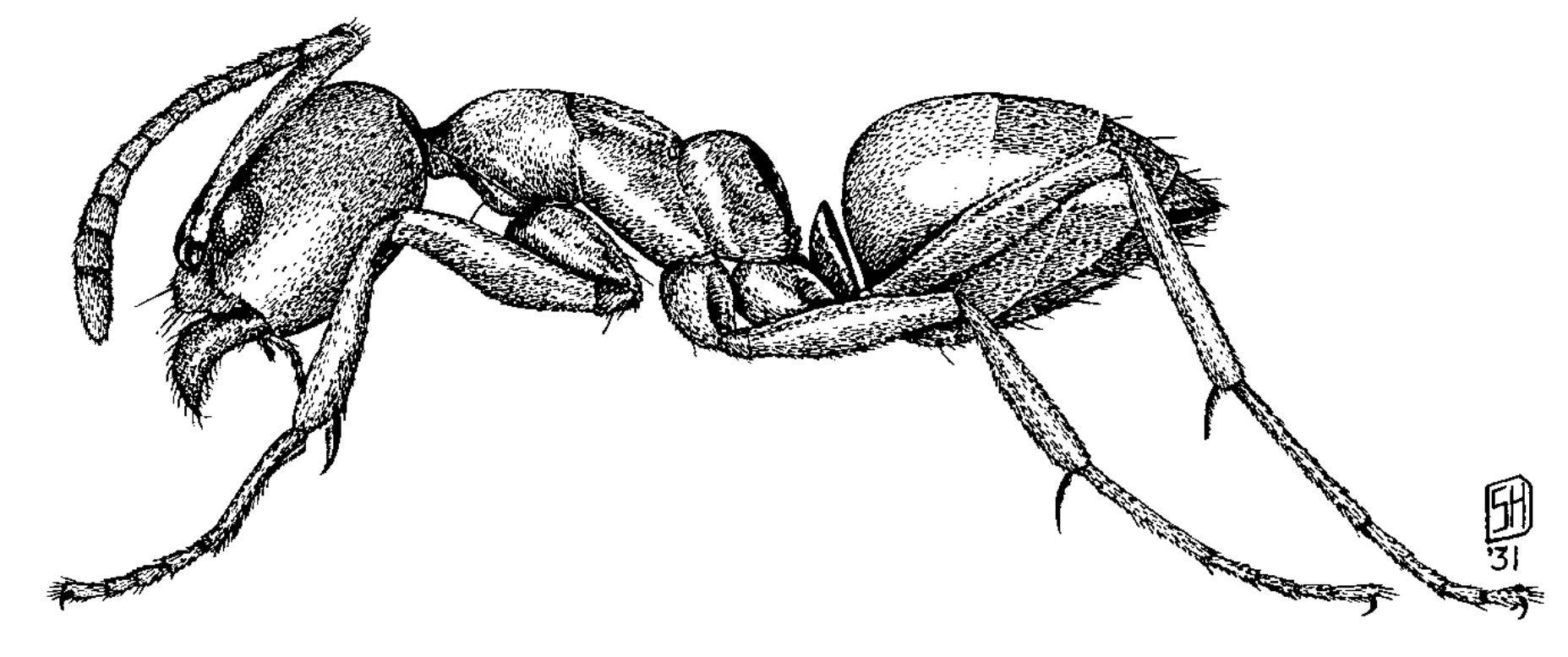
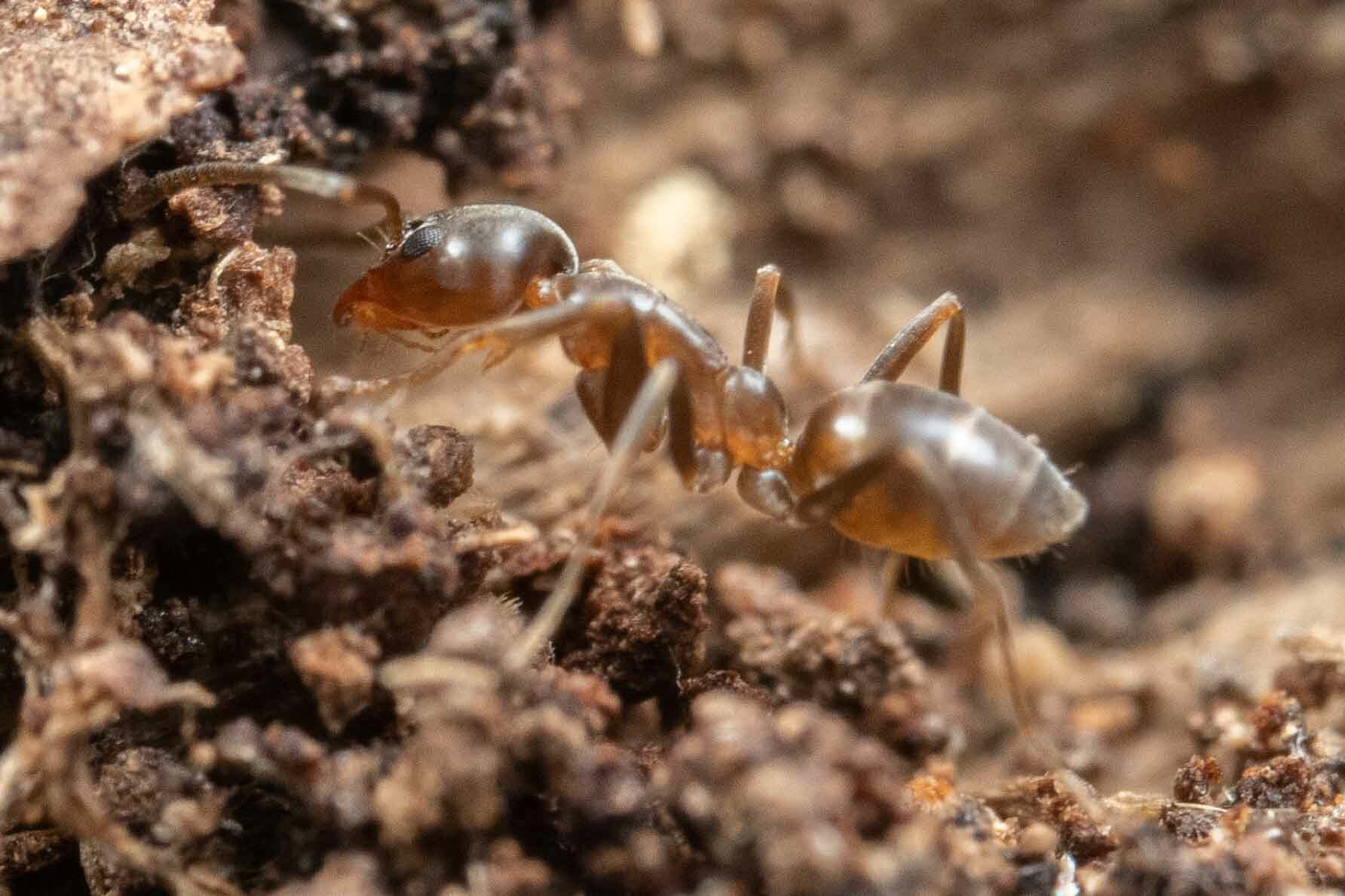
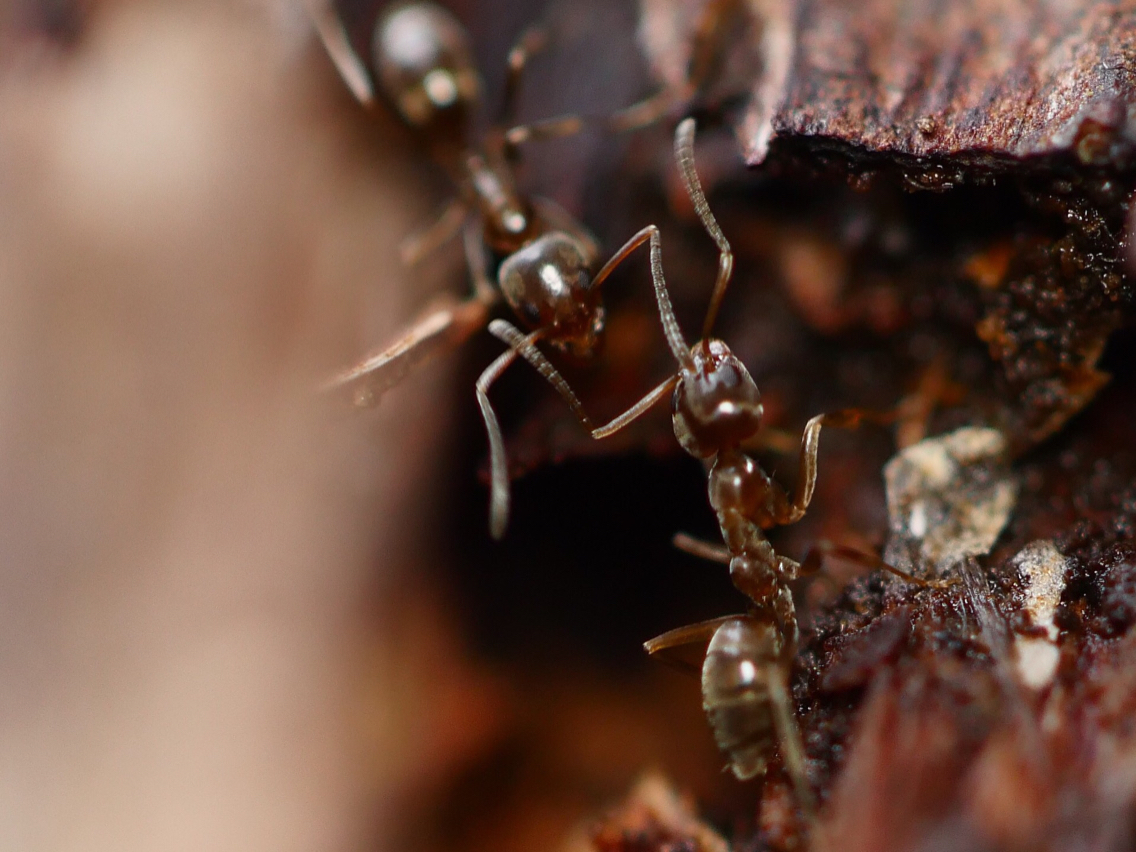
Identification/Description
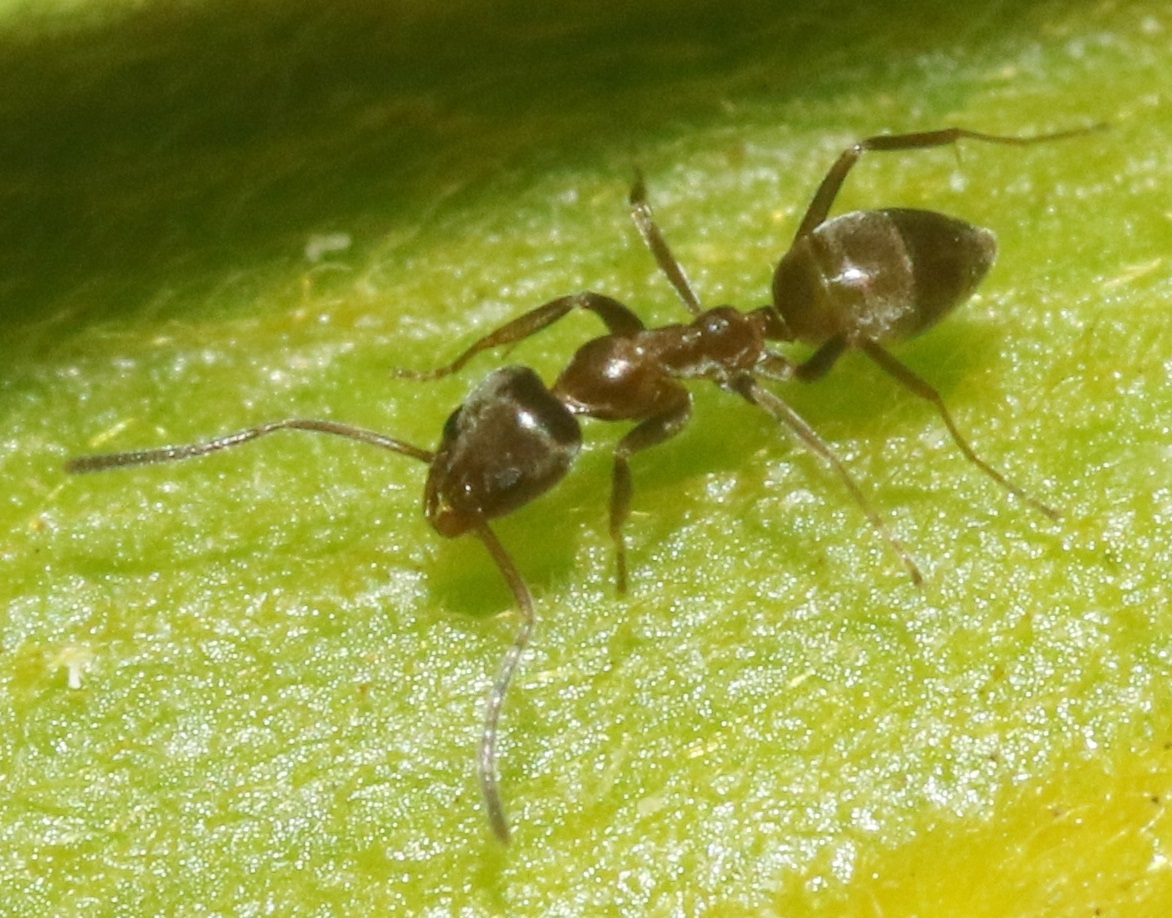
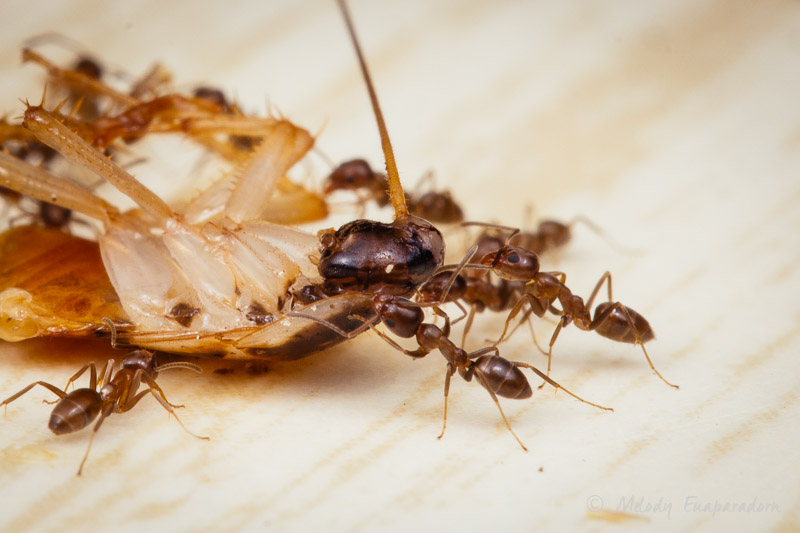
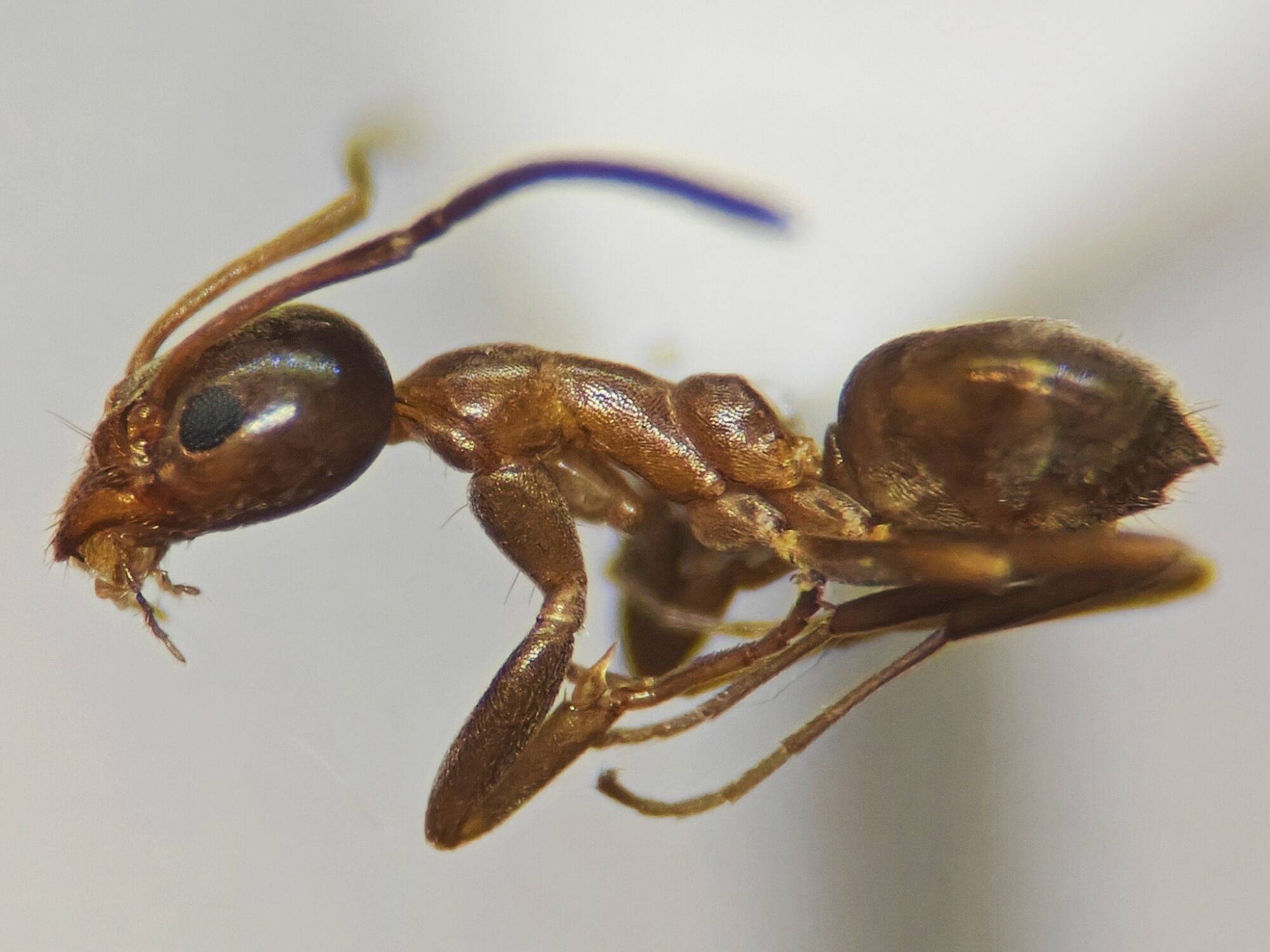
This is an average-sized, bland brownish ant that can be found in very large numbers in the proper habitat at higher elevations. Though fond of highly disturbed areas, it is readily found in largely intact native landscapes.
Impacts
- This ant poses a serious threat to native biodiversity in upper elevation areas of Maui such as Haleakalā National Park.
- Reports of this ant as an indoor pest are hard to come by, but would likely be entirely restricted to higher elevation homes in, say, Upper Kula above 3,000 feet elevation.
History
- Linepithema humile was first detected in the Islands in 1940 (Zimmerman 1941) at Fort Shafter in Honolulu. It continued to spread on Oʻahu through the 1950s, with Beardsley (1960) reporting “that during the past several years this ant has considerably extended its range in sugar cane fields both at Ewa and Waialua, Oahu”. In 1950 Argentine Ants were found at a location above Makawao on Maui that was “overrun by the ants” (Eckert 1951). Ito (1957) made the first report of Argentine Ant on Lānaʻi, in October 1955, and the first detection on Molokaʻi appears to have been in the 1990s (Nishida 1997). In 1969 it was found “approximately ½ mile into the native forest at Waikamoi, Maui, 4000 ft. elevation” (Hardy 1970). Medeiros, Loope & Cole (1986) reported that it was found at least as high in 9,285 feet in Haleakalā National Park.
- Despite the above, Argentine Ant can no longer easily (if ever) be found at low elevations anywhere in the Islands. Though Linepithema humile has been detected on all six of the main Hawaiian Islands, it is an open question as to whether it persists on any islands other than Maui and Hawaiʻi. Gillespie & Reimer (1993) wrote that Linepithema humile “no longer occurs below 600m [1970 feet]” and “It is likely that [this species] is only successful above 910m [2,985 feet] in the Hawaiian Islands”. Reimer, Beardsley & Jahn (1990) reported that Linepithema humile “does not thrive in areas of heavy rainfall ( > 100 inches annually)”. Today, there seems to be a fairly consistent DMZ somewhere between 2900 feet and 3500 feet where the role of “dominant ant” transitions, with Pheidole megacephala dominant below that line, and Linepithema humile dominant above it.
Resources/References
- Linepithema humile – AntWiki
- Beardsley, J. W. 1960. [Notes & Exhibitions]. Iridomyrmex humilis (Mayr). Proceedings of the Hawaiian Entomological Society 17(2): 173.
- Eckert, C. F. 1951. [Notes & Exhibitions]. Argentine Ant. Proceedings of the Hawaiian Entomological Society 14(2): 222.
- Gillespie, R. G. & Reimer, N. 1993. The Effect of Alien Predatory Ants (Hymenoptera: Formicidae) on Hawaiian Endemic Spiders (Araneae: Tetragnathidae). Pacific Science 47(1): 21–33.
- Hardy, D. E. 1970. [Notes & Exhibitions]. Iridomyrmex humilis (Mayr). Proceedings of the Hawaiian Entomological Society 20(3): 488.
- Ito, K. 1957. [Notes & Exhibitions]. Iridomyrmex humilis (Mayr). Proceedings of the Hawaiian Entomological Society 16(2): 185, 187.
- Krushelnycky, P. D. 2008. Developing Techniques for Invasive Ant Control: A Test of 0.5 HP Granular Ant Bait on Argentine Ants at Haleakala Nation Park. Report to Hawaii Invasive Species Council for PCSU contract 438221. 15 pp..
- Krushelnycky, P. D. 2019. Evaluation of water-storing granules as a promising new baiting tool for the control of invasive ants in Hawaii. Report of Year 1 Activities to the Hawaii Invasive Species Council. 40 pp.
- Krushelnycky, P. D., Haines, W., Loope, L. L. & Van Gelder, E. 2011. The Haleakala Argentine ant project: a synthesis of past research and prospects for the future. Pacific Cooperative Studies Unit Technical Report 173. University of Hawaiʻi at Mānoa, Department of Botany. Honolulu, HI. 127 pp.
- Krushelnycky, P. D., Hodges, C. S. N., Medeiros, A. C. & Loope, L. L. 2001. Interaction Between the Hawaiian Dark-rumped Petrel and the Argentine Ant in Haleakalā National Park, Maui, Hawaiʻi. Studies in Avian Biology 22: 243–246.
- Krushelnycky, P. D., Loope, L. L. & Joe, S. M. 2003. Limiting spread of a unicolonial invasive insect and characterization of seasonal patterns of range expansion. Biological Invasions 6: 47–57.
- Krushelnycky, P. D. & Reimer, N. J. 1996. Efforts at control of the Argentine ant in Haleakala National Park, Maui, Hawaii. Cooperative National Park Resources Studies Unit – University of Hawaiʻi at Manoa Technical Report 109: 1–33.
- Krushelnycky, P. D. & Reimer, N. J. 1998. Bait Preference by the Argentine Ant (Hymenoptera: Formicidae) In Haleakala National Park, Hawaii. Entomology Papers from Other Sources 64: 1482–1487.
- Lowe S., Browne M., Boudjelas S., De Poorter M. 2000. 100 of the World’s Worst Invasive Alien Species. A selection from the Global Invasive Species Database. Published by The Invasive Species Specialist Group (ISSG) a specialist group of the Species Survival Commission (SSC) of the World Conservation Union (IUCN), 12pp. Updated November 2004.
- Medeiros, A. C., Loope, L. L. & Cole, F. R. 1986. Distribution of Ants and Their Effects on Endemic Biota of Haleakala and Hawaii Volcanoes National Parks: A Preliminary Assessment. Haleakala National Park and Colby College (Waterville, MN) Department of Biology : 39–52.
- Nishida, G. M. 1997. Hawaiian Terrestrial Arthropod Checklist (Third Edition). Hawaii Biological Survey Contribution No. 97-016, Bishop Museum Technical Report No. 12.
- Reimer, N. J., Beardsley, J. W. & Jahn, G. 1990. Pest Ants in the Hawaiian Islands. In Vander Meer, R. K., Jaffe, K. & Cedeno, A. (Editors). Applied Myrmecology – A World Perspective, Westview Press, Boulder, San Francisco, Oxford. pp. 40–50.
- Zimmerman, E. C. 1941. Argentine ant in Hawaii. Proceedings of the Hawaiian Entomological Society 11(1): 108..