Graceful Twig Ant
Pseudomyrmex gracilis
Species Info General
Other common names include: Mexican Elongate Twig Ant, Slender Twig Ant, Big Bicolored Slender Twig Ant
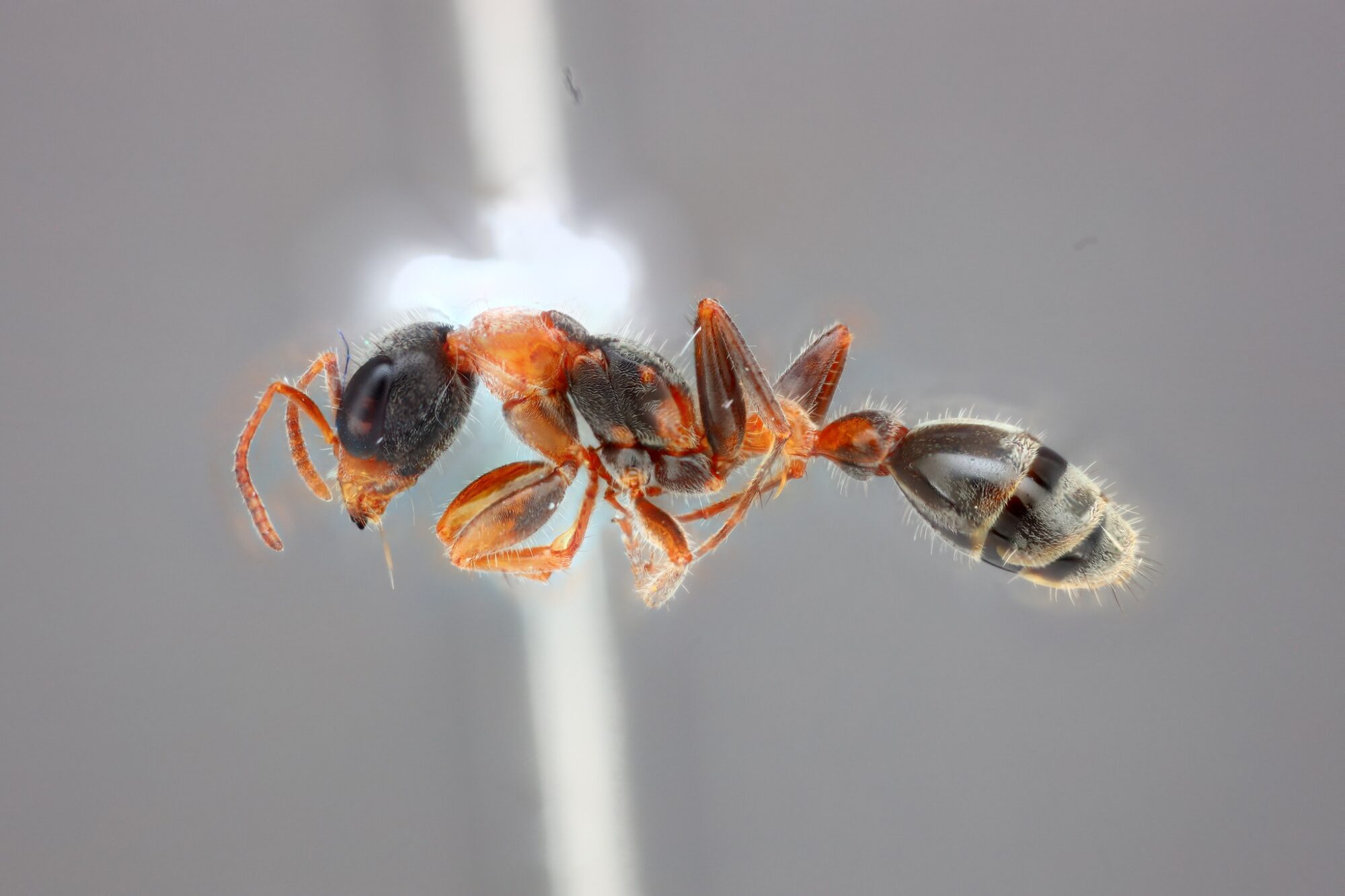
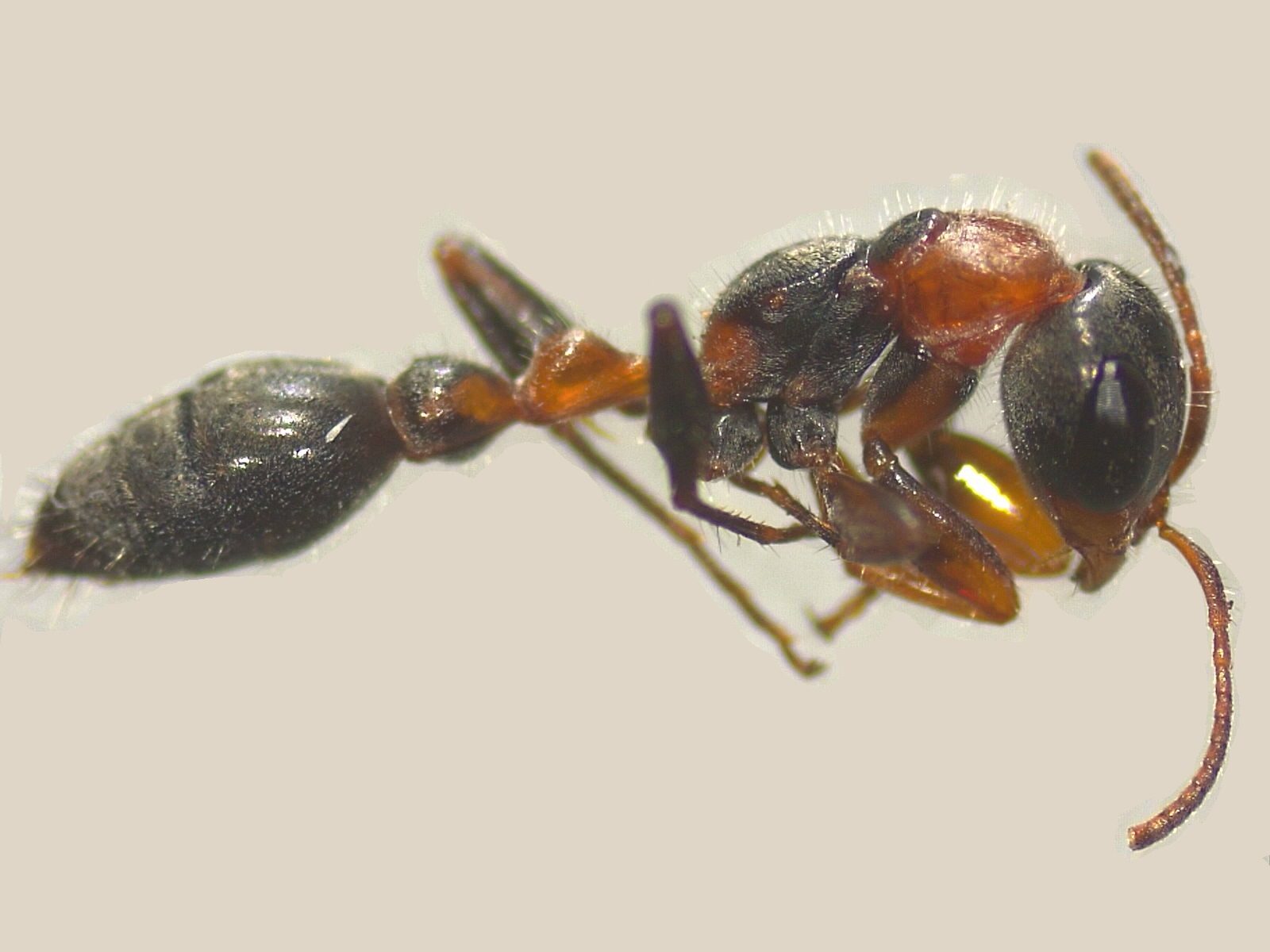
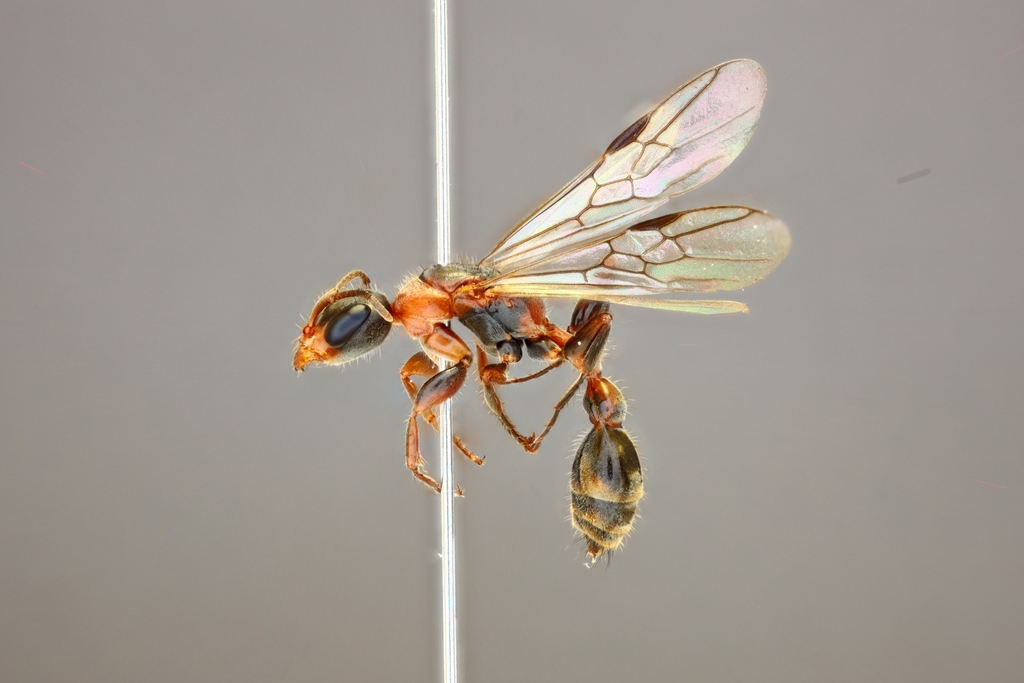
This large rusty-red-and-black ant is often mistaken for some sort of wasp – an impression that highlights the close evolutionary relationship between ants and wasps. Indeed, this ant comes with a rather powerful sting, though as a colleague at Oʻahu Invasive Species Committee described it, the sting is “definitely not as painful as a wasp or bee sting” (J. Miller, pers. comm.). The common name “twig ant” refers to its habit of occupying hollow dead twigs up in trees. Its sting and arboreal habit leads to interesting behaviors when it falls out of trees, as was eloquently elaborated upon by Deyrup (2017) who wrote about the several members of this genus found in Florida:
“All Florida species of Pseudomyrmex are equipped with a sting but are generally reluctant to use it, even on a myrmecologist who is breaking into a nest. . . . Our species do sting readily if seized or slapped, and Floridians are often stung on the neck by one of these ants that has become dislodged from its home on a plant, and is climbing up the nearest tall object. The ascent of a human by Pseudomyrmex . . . results in the ant climbing the back of the human, usually first hitting bare skin on the back of the neck. One can brush off the ant with a quick flick of the fingers, but a slapping reaction gives the ant a chance to sting, sometimes more than once. Most people seem to get a sensation of pain that starts slowly, builds over a few seconds to half a minute, and then begins to fade after a few minutes. A small number of people get persistent swelling, and I have heard of one case of anaphylactic shock. Considering that some species are very abundant, hundreds of Floridians must get stung by some species of Pseudomyrmex every month, without any lasting or traumatic effects. It is probably far safer to be outdoors with the stinging ants than indoors, glued to the TV, whose anxiety-raising stories cause all sorts of ulcers, heart attacks, stress-induced eating, and displacement activity in the form of domestic violence.” (Deyrup (2017)
Identification/Description
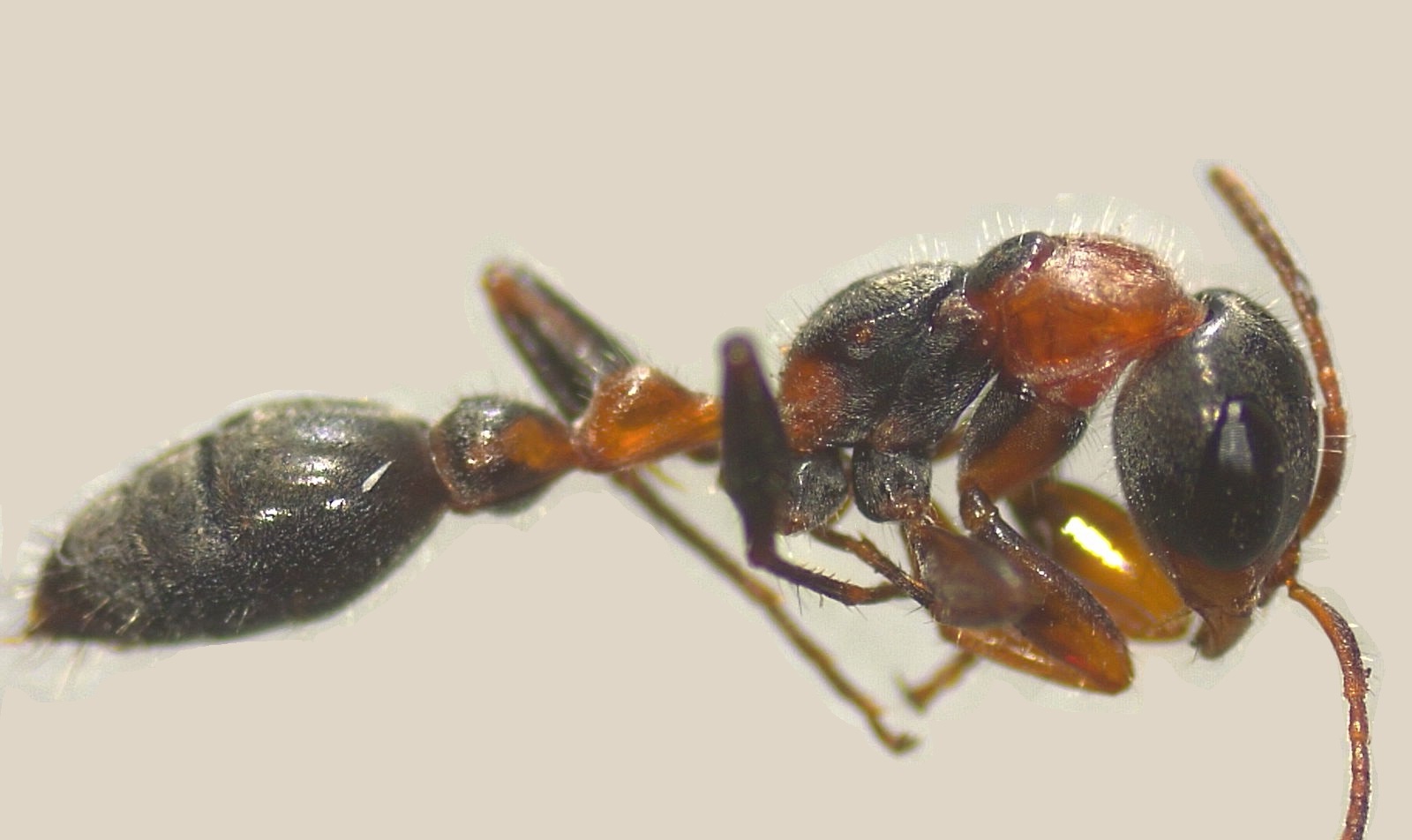
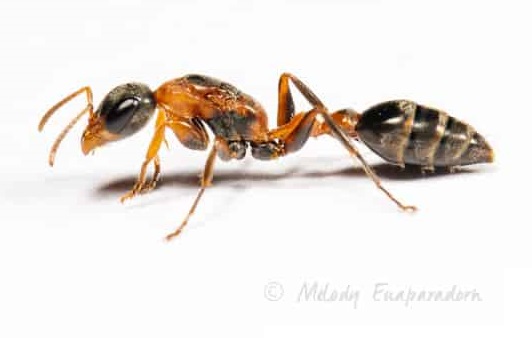
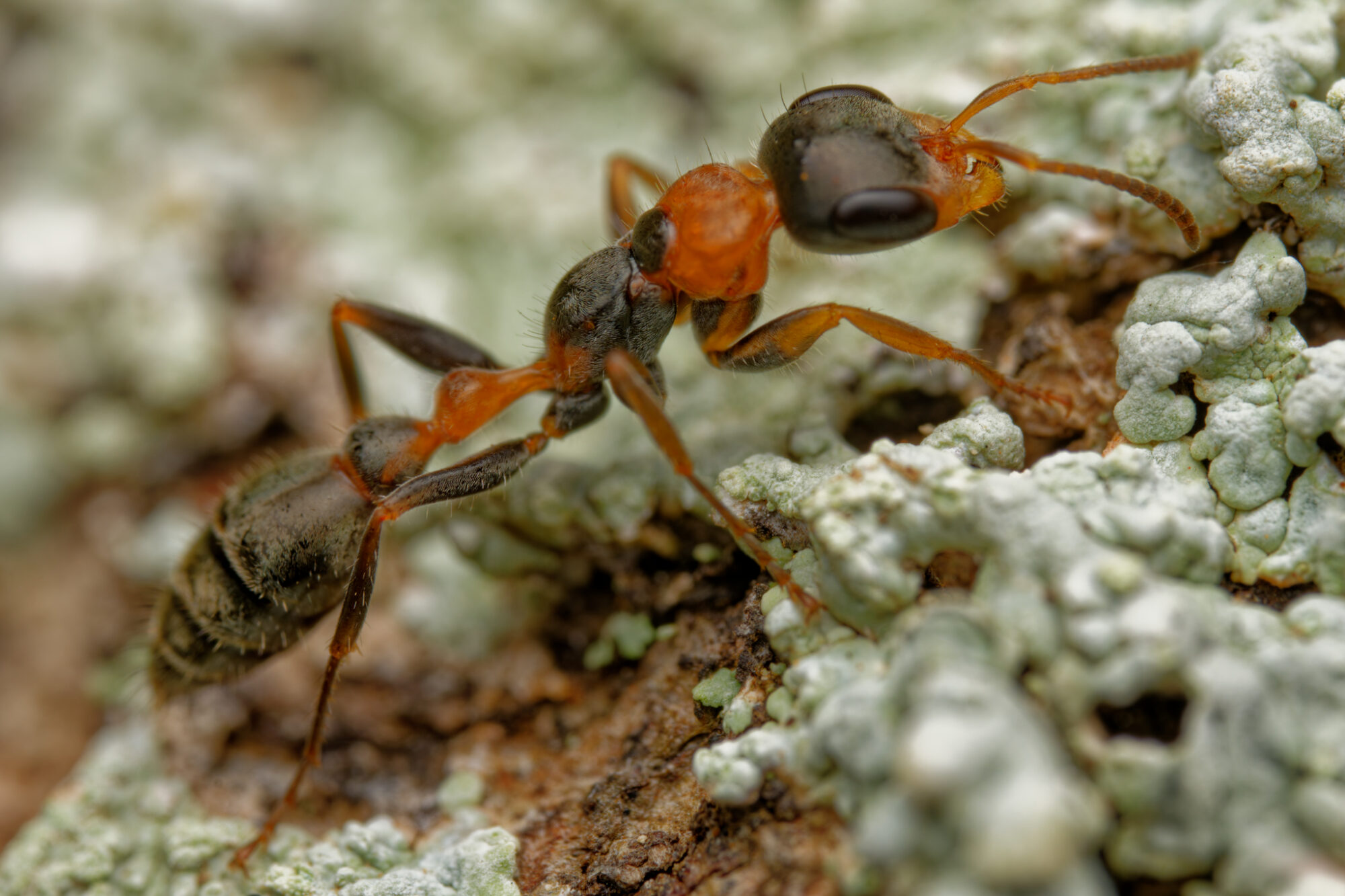
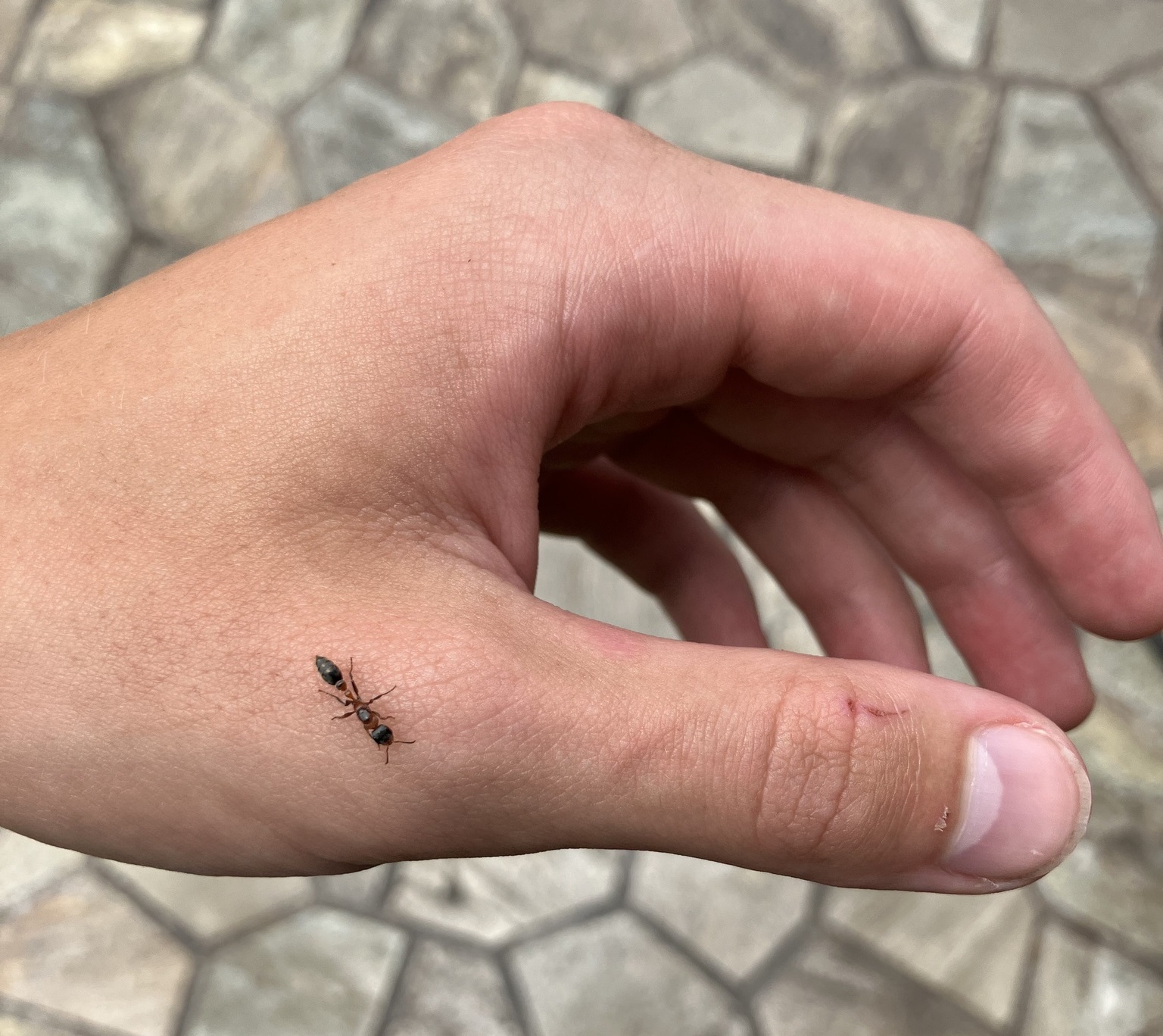
This is a large, long bicolored ant with gigantic eyes that is usually found wandering about solo. The winged queens and males have a very wasp-like appearance. A quick glance suggests a blackish ant, but more careful observation usually reveals variable rust-colored patches between the head and the gaster, both of which are usually quite dark. It is fond of kiawe trees, in the dead twigs of which it likes to make a nest. It often falls from trees in the wind and then exerts great effort to find its way back into a tree by climbing whatever vertical object it can find – fence posts, boulders, drinking fountains, picnic tables, your leg . . . It is commonly found at the highest point of such objects, searching in vain for an actual tree to climb.
Impacts
- Though not at all aggressive, this ant will sting if it gets on you and you irritate it: best to gently flick it off of you rather than slapping it.
- As described above, the sting is usually unpleasant but in the “it could be worse” category. Anaphylactic responses are not common but do occur.
History
- Graceful Twig Ants were first detected in the Islands in 1976 (Beardsley 1979). The first detections in Maui Nui were on Kahoʻolawe in 2003, Maui in 2012 and Molokaʻi in 2019 (Starr, Starr & Loope 2004, Starr, Starr & Tudor-Long 2021). There have been no reports yet from Lānaʻi.
Resources/References
- Pseudomyrmex gracilis – AntWiki
- Beardsley, J. W. 1979. [Notes & Exhibitions]. Pseudomyrmex gracilis mexicanus (Roger). Proceedings of the Hawaiian Entomological Society 23(1): 23.
- Deyrup, M. 2017. Ants of Florida – Identification and Natural History. CRC Press, Boca Raton, Florida. 423 pp.
- Starr, F., Starr, K. & Loope, L. L. 2004. New arthropod records from Kahoʻolawe. Bishop Museum Occasional Papers 79: 50–54.
- Starr, F., Starr, K. & Tudor-Long, M. 2021. New Ant Records (Hymenoptera; Formicidae) from Maui and Molokaʻi. Bishop Museum Occasional Papers 137: 19-20.