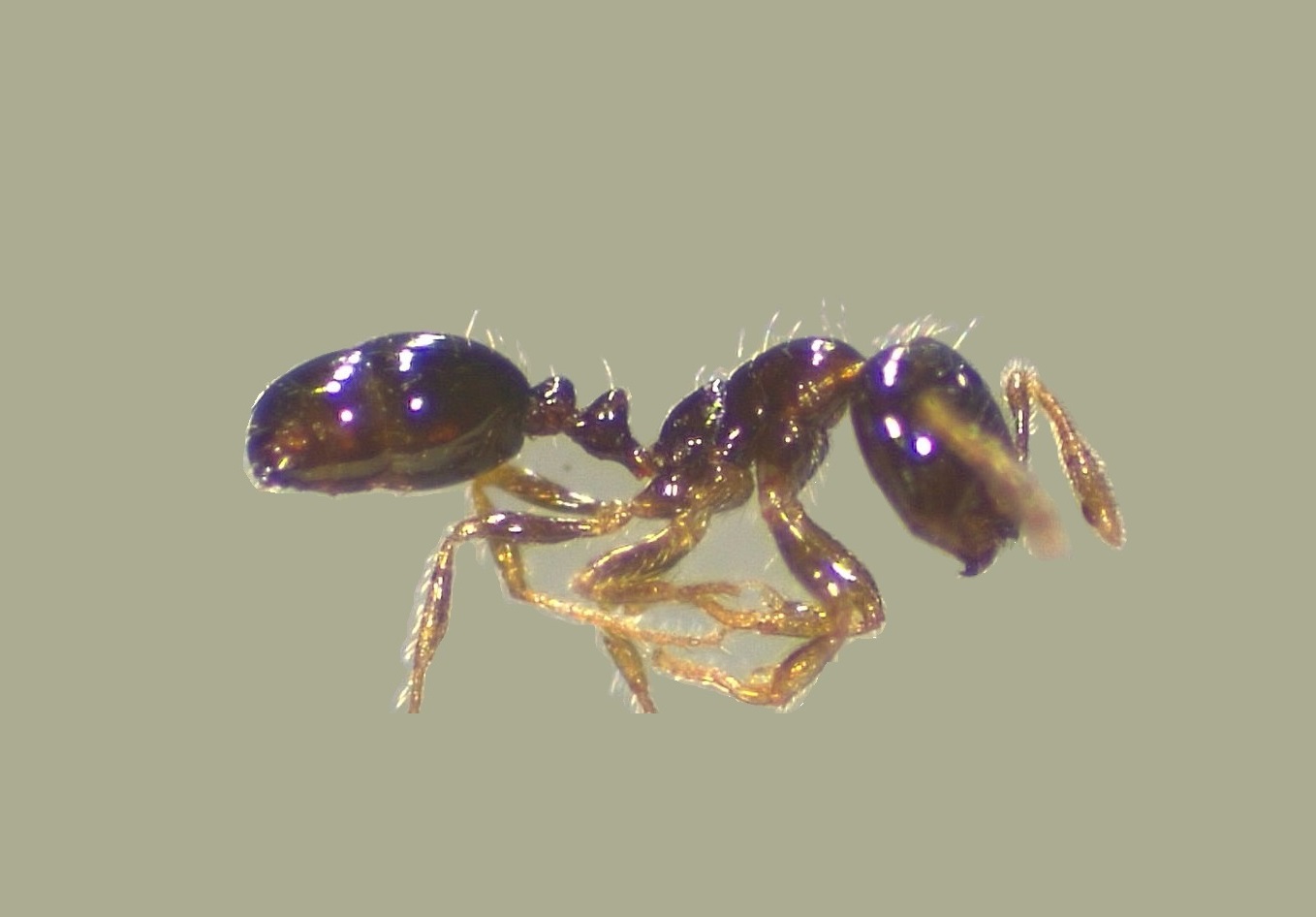
Mascarene Thief Ant
Solenopsis (papuana) mameti
Species Info General
Other common names include: Papuan Thief Ant
This ant is abundant in the Islands and unfortunately ranges into elevations with native forest. On Maui this ant is very common from Haʻikū and Heulo to Hāna, as well as along the windward side of West Maui. With respect to Oʻahu, Krushelnycky & Ogura-Yamada (2017) wrote that “S. papuana is the most common species that can be found under the canopy in the interior of mesic to wet forests, and appears to be nearly ubiquitous above elevations of roughly 1000 ft” – and these statements likely hold true for Maui and the upper elevations of Molokaʻi as well. Gillespie & Reimer (1993) called it “the most successful ant to invade native and disturbed wet forest” in the Islands and that it “may be the most serious threat to the native Hawaiian fauna among ant species currently extant on the islands.” Krushelnycky et al. (2017) found that this ant is often abundant “in the more shaded closed-canopy gulches typically favored by [Hawaiʻi’s endangered picture-winged Drosophila] flies and their host plants” where a study on a non-endangered sympatric species of picture-winged flies found that “ambient densities of these ants reduced the fly’s survival rate to adulthood by 58%”.
Sixty years after it was first detected here, this ant’s identity remains in flux. For twenty years after it was first detected it was simply referred to as “Solenopsis ‘a’ ”. In 1990 it was reported that the identity of Solenopsis ‘a’ had been determined to be Solenopsis papuana, an ant found in much of the South Pacific from Papua New Guinea, New Caledonia and Fiji north to the Mariana Islands (Reimer 1992). However, Ogura-Yamada & Krushelnycky (2016) report that specimens they examined from the South Pacific “all differ substantially from those in Hawaii and are unlikely to be conspecific with the Hawaiian species”. It has been suggested that the species we’ve been calling Solenopsis papuana here in Hawaiʻi for the past thirty years is actually Solenopsis mameti (Krushelnycky pers. comm. 2026), an ant first collected on the island of Mauritius in the Mascarene Islands east of Madagascar.
.

Identification/Description
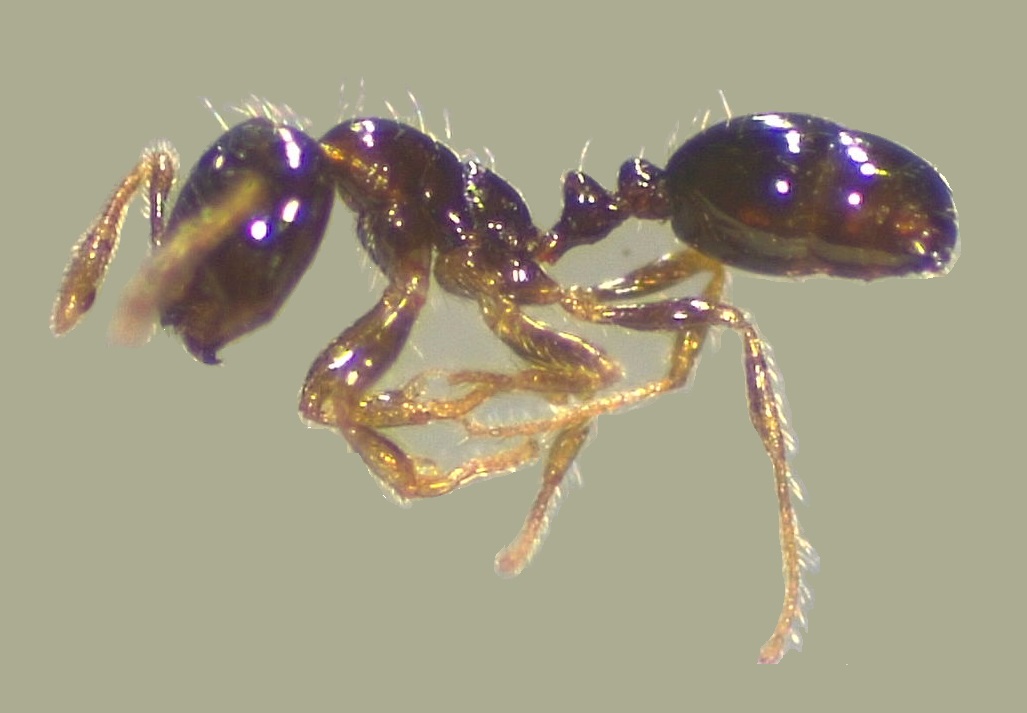
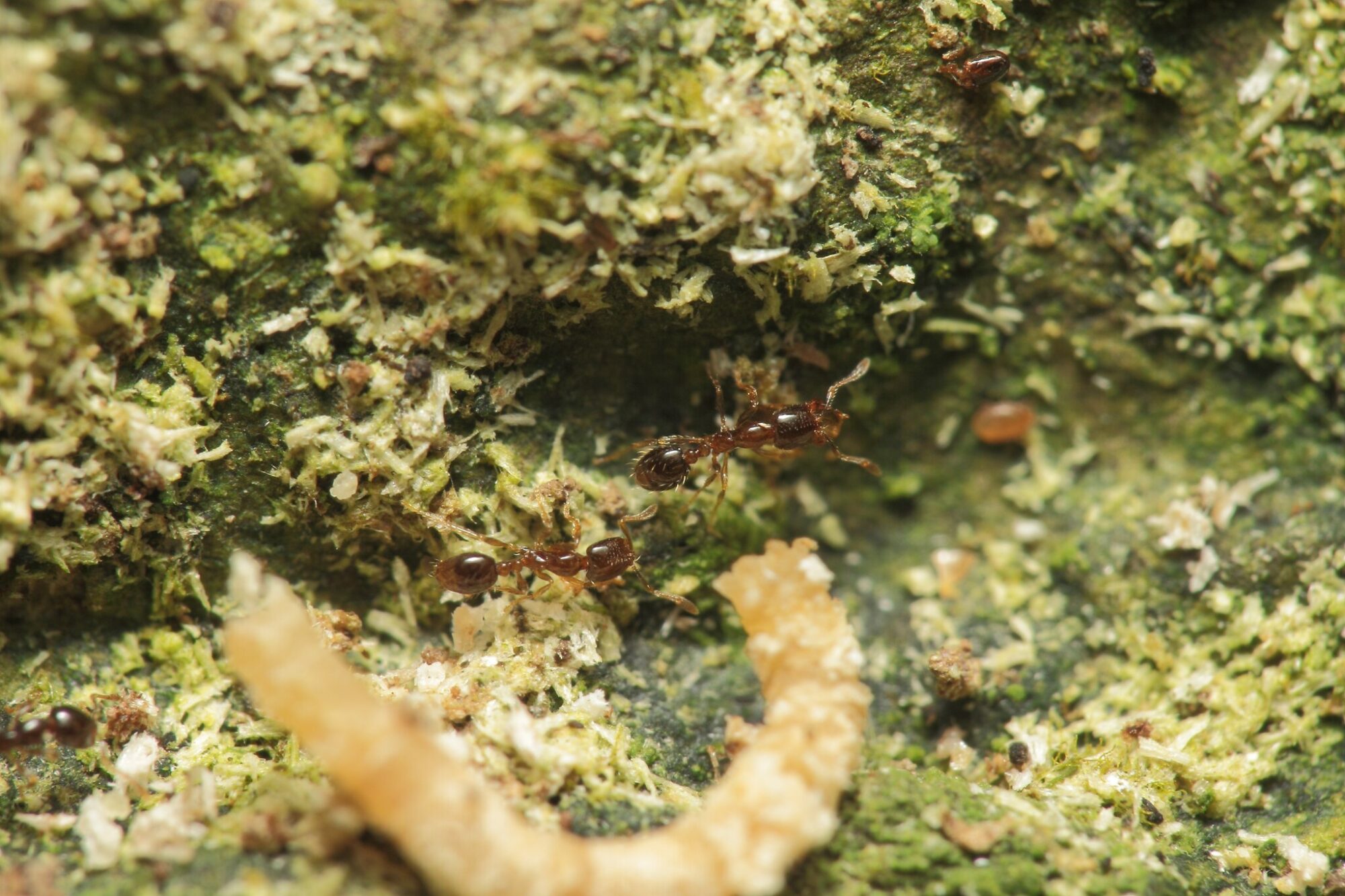
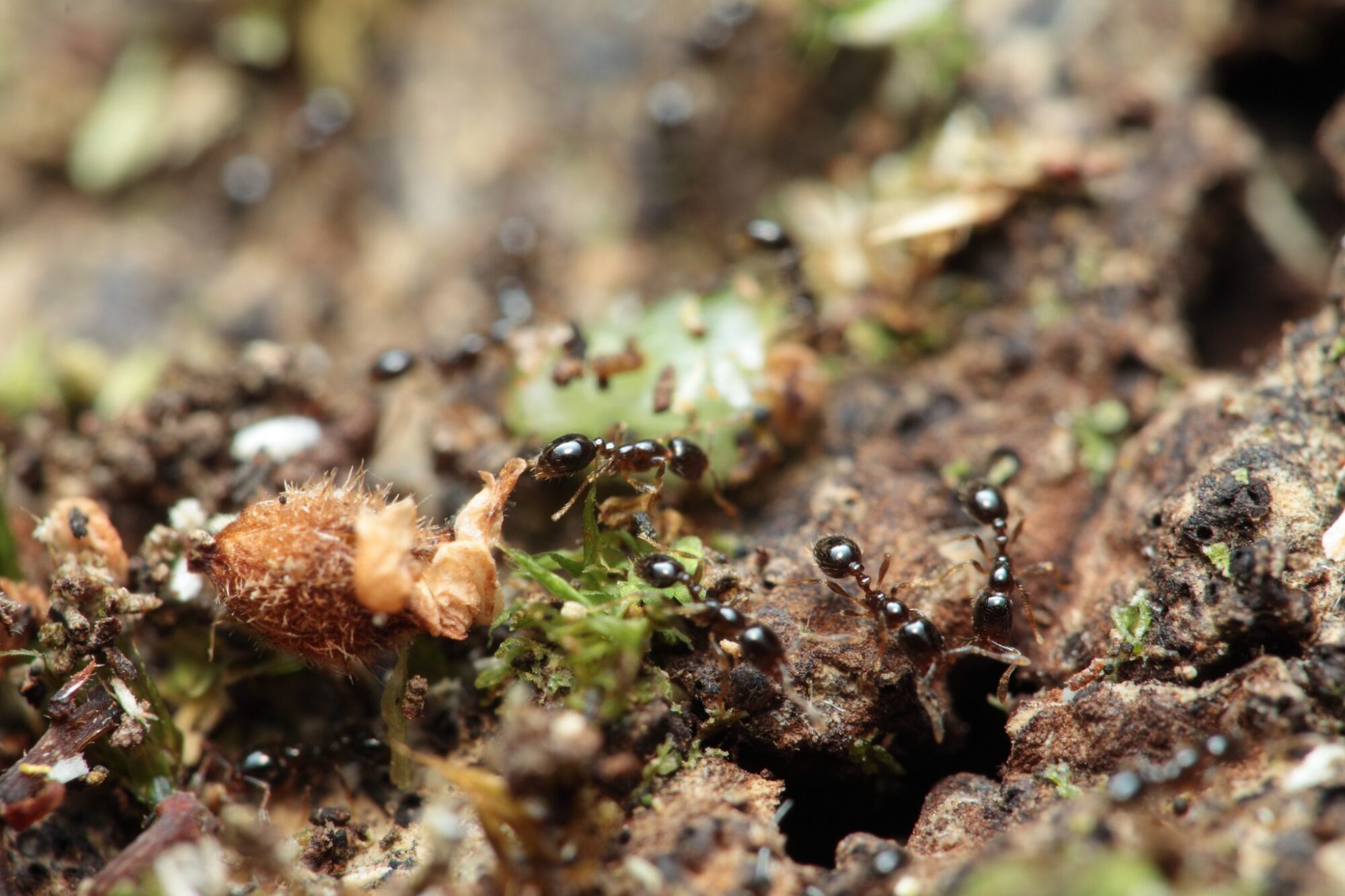
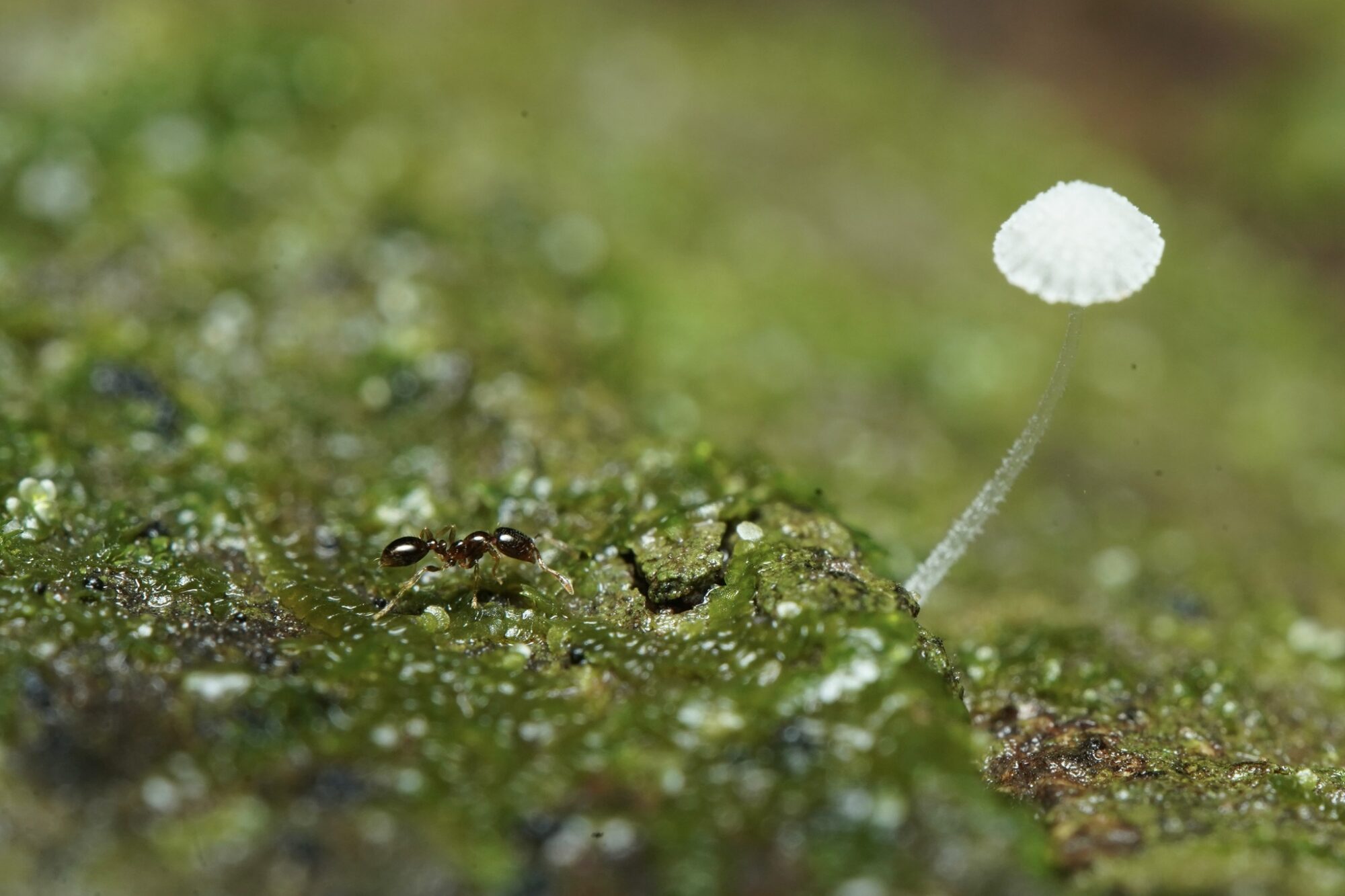
This is a very small, slow-moving concolorous dark ant that recruits to baits in impressive numbers – but is probably inconspicuous if you’re not taking the time to look for it. To the naked eye it is similar to Flower Ants (Monomorium floricola), the Queen’s Ant (Monomorium liliuokalanii) and some of our Sneaking Ants (Cardiocondyla spp.). Flower Ants are pretty distinctly bicolored however, and the other species listed are not found in high densities as tends to occur with this Thief Ant. Particularly in a wet, northshore forest, this is the only ant that answers to this description and also appears in large numbers.
Impacts
- As one of the few ants in the Islands that appears in high numbers in native forests, this ant poses a significant threat to our endemic (and often endangered) arthropods in mid-elevation forests.
- Reports of this ant as an indoor pest are hard to come by, but it is certainly to be found in the yards of those living in wet areas such as Waiheʻe Valley, Haʻikū, and from Huelo to Hāna.
History
- The ant’s presence in the Islands was first noted by Huddleston & Fluker (1968a, 1968b). As its identity at that time was uncertain, Huddeston & Fluker (1968b) referred to it as “Solenopsis ‘a’ ” (distinguishing it from another new small thief ant they were reporting in the same study, “Solenopsis ‘b’ ” – now known to be Solenopsis abdita, the Overlooked Thief Ant). It was quickly discovered to be widespread on Maui: “On large areas of Maui, this is the dominant and sometimes the sole ant species collected” (Huddleston & Fluker 1968b). In February 1967 it was found in Wailua, Hāna, Kaupō, Haʻikū, ʻIao Valley and Kahakuloa, six quite disparate locations on the island, demonstrating that it was, in fact, already widespread on Maui before it was even first noticed. It was first noted on Molokaʻi in 1986 (ref: UH Insect Museum specimens), and on Lānaʻi in 1988 (ref: UH Insect Museum specimens). It has not been recorded on Kahoʻolawe.
Resources/References
- Solenopsis mameti – AntWiki
- Solenopsis papuana – AntWiki
- Gillespie, R. G. & Reimer, N. 1993. The Effect of Alien Predatory Ants (Hymenoptera: Formicidae) on Hawaiian Endemic Spiders (Araneae: Tetragnathidae). Pacific Science 47(1): 21–33.
- Huddleston, E. W. & Fluker, S. S. 1968a. [Notes & Exhibitions]. Pheidole javana Mayr, Strumigenis [sic] rogeri Emery and Solenopsis (Diplorthoptrum). Proceedings of the Hawaiian Entomological Society 20(1): 5.
- Huddleston, E. W. & Fluker, S. S. 1968b. Distribution of Ant Species of Hawaii. Proceedings of the
- Hawaiian Entomological Society 20(1): 45–69.
- Krushelnycky, P. D. & Ogura-Yamada, C. S. 2017. Assessment of Effects of Solenopsis papuana on Arthropods in Oahu Forests. University of Hawaii, Department of Plant and Environmental Protection Sciences, Annual Statement of Work (Appendix ES-10).
- Krushelnycky, P. D., Ogura-Yamada, C. S., Kanegawa, K. M., Kaneshiro, K. Y., Magnacca, K. N. 2017. Quantifying the effects of an invasive thief ant on the reproductive success of rare Hawaiian picture-winged flies. Biological Conservation 215: 254–259.
- Ogura-Yamada, C. S. & Krushelnycky, P. D. 2016. Testing the Attractiveness and Efficacy of Baits for the Monitoring and Control of the Thief Ant, Solenopsis papuana. Proceedings of the Hawaiian Entomological Society 48: 95–108.
- Ogura-Yamada, C. S. & Krushelnycky, P. D. 2020. The effects of the invasive thief ant, Solenopsis papuana, on ground-dwelling invertebrates in mesic forests of Hawaiʻi. Journal of Insect Conservation 24: 151–162.
- Reimer, N. J. 1992. [Notes and Exhibitions]. Solenopsis papuana Emery (Hymenoptera: Formicidae). Proceedings of the Hawaiian Entomological Society 31: 23.