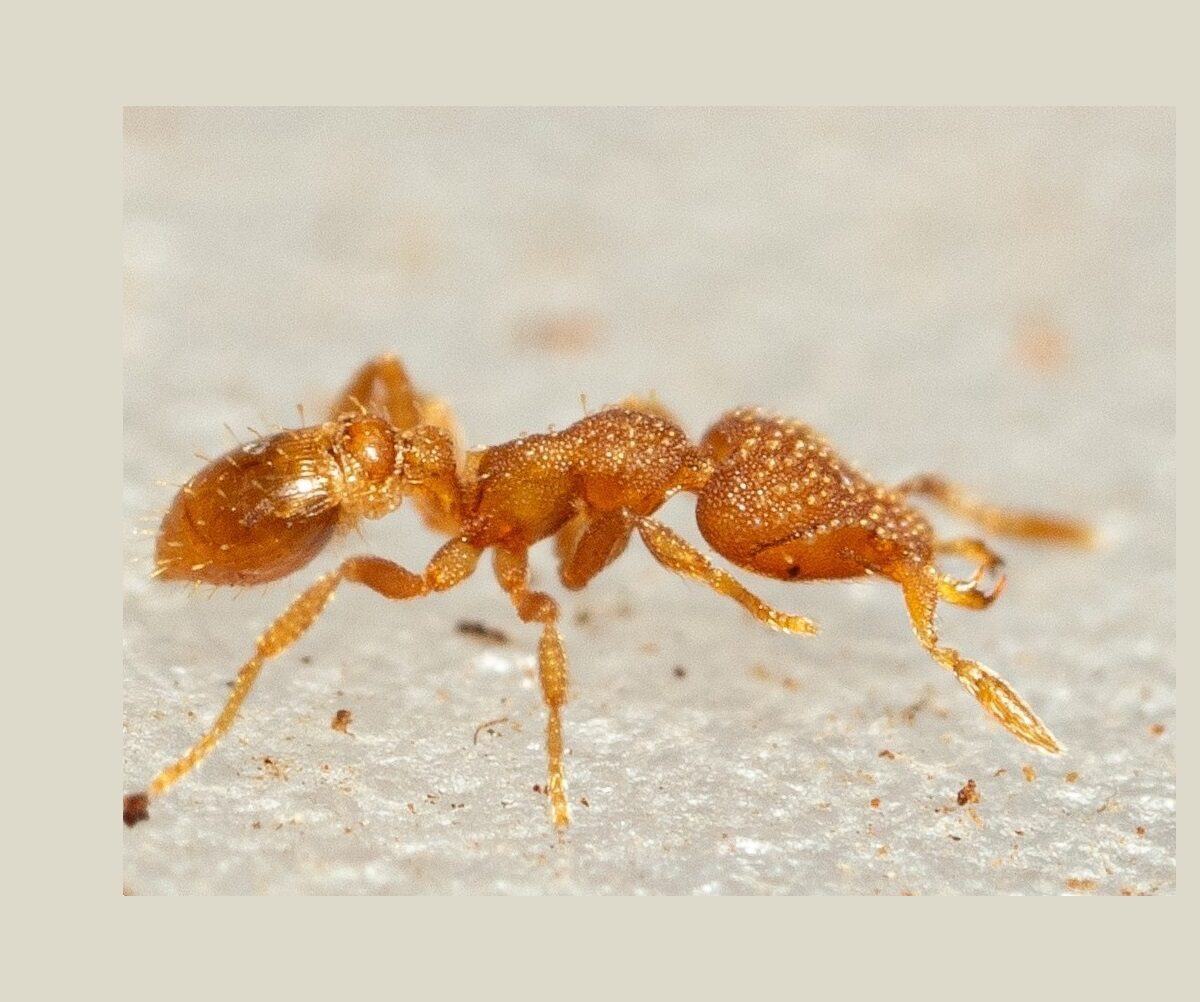
Mustache & Pygmy Snapping Ants
Strumigenys eggersi, S. emmae, S. godeffroyi, S. lewisi, S. membranifera, S. rogeri
Species Info General
Other common names include: Miniature Trap-jaw Ants, Dacetine Ants
The species in the genus Strumigenys are, by any objective measure, very handsome ants: “[S]triking in appearance” wrote Sarnat et al. (2019) and an “interesting and curious genus” according to Emery (1890). Sarnat et al. (2019) wrote that these “are diminutive predators that specialize in capturing minute arthropods. These huntresses most often nest and forage in leaf litter, topsoil and decaying wood.” Deyrup & Trager (1984) wrote: “Strumigenys species are small . . . slow-moving ants, almost never seen in the open. These ants are predators of small soil arthropods, particularly Collembola.” Collembola, commonly known as Springtails, are an incredibly abundant soil organism that serve as plentiful prey for these and many other soil-dwelling predators.
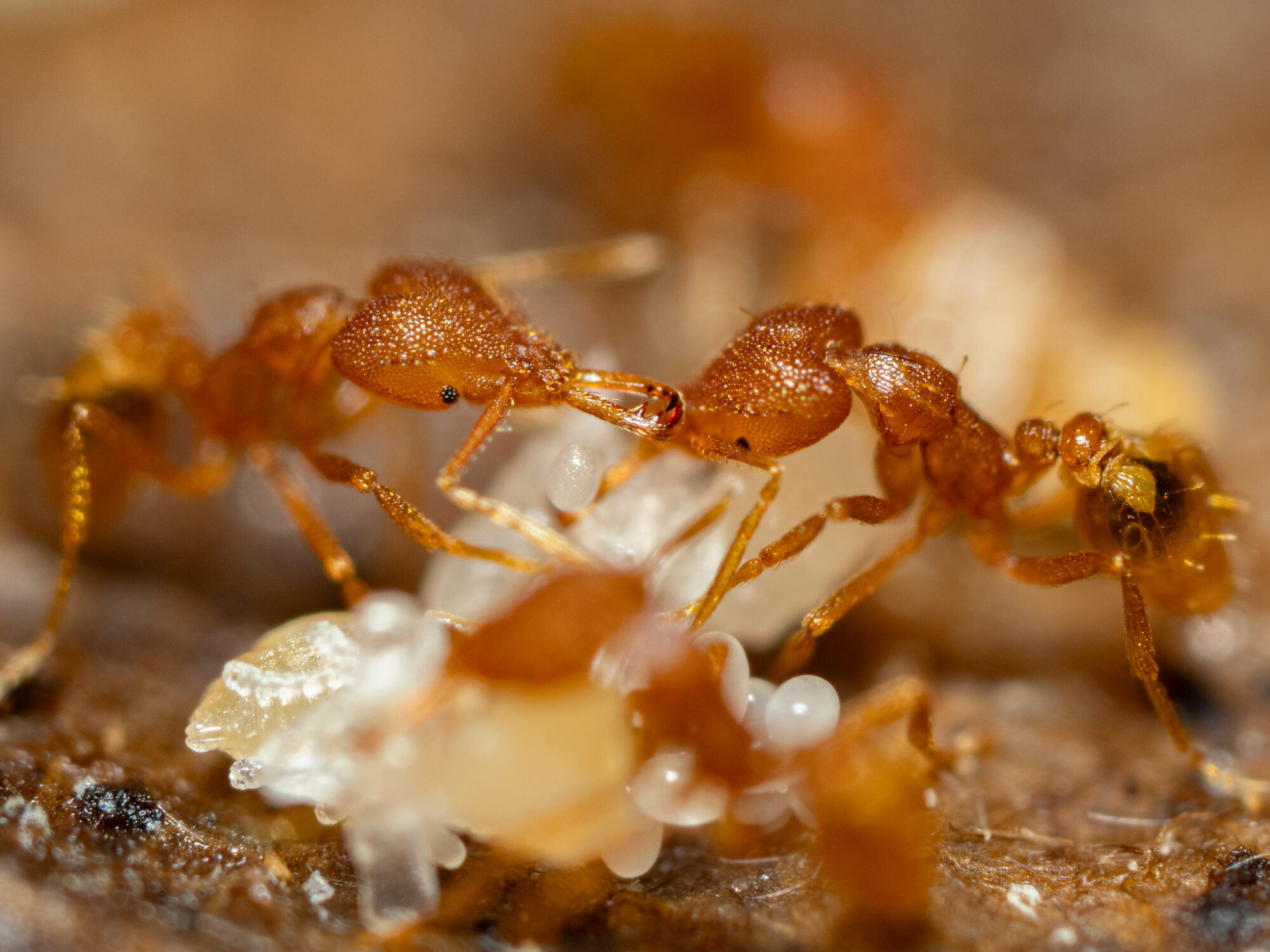
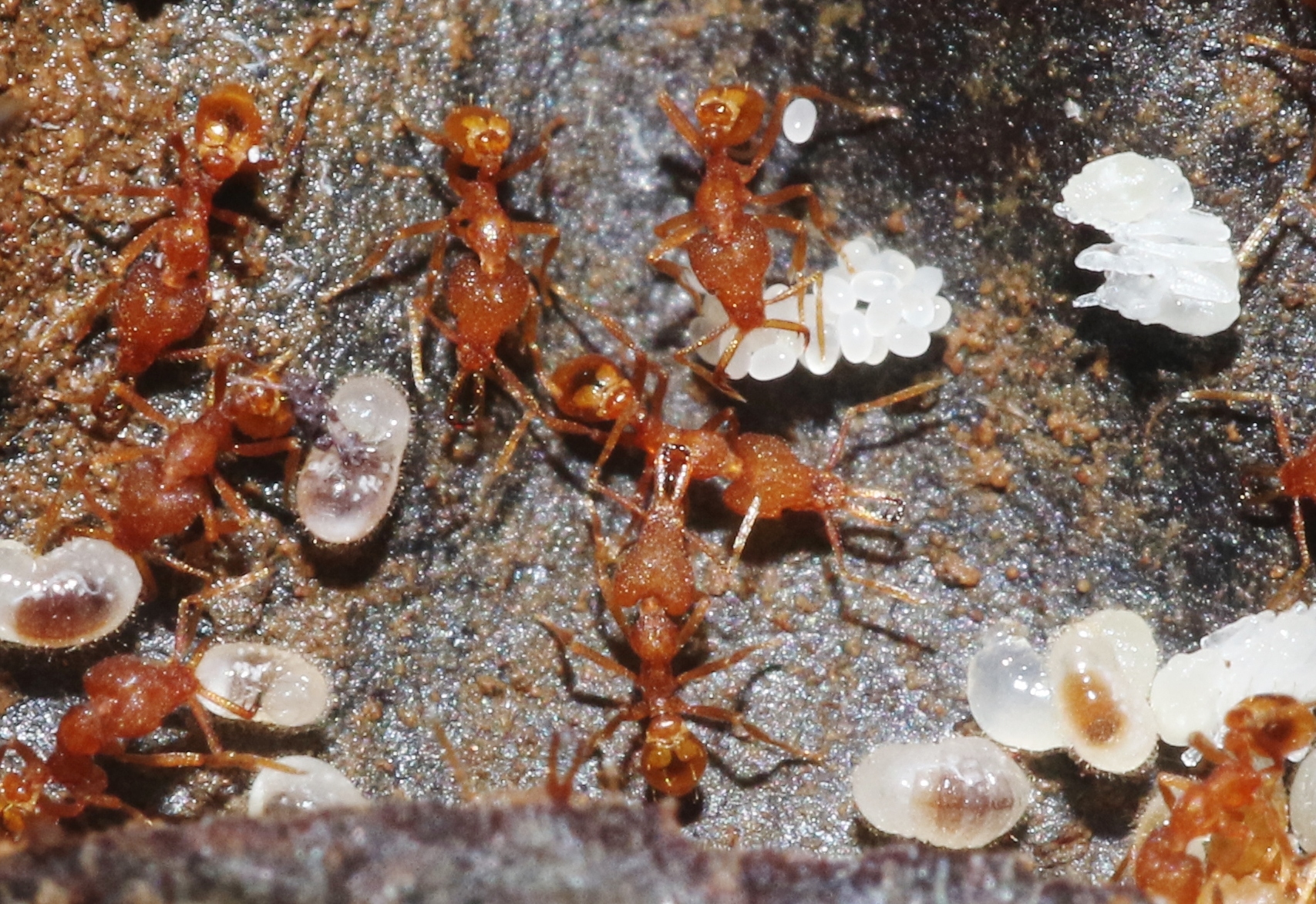
These ants can be found in a variety of habitats, with some thriving best in dryer areas and others doing better in wet areas. All seem to do just fine in highly disturbed environments. They appear to get moved around a lot via plant nurseries (Deyrup & Deyrup 1999). Huddleston & Fluker (1968) wrote that Strumigenys rogeri is “[v]ery abundant over most of its range, which extends from irrigated fields in low rainfall areas to over 3000 ft elevations”, although in Florida Deyrup & Trager (1984) stated that it “is almost completely restricted to moist bayheads” where it “produces remarkably dense populations”. Lubertazzi (2019) wrote that Strumigenys eggersi is “[r]elatively tolerant of dry conditions” and “has a penchant for disturbed areas”. Of both S. eggersi and S. emmae, Deyrup & Trager (1984) wrote that in Florida they “range much more widely into dry woodlands, grass tussocks in seasonal ponds, and cultivated areas.” Huddleston & Fluker (1968) wrote that Strumigenys godeffroyi is “usually found in wetter areas, in soil and especially under rocks.” Writing about Strumigenys membranifera, Wilson & Taylor 1967 stated that it “has an ecological amplitude unusual for a [Strumigenys], nesting in major habitats from dense woodland to dry, open cultivated fields.”
Identification/Description
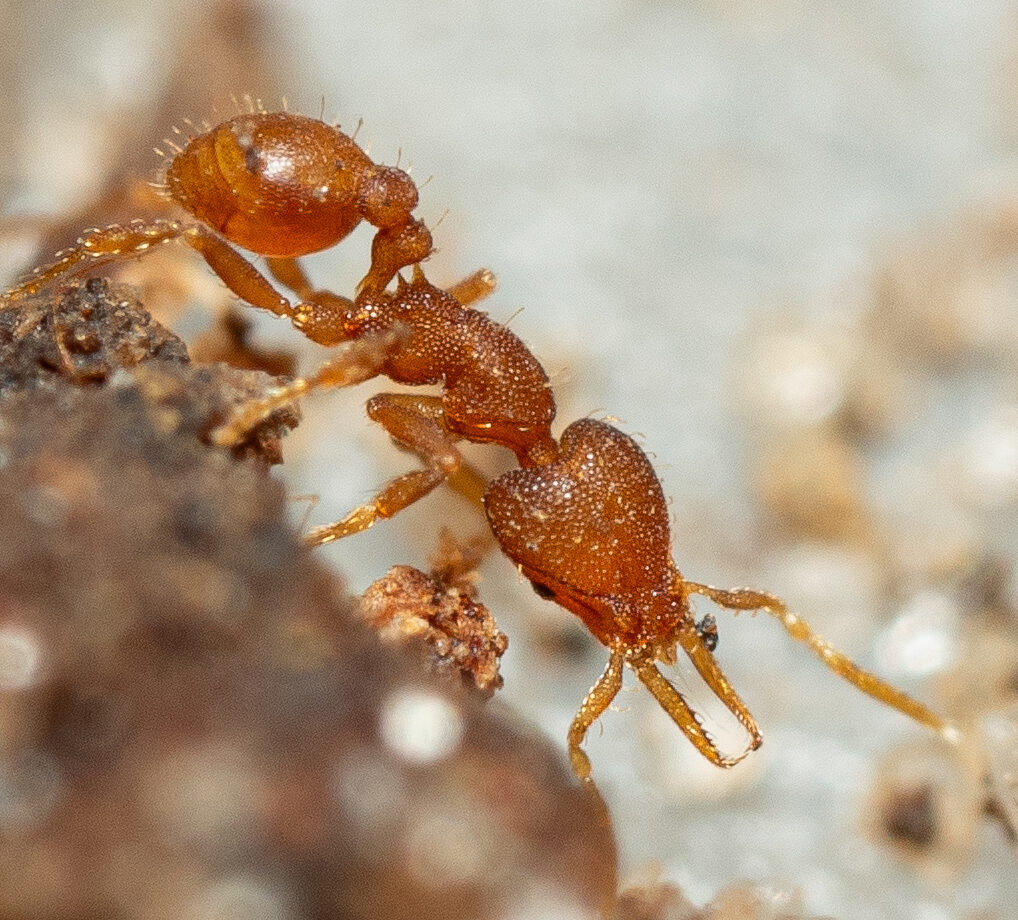
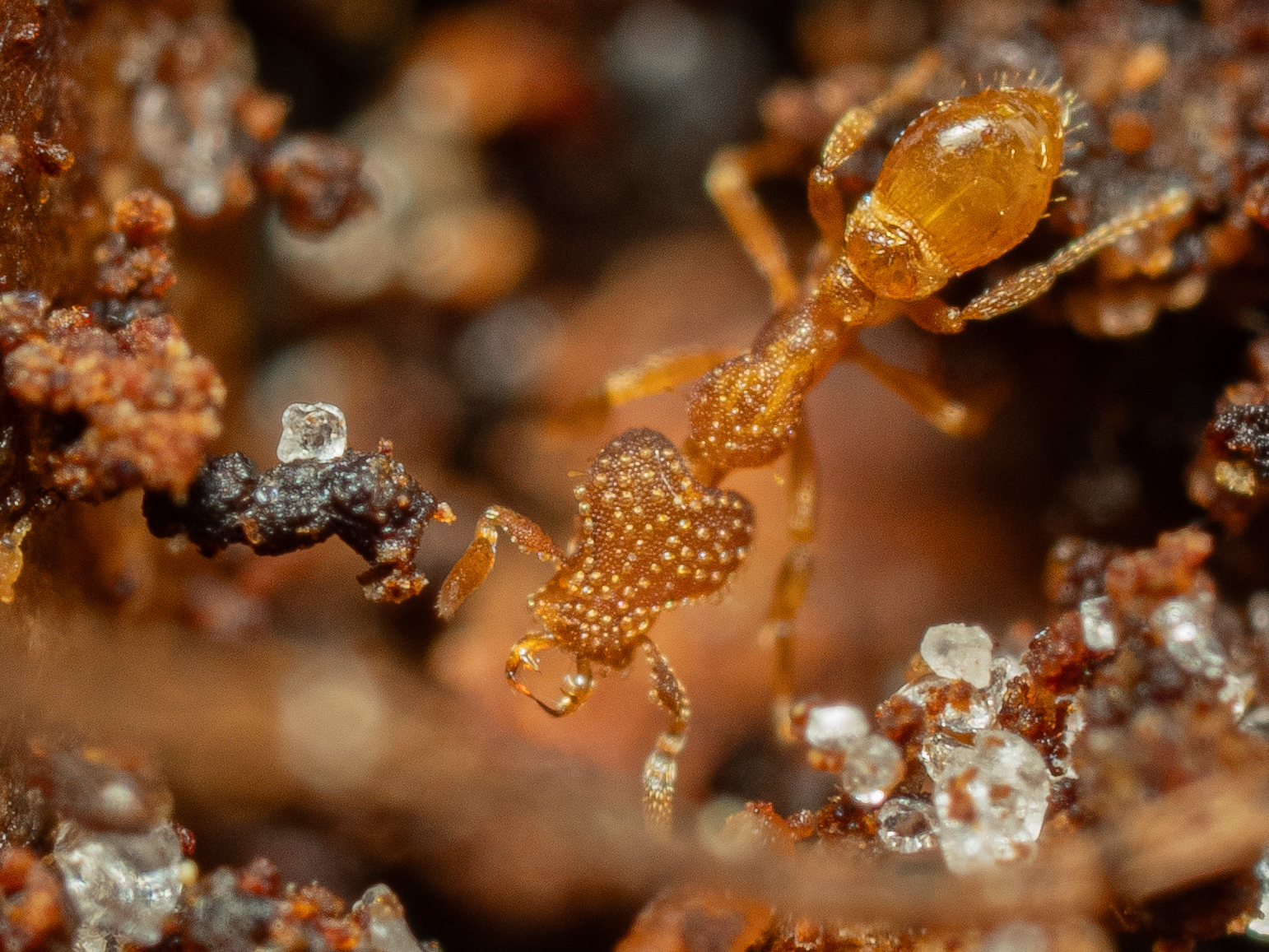
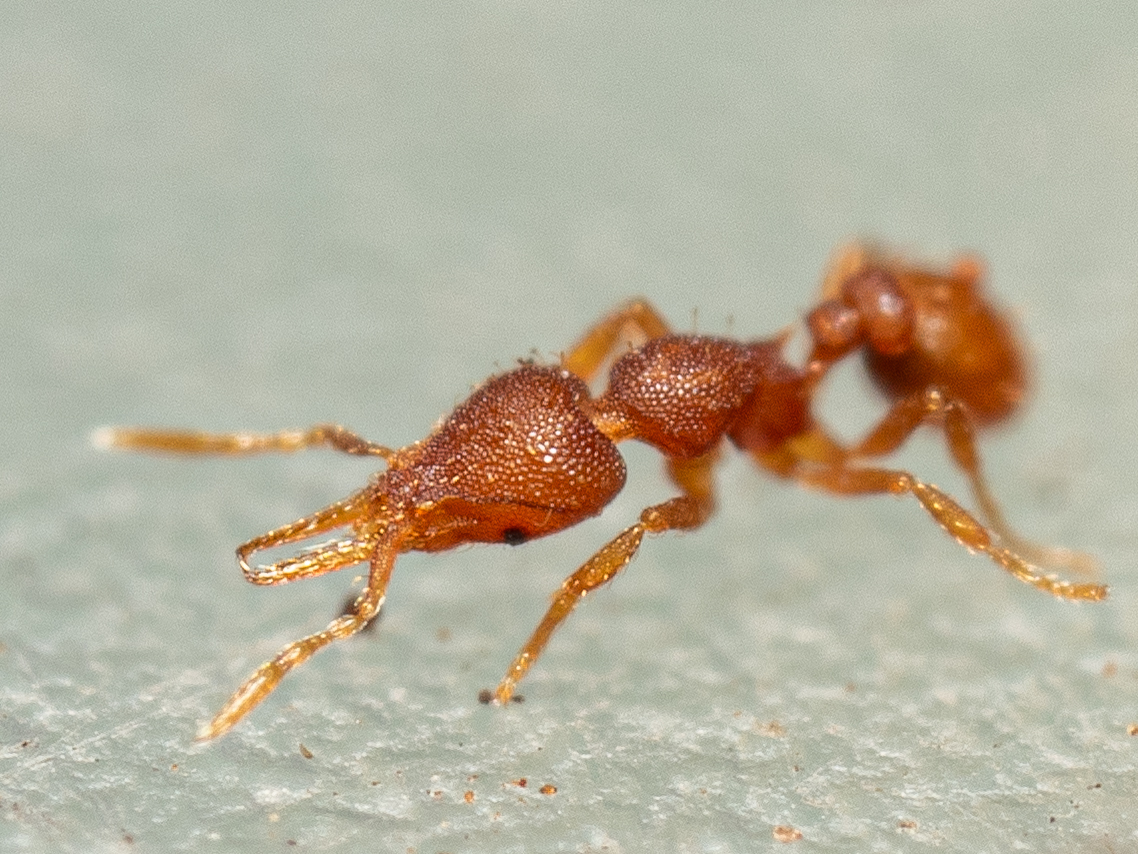
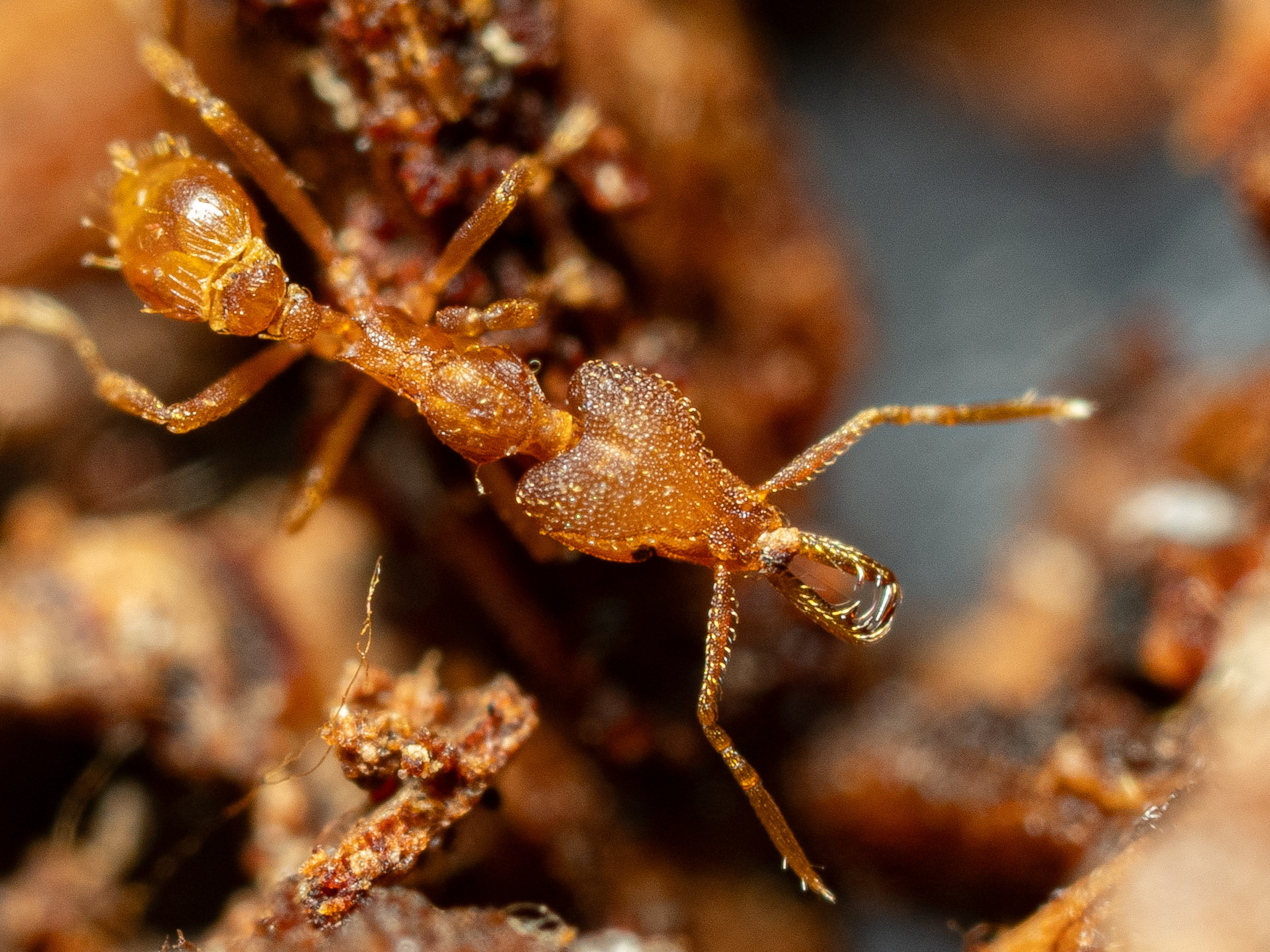
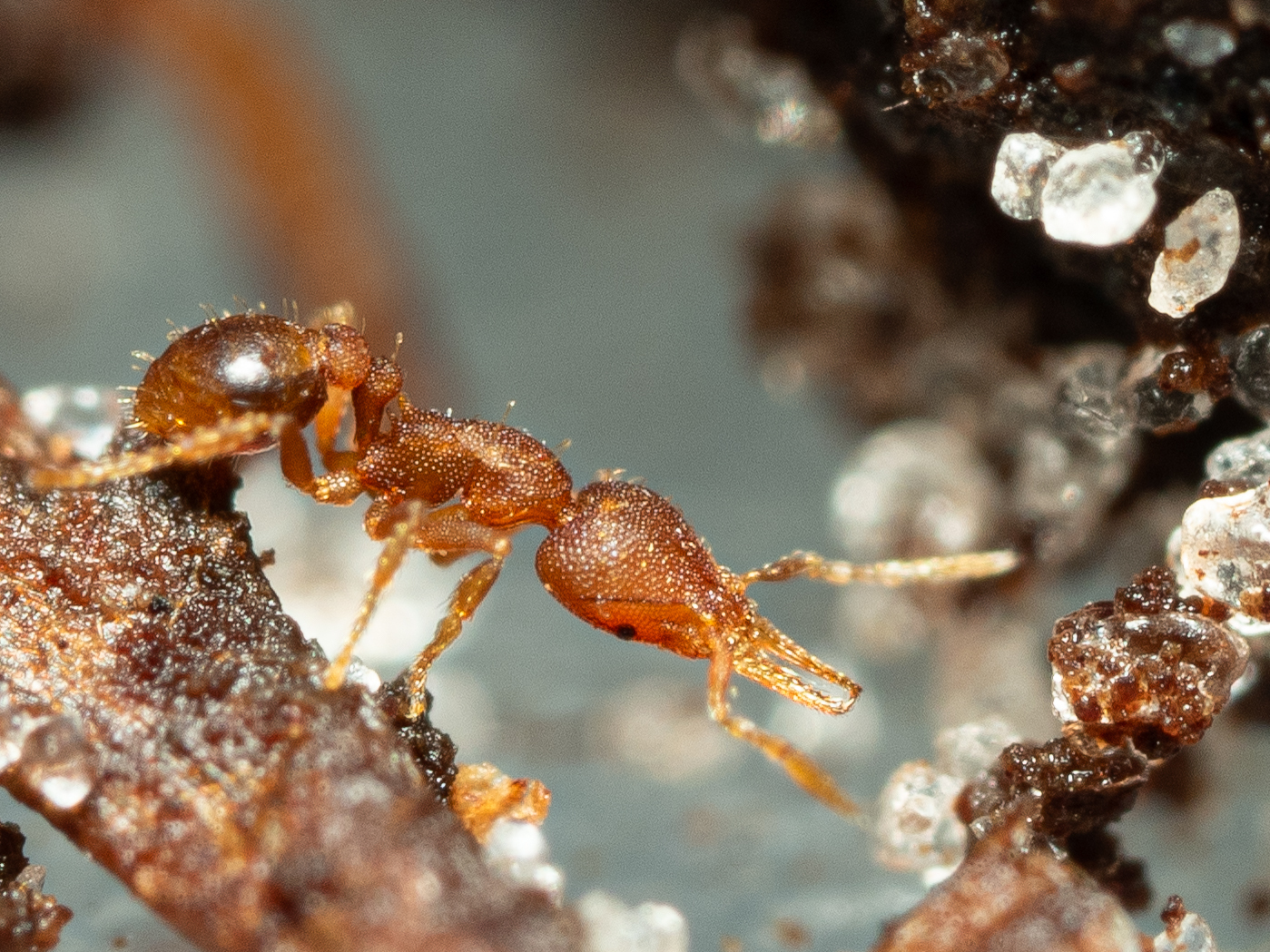
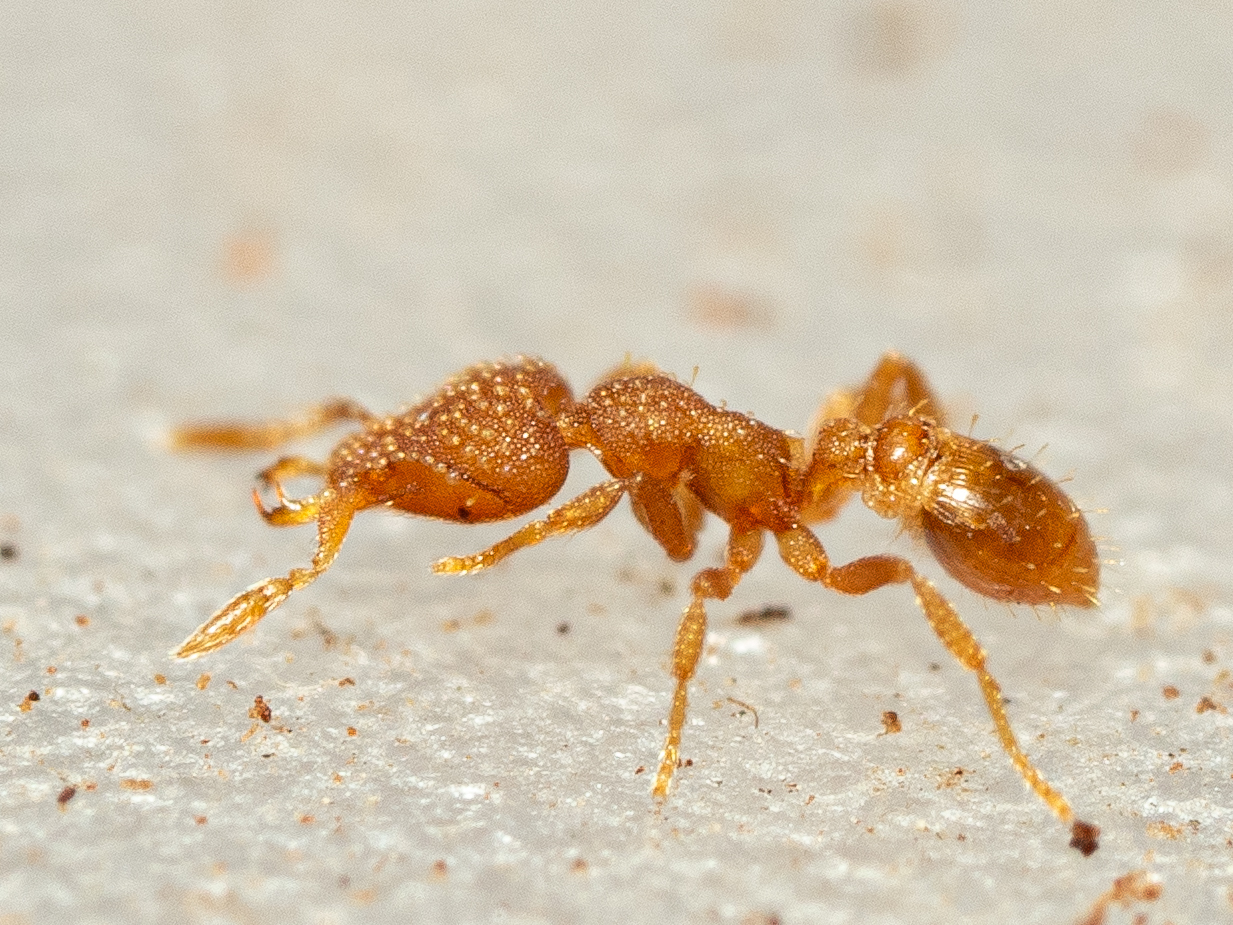
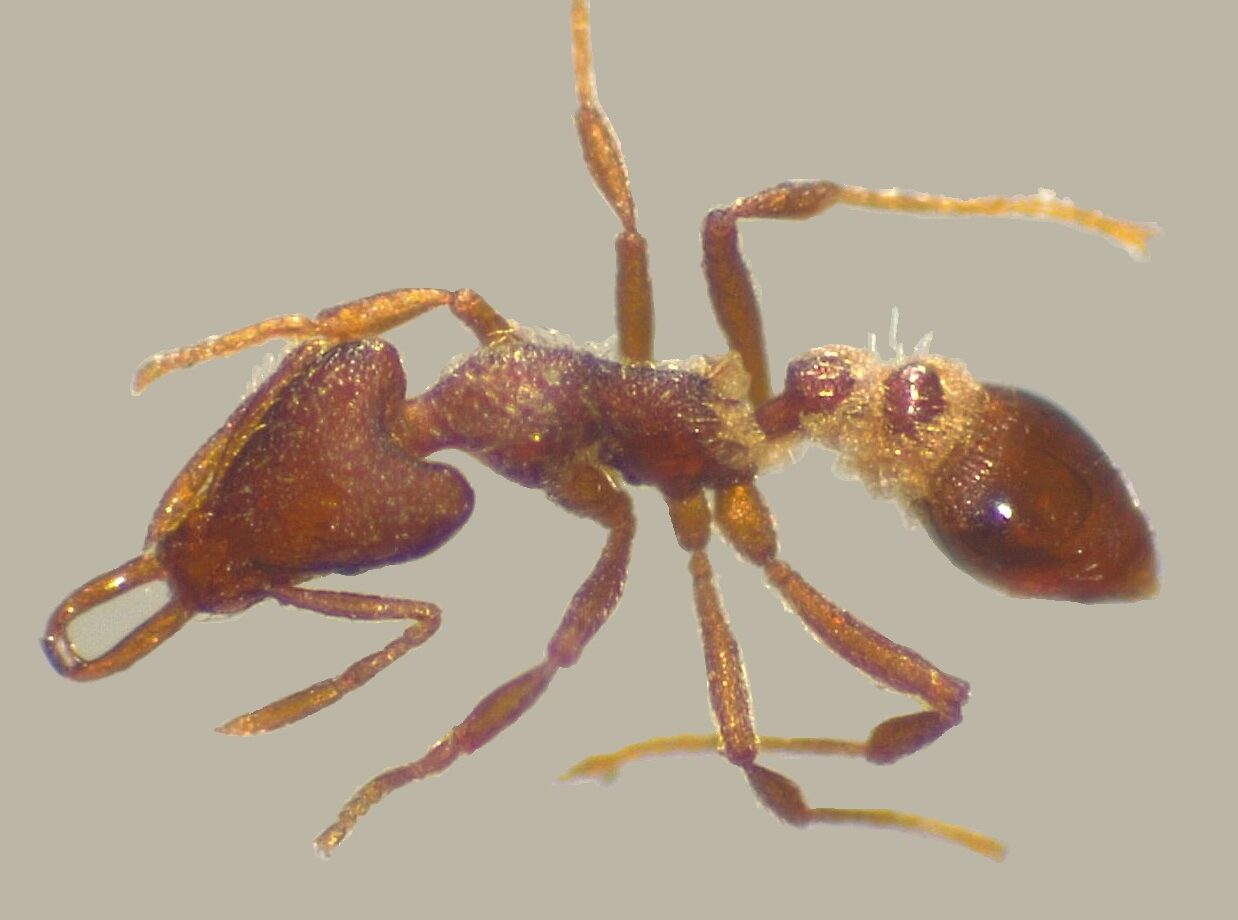
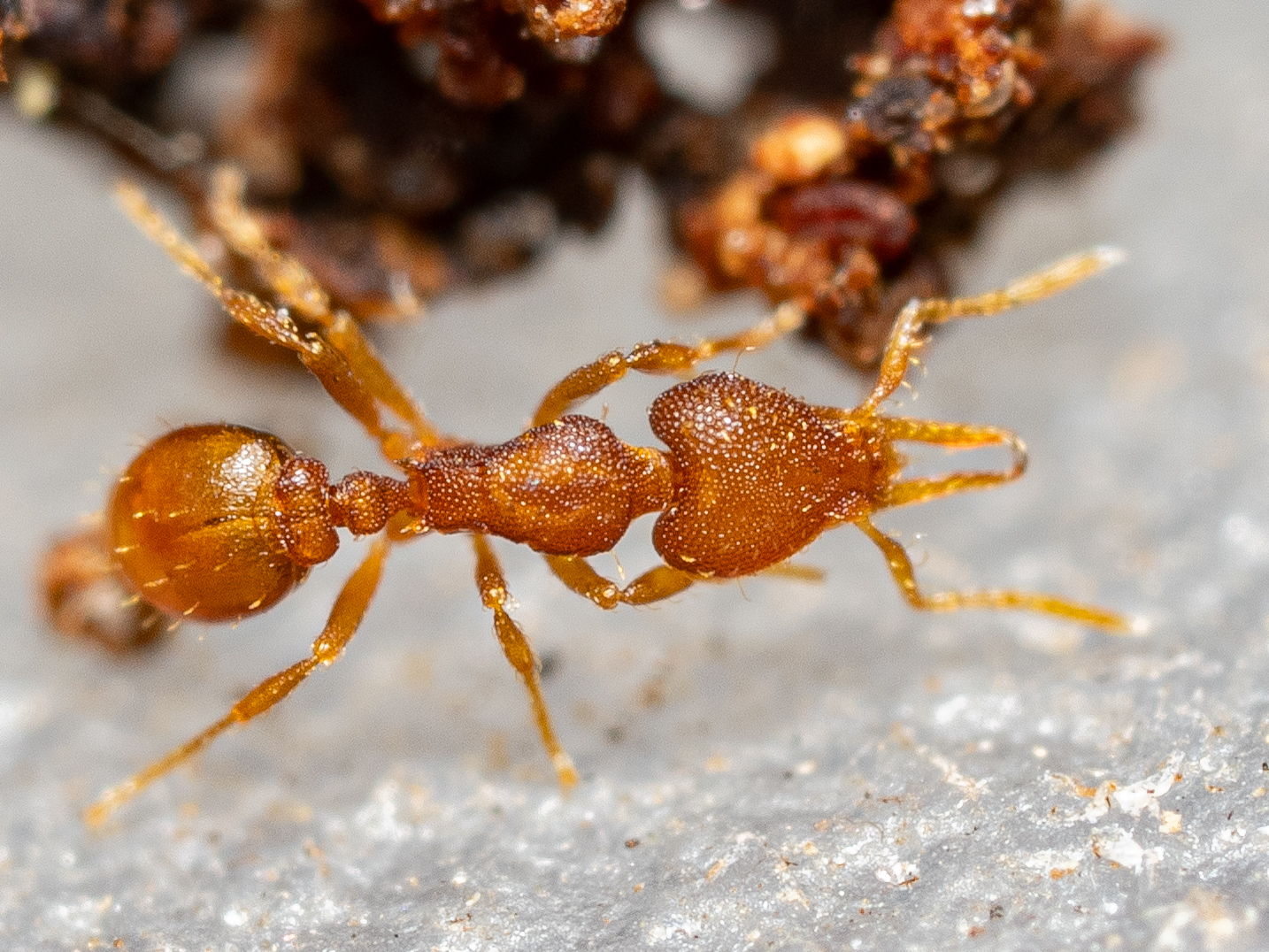
These are tiny ants, most of whom sport long mandibles which they use to capture their even tinier prey. Though some species (such as S. emmae) have relatively short mandibles, the “[l]ong-mandible Strumigenys are commonly referred to as trap-jaw ants on account of their mandibles’ spring-loading mechanism which is triggered to snap shut by the touch of suitable prey” (Sarnat et al. 2019). Though Strumigenys rogeri has been noted to have “remarkably dense populations” in Florida at times (Deyrup & Trager 1984), all of these ants are typically found in small colonies with dozens to scores rather than hundreds or thousands of individuals.
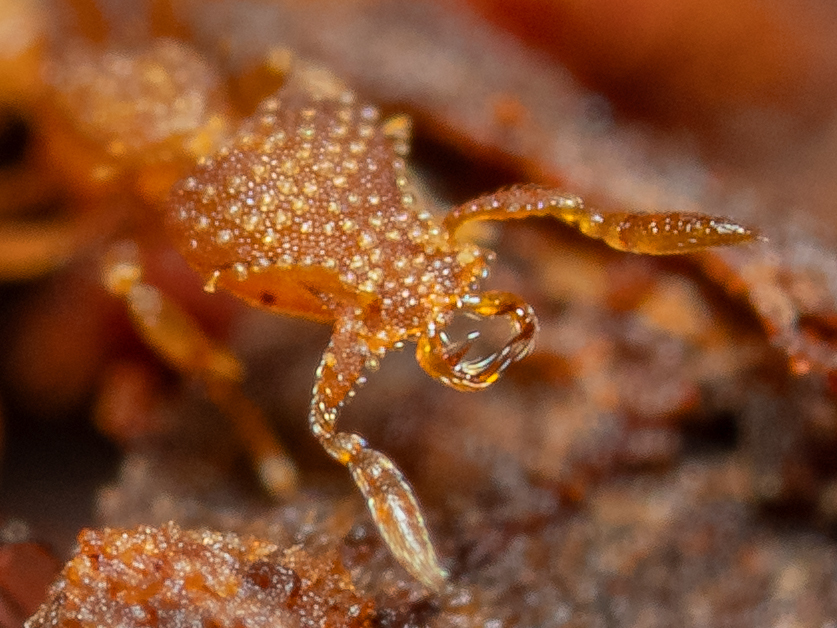
Strumigenys have heart-shaped heads and “[n]early all produce mysterious sponge-like outgrowths referred to as spongiform appendages that emanate from the waist.” (Sarnat et al. 2019) (e.g. in photo at center below).
.
Impacts
- “Strumigenys species may occasionally be numerous enough to affect detritivore populations, but they are of no economic importance.” (Deyrup & Trager 1984)
History
- The first Strumigenys species recorded in the Islands were S. lewisi and S. emmae, both in the mid-1910s (Donisthorpe 1916, Bridwell 1918). In the 1930s S. membranifera and S. rogeri showed up (Williams 1933, Wilson & Taylor 1967), followed by S. godeffroyi in 1961 (Wilson & Taylor 1967) and S. eggersi in 2019 (Antweb.org CASENT0923369). Records of S. lewisi and S. membranifera are scarce, but the other four species have all been recorded recently on Maui. Interestingly, Strumigenys rogeri is the only species ever recorded on Molokaʻi, and no Strumigenys ants at all have ever been recorded on Lānaʻi or Kahoʻolawe.
Resources/References
- Strumigenys eggersi – AntWiki – Eggers’ Pygmy Snapping Ant
- Strumigenys emmae – AntWiki – Emma’s Pygmy Snapping Ant
- Strumigenys godeffroyi – AntWiki – Godeffroy’s Pygmy Snapping Ant
- Strumigenys lewisi – AntWiki – Lewis’ Pygmy Snapping Ant
- Strumigenys membranifera – AntWiki – Bare Mustache Ant
- Strumigenys rogeri – AntWiki – Roger’s Pygmy Snapping Ant
- AntWeb. Version 8.114. California Academy of Science, online at https://www.antweb.org. Accessed 18 May 2026.
- Bridwell, J. C. 1918. [Entomological Program]. Strumigenys lowesii? Proceedings of the Hawaiian Entomological Society 3(5): 383.
- Deyrup, M., & Deyrup, S. 1999. Notes on the Introduced Ant Quadristruma emmae (Hymenoptera: Formicidae) in Florida. Entomological News 110(1): 13–21.
- Deyrup, M. & Trager, J. 1984. Strumigenys rogeri, an African Dacetine Ant New to the U.S. (Hymenoptera: Formicidae). Florida Entomologist 67(4): 512–516.
- Donisthorpe, H. 1916. Epitritus wheeleri, n. sp., an Ant new to Science; with Notes on the Genus Epitritus, Emery. The Entomologist’s Record and Journal of Variation 28: 121–122.
- Emery, C. 1890. Studii Sulle Formiche della Fauna Neotropica. [Studies on Ants of the Neotropical Fauna] Bollettino della Società Entomologica Italiana 22: 38–85.
- Huddleston, E. W. & Fluker, S. S. 1968. Distribution of Ant Species of Hawaii. Proceedings of the Hawaiian Entomological Society 20(1): 45–69.
- Lubertazzi, D. 2019. The Ants of Hispaniola. Bulletin of the museum of Comparative Zoology 162(2): 59–210.
- Sarnat, E. M., Hita Garcia, F., Dudley, K., Liu, C., Fischer, G. & Economo, E. P. 2019. Ready Species One: Exploring the Use of Augmented Reality to Enhance Systematic Biology with a Revision of Fijian Strumigenys (Hymenoptera: Formicidae). Insect Systematics and Diversity 3(6): 6; 1–43.
- Williams, F. X. 1933. [Notes and Exhibitions]. Strumigenys sp. Proceedings of the Hawaiian Entomological Society 8(2): 230–231.
- Wilson, E. O. & Taylor, R. W. 1967. The Ants of Polynesia (Hymenoptera: Formicidae). Pacific Insects Monograph 14: 1–109.