Destroyer Ant
Trichomyrmex destructor
Species Info General
Other common names include: Singapore Ant, Ninja Ant, Destructive Trailing Ant
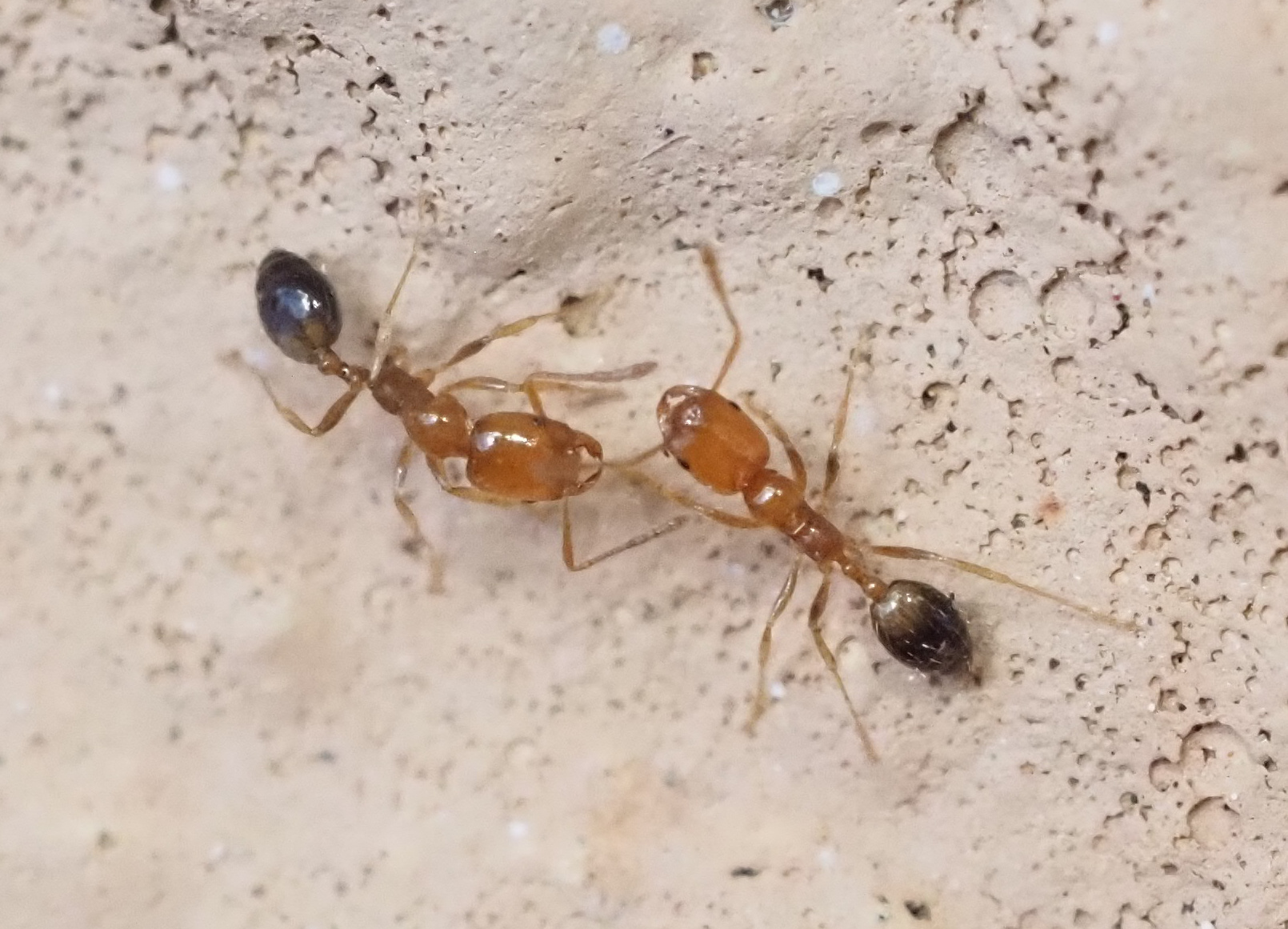
This is an aggressive, biting ant found primarily in dry leeward areas. It thrives in hot, sandy areas and often appears in distressingly impressive numbers: “[C]olonies of destructor must be composed of thousands of individuals if one is to judge from the number and size of their trails” (Smith 1936). It is especially common in the Maui Meadows neighborhood of south Kīhei, although it can be found all through central Maui from Wailea to Olowalu and Kahului. It doesn’t sting, but rather it bites – and it does so aggressively when its colonies are disturbed. This ant is mean and also gets into everything, invading both the garden and the house where it sometimes causes significant damage: according to Smith (1965), “They are almost omnivorous and feed on such household foods as cookies, sweets, breads, meats, oils, greases, and animal substances” while Wetterer (2008) added “it is notorious for chewing through the insulation of electrical wires, living in and destroying electrical equipment, and attacking people”. This species is not above starting fires: “They frequently nest in power sockets and chew on electrical wiring and in some cases have started electrical fires” (Chin 1998 as quoted in Wetterer 2008). Although after extensive research Wetterer (2008) “found little information concerning possible impacts of [Trichomyrmex] destructor in natural ecosystems”, Sarnat & Economo (2012) wrote that this ant is “[C]onsidered to be a significant threat to native biological diversity and human health”; and Ramage (2014) wrote “[Trichomyrmex] destructor is known for its impact on biodiversity”.
Identification/Description
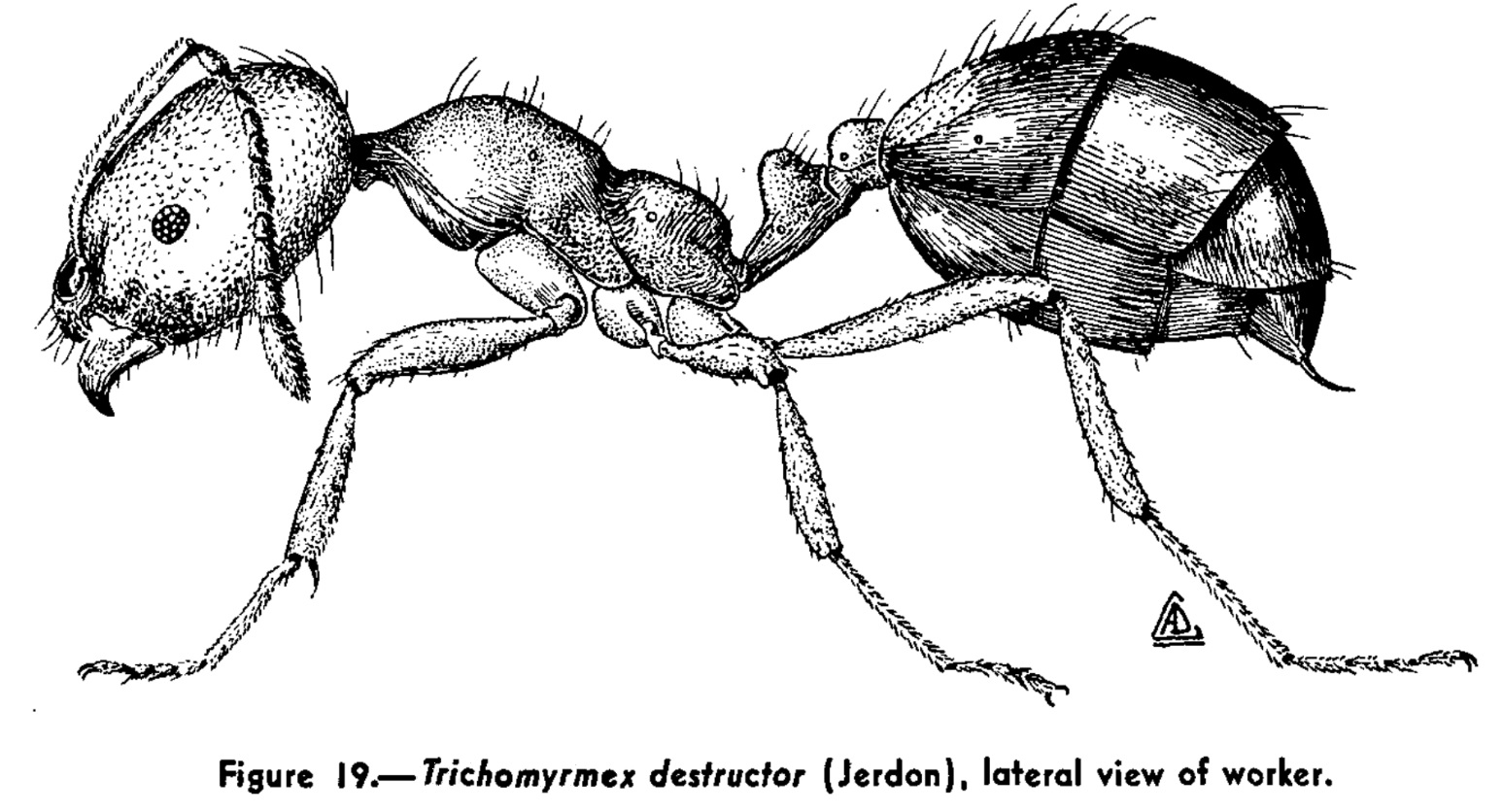
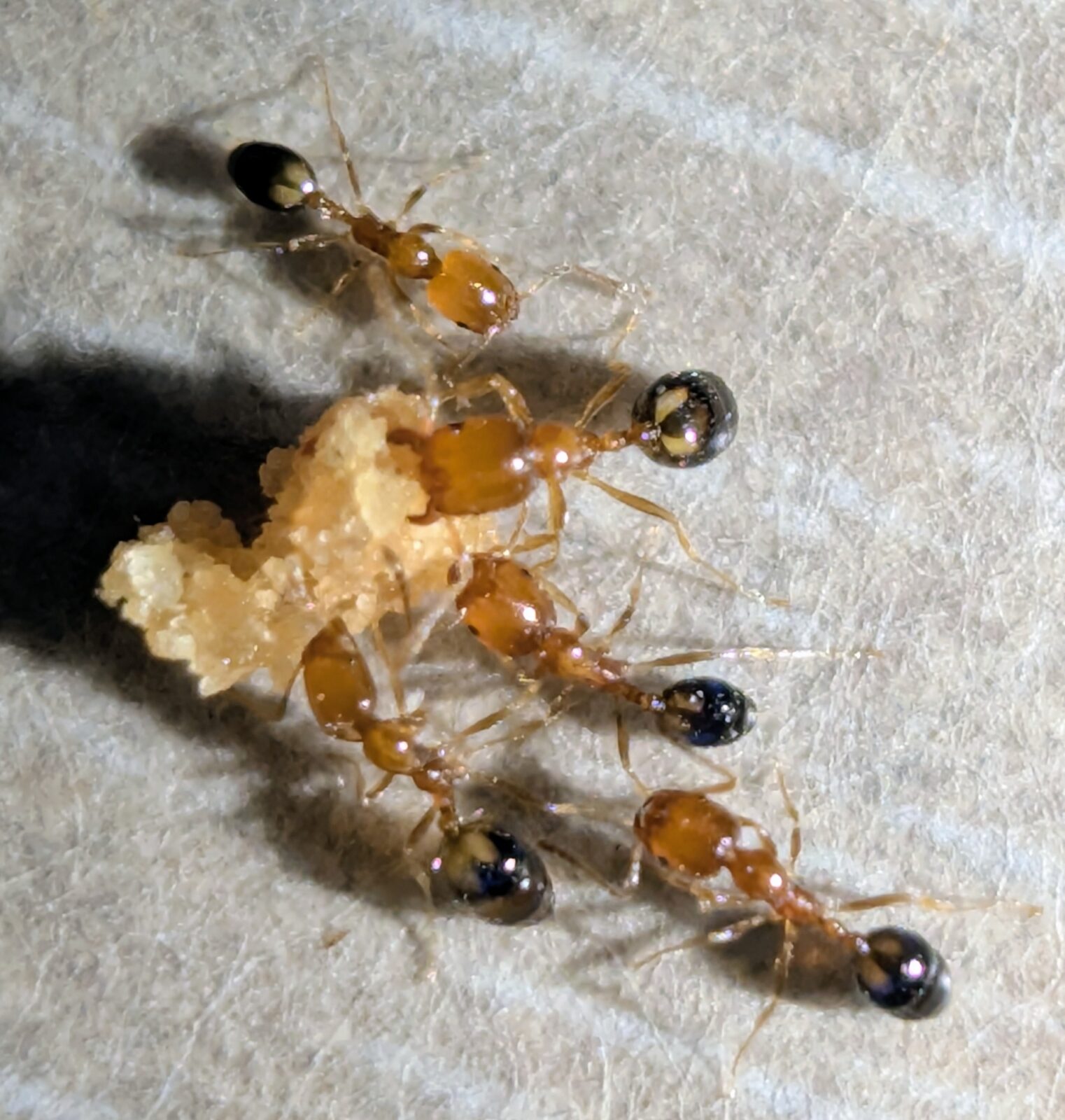
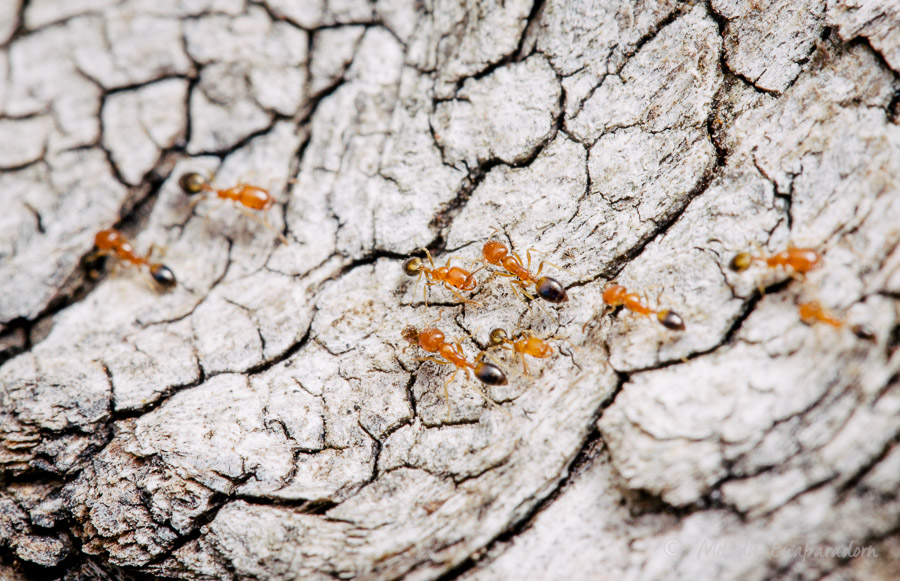
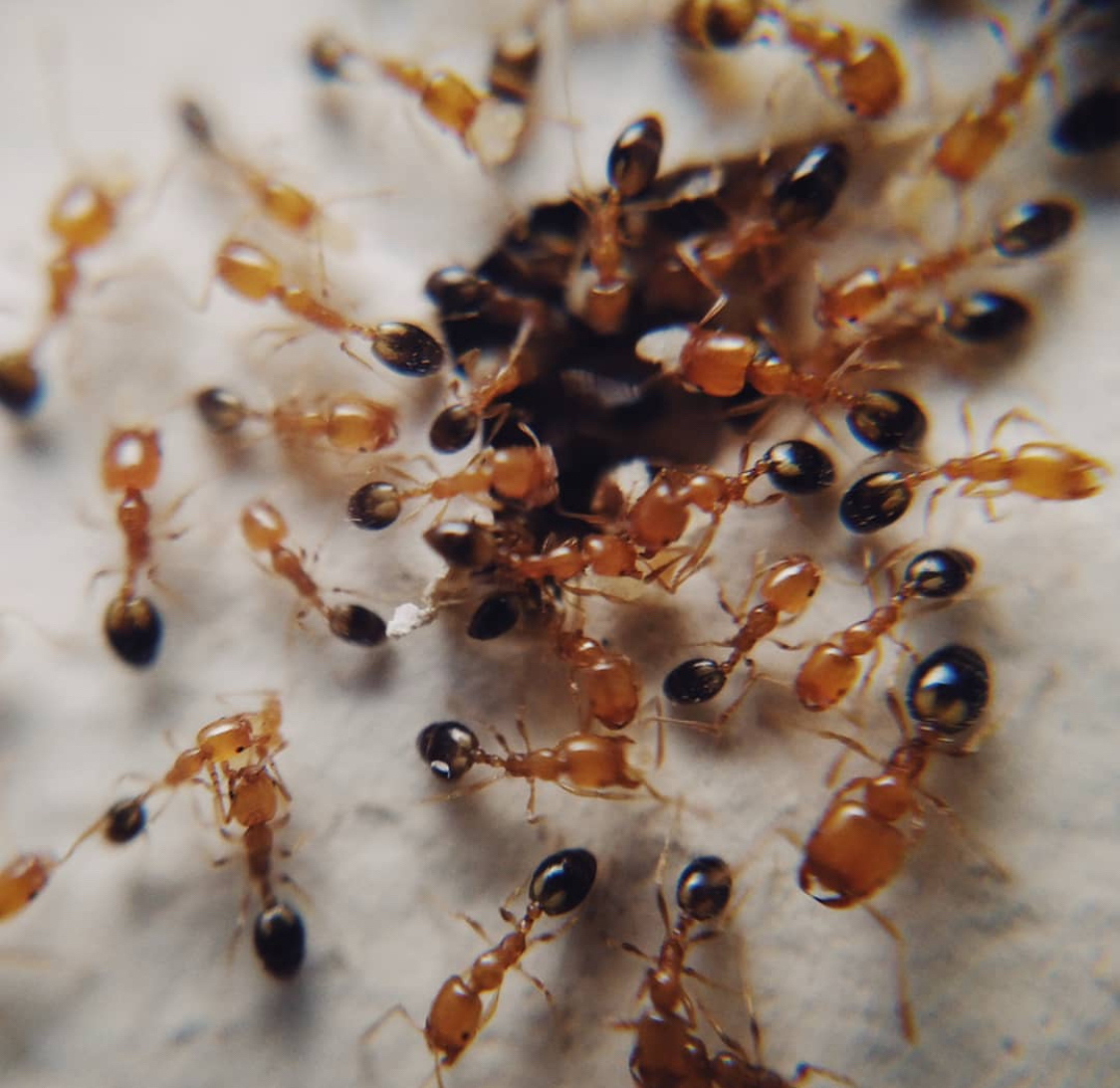
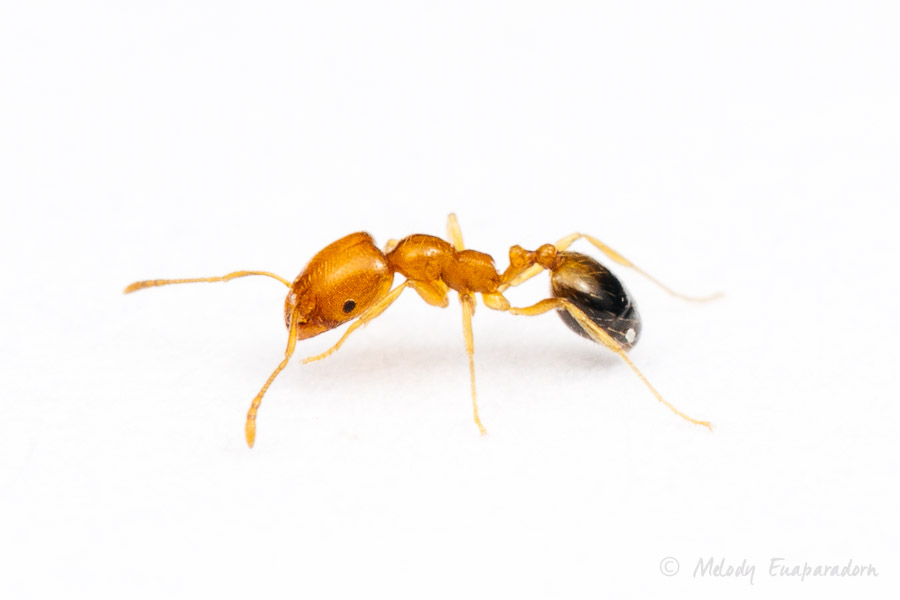
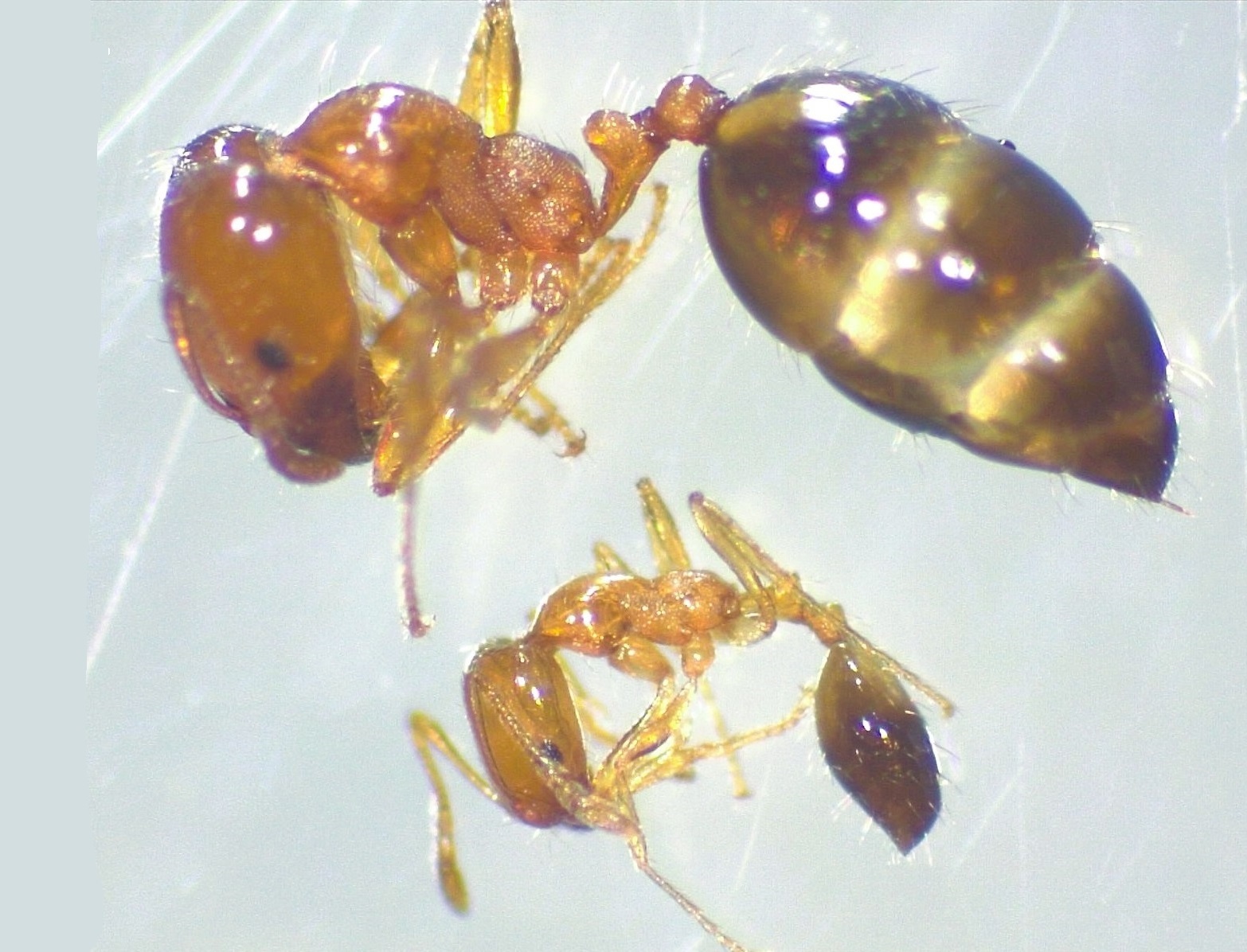
Destroyer Ants commonly travel in orderly lines. They are variable in both size and color. The typical individual has a yellow, golden or honey-colored head and mesothorax, contrasting sharply with a blackish gaster, giving most individuals a distinctly bicolored appearance. But some individuals in a given colony tend towards being uniformly dark chocolate brown to almost black throughout. They come in a variety of sizes, with the largest individuals being more than twice the size of the smallest. There are only a handful of such polymorphic ant species on Maui, and none of them exhibit this same color pattern. The larger individuals of a Destroyer Ant colony are proportionately the same shape as their littler sisters. Hawaiian Carpenter Ants (Camponotus variegatus) are similarly polymorphic but most of our polymorphic species exhibit disproportionate (some would say grotesquely) outsized heads in the larger individuals (see e.g. Tropical Fire Ant [Solenopsis geminata], African Big-headed Ant [Pheidole megacephala], Fiery Big-headed Ant [Pheidole fervens], and Navigating Big-headed Ant [Pheidole navigans].
It is worth noting that this species is known for going through population cycles: “Outbreaks of [Trichomyrmex] destructor often appear to be fairly localized and short-lived. This pattern of population explosion followed by decline should be taken into consideration in any large-scale efforts to control these ants.” (Wetterer 2008).
Impacts
- Serious nuisance species that attacks aggressively with painful bites
- Damages electronics, occasionally starts fires
- Tends homopterous insects that are pestiferous to agriculture
- Potential threat to biodiversity, though more study is needed
History
- Destroyer Ants have a long history in Hawaiʻi, having been identified on Oʻahu (and also way out on Laysan) in the 1890s (Forel 1899, Schauinsland 1899). Oddly, though, they didn’t spread to most of the rest of the islands until much later: Maui’s first record was not until 1997 (Nakagawa, unpub. data). It was first collected on Kahoʻolawe in 2004 (Starr & Starr 2007), and the first records for Molokaʻi and Lānaʻi were both in 2011 (Starr & Starr 2012).
Resources/References
- Trichomyrmex destructor – AntWiki
- Forel, A. 1899. Formicidae of Hawaii – Heterogyna. (Formicidae.), Fauna Hawaiiensis 1(1): 116–122.
- Ramage, T. 2014. Les Fourmis de Polynésie française (Hymenoptera, Formicidae). Bulletine de la Société entomologique de France 119(2): 145–176.
- Sarnat, E. & Economo, E. P. 2012. The Ants of Fiji. University of California Press, Berkeley & Los Angeles, California. 384 pp.
- Schauinsland, H. H. 1899. Drie Monate auf einer Koralleninsel (Laysan). [Three Months on a Coral Island (Laysan)] Max Nössler Publisher, Bremen. 104 pp. [Translated by M. D. F. Udvardy, National Museum of Natural History, Smithsonian Institution]
- Smith, M. R. 1936. The Ants of Puerto Rico. The Journal of Agriculture of the University of Puerto Rico 20(4): 819–875.
- Smith, M. R. 1965. House-Infesting Ants of the Eastern United States: Their Recognition, Biology, and Economic Importance. Agriculture Research Service, U.S. Department of Agriculture. Technical Bulletin No. 1326: 1–105.
- Starr, F. & Starr, K. 2007. New records for arthropods from Kahoʻolawe Island, Hawaiʻi. Bishop Museum Occasional Papers 96: 46–47.
- Starr, F. & Starr, K. 2012. New Arthropod Records from Maui, Molokaʻi, and Lānaʻi. Bishop Museum Occasional Papers 112: 39–42.
- Wetterer, J. K. 2009. Worldwide spread of the destroyer ant, Monomorium destructor (Hymenoptera: Formicidae). Myrmecological News 12: 97–108.