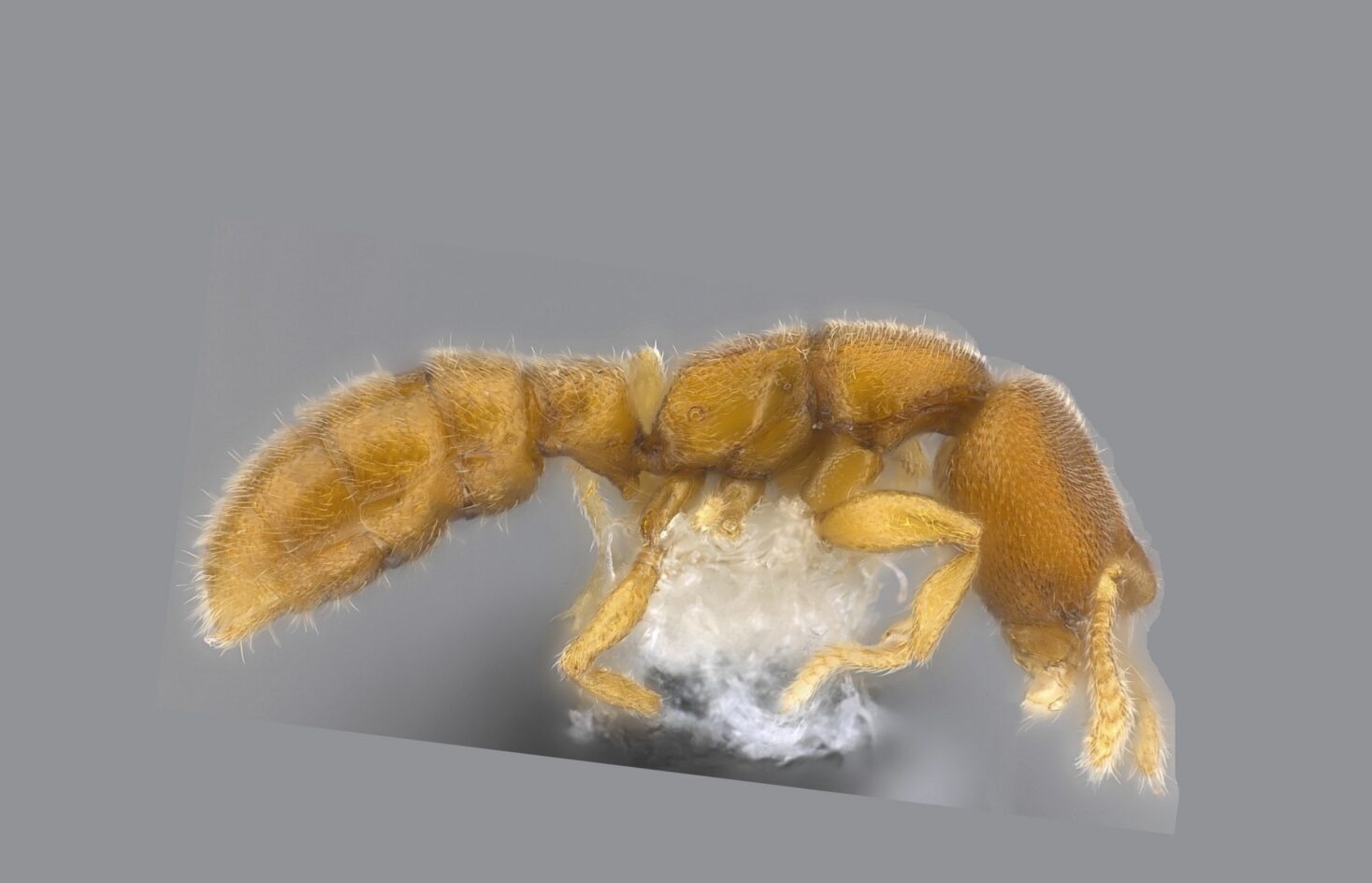
Van Zwaluwenburg’s Dracula Ant
Stigmatomma zwaluwenburgi
Species Info General
Other common names include: n/a
Ants of the genus Stigmatomma are commonly referred to as “Dracula Ants” (Ward & Fisher 2016). This nickname is in reference to the unusual feeding practices of at least some Stigmatomma queens: “[S]tudies indicate that female adults perform nondestructive cannibalism on their own larvae. This practice, also known as Larval Hemolymph Feeding (LHF), consists of ingestion of hemolymph dripping from punctures made by adults in the larval integument.” (Esteves & Fisher 2016). In plain English, the mothers feed by biting their babies and drinking their blood (!). As this is nondestructive cannibalism however, we can rest assured that the young ants grow up healthy and without psychological scars from the experience.
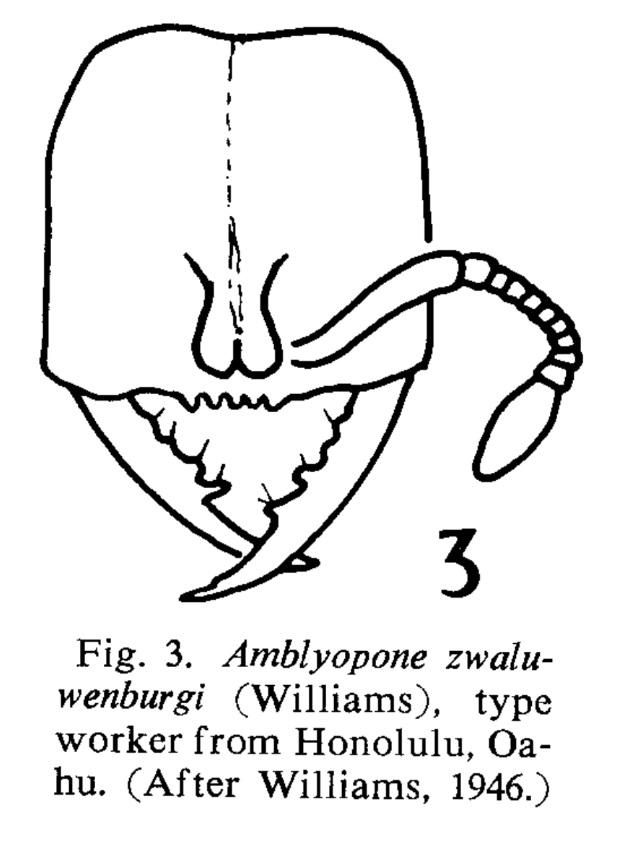
The enigmatic Van Zwaluwenburg’s Dracula Ant was initially described here in the Islands in 1946 from six specimens collected on Oʻahu between 1937–1945 by Reyer H. Van Zwaluwenburg (Williams 1946). Intriguingly, however, after 1945 it was never again collected there.
“The cryptobiotic nature of this species makes it one of the most rarely collected ants in the world, but probably even more surprisingly, one for which at this point, the native range remains completely unknown . . .” Thus reported Hamer et al. (2023) in their paper reporting the first ever non-insular collection of this species, of two specimens found in mainland Hong Kong in 2021.
After Van Zwaluwenburg’s Oʻahu collections, this ant was not collected anywhere on Earth for more than four decades, not until a queen was collected on Christmas Island in the Indian Ocean in 1989 (Framenau & Thomas 2008). A decade later, between 1999–2001 three more specimens were obtained: two more workers collected on Christmas Island and one on Viti Levu in Fiji (Framenau & Thomas 2008, Sarnat & Economo 2012). Two decades after that, in 2021, the two Hong Kong specimens mentioned above were collected (Hamer et al. 2023). And then . . . in 2022, back here in the Islands, a single worker was collected at Huelo on Maui. With two more specimens (AntWeb.org CASENT0923765 – 766) collected in 2024 on Réunion, an island in the Indian Ocean 430 miles east of Madagascar, this ant has been found at just six locations around the world.
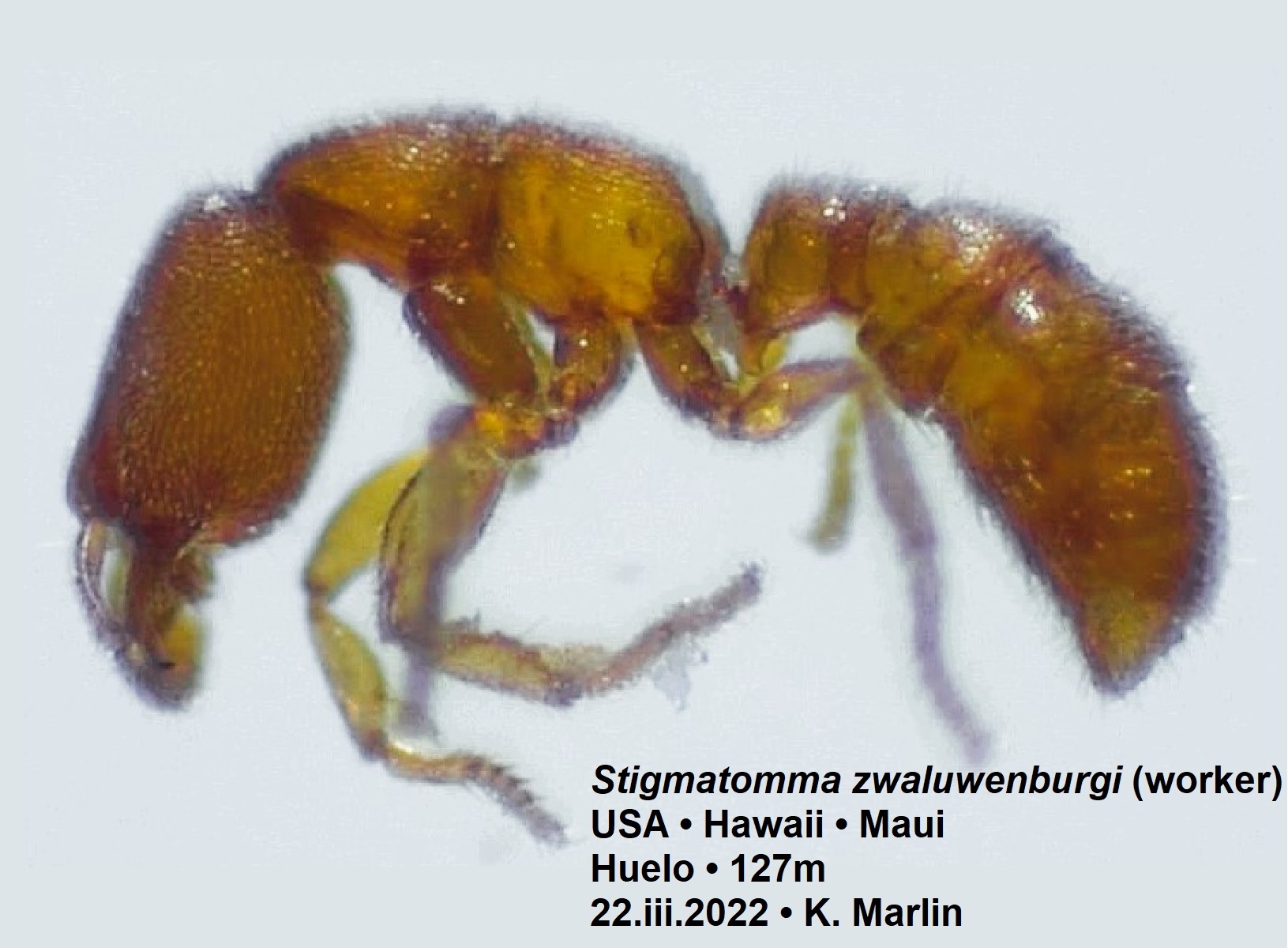
The specimen collected on Maui represents the first (and only) detection of this species in the Islands since 1945, and represents one of only around sixteen individuals of this species that have ever been collected.
Identification/Description
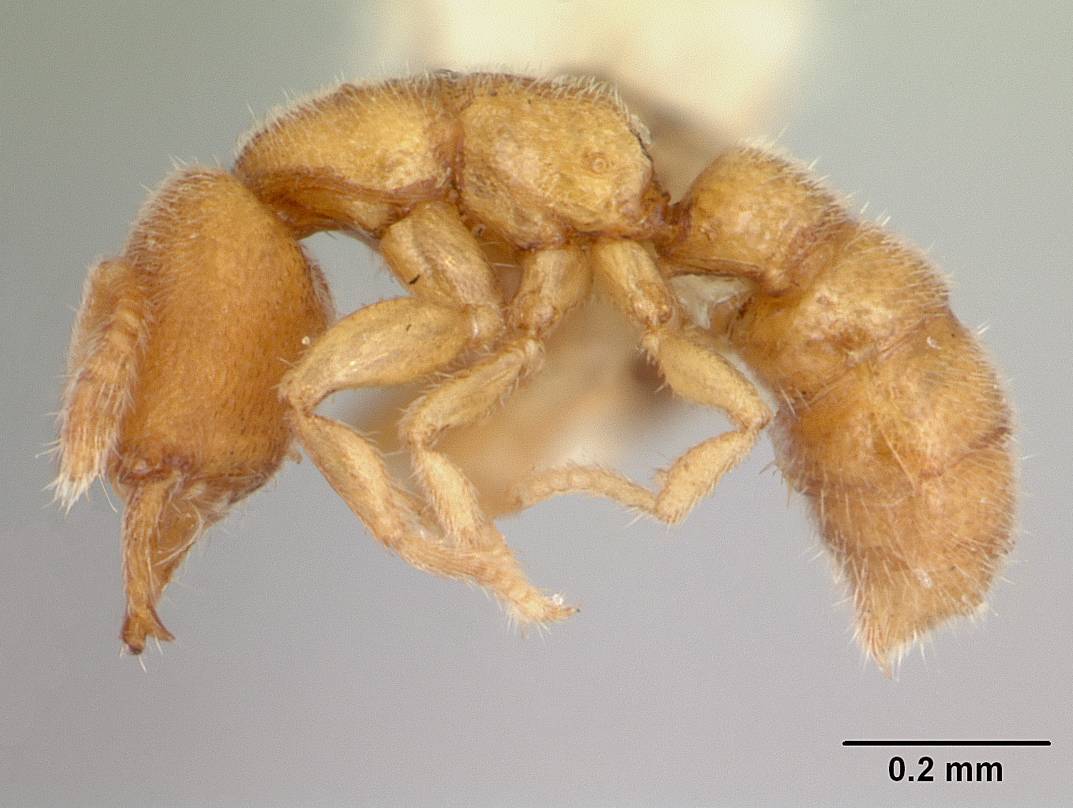
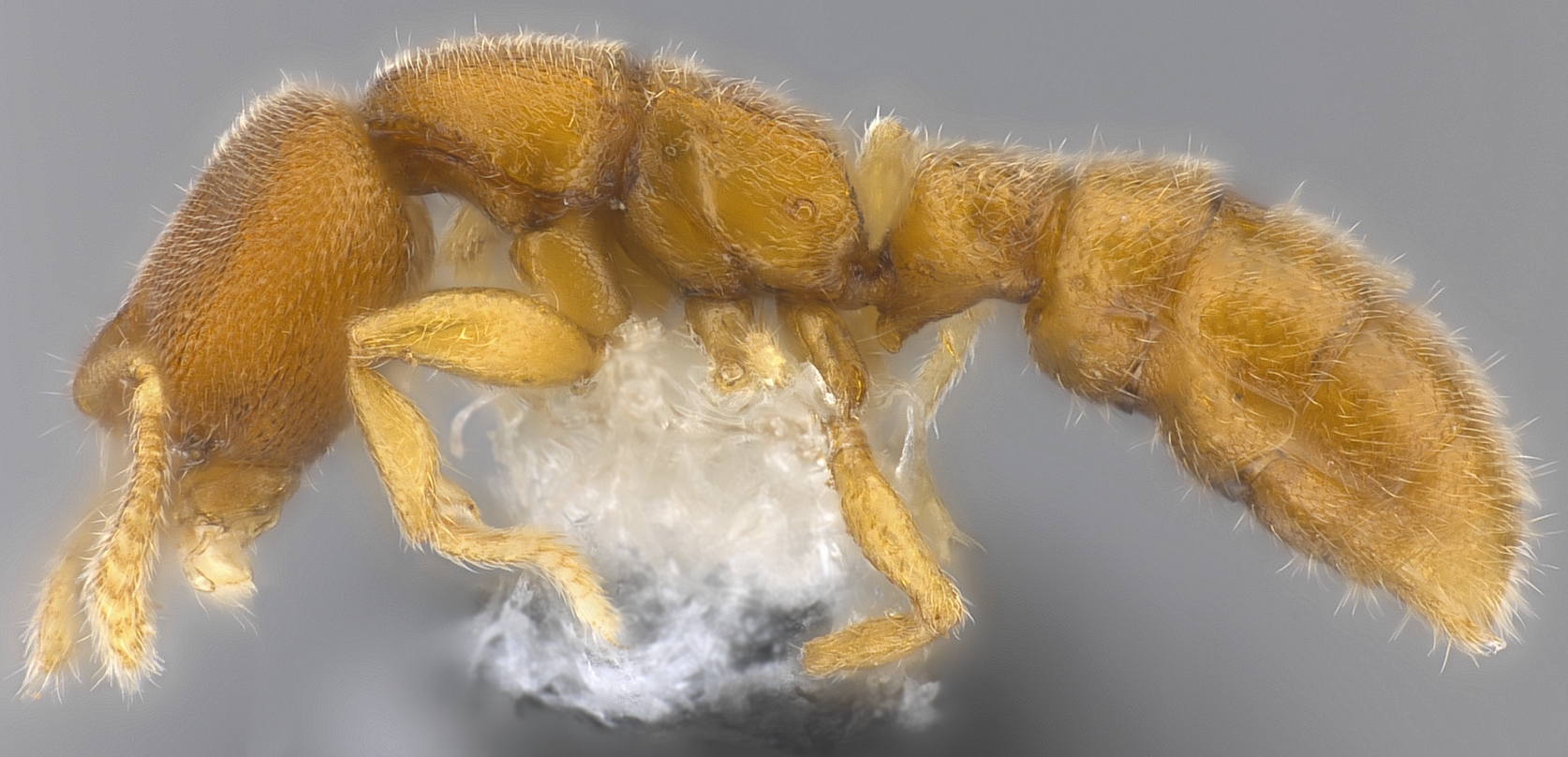
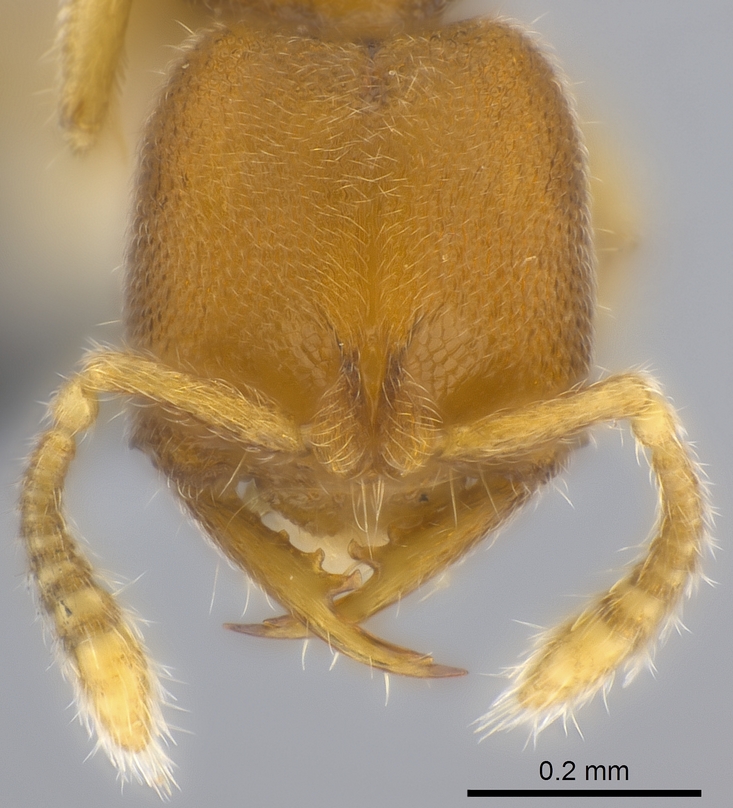
This is a tiny, orangish ant with no eyes. It hunts its way just below the surface of the soil. As a hunter it won’t be attracted to baits like peanut butter or sugary substances. “[M]embers of this subfamily are typically slow and lumbering in their movements” (Wilson 1958, Ward & Fisher 2016) – a reference to the ant subfamily Amblyoponinae, to which Stigmatomma zwaluwenburgi belongs.
Impacts
- Virtually nothing is known about this particular ant’s habits or potential impacts. “Our understanding of the biology of the species assigned to Stigmatomma is far from comprehensive as it is based on generalizations from limited observations of a few species” (Esteves & Fisher 2016). Writing about the tiny subfamily to which our Dracula Ant belongs (Amblyoponinae), Ward & Fisher (2016) (who also reference Brown 1960), stated that these ants “live and forage almost exclusively underground in the soil or undercover in leaf litter and rotten logs, where they hunt specialized prey such as geophilomorph centipedes” (geophilomorph centipedes being small, blind soil-dwelling centipedes that are often only a centimeter or three long). Given what must be a tiny population of this ant in the Islands, it is reasonable to assume its impact is negligible.
History
- This species was first collected in the Islands on March 29, 1937, when Reyer H. Van Zwaluwenburg found a single specimen in a sugar cane field on Oʻahu. In 1941 he found four more, and then one final specimen was collected in 1945 – all on Oʻahu (Williams 1946). Eighty years later, on March 22, 2022, a single ant was found on Maui, in Huelo (Maui Invasive Species Committee, unpub. data). This ant has not been found anywhere else in the Hawaiian Islands.
Resources/References
- Stimgatomma zwaluwenburgi – AntWiki
- AntWeb. Version 8.114. California Academy of Science, online at https://www.antweb.org. Accessed 5 May 2026.
- Photo by April Nobile, ShareAlike (By-SA) – CASENT0173925 from AntWeb.com. Version 8.114. California Academy of Science, online at https://www.antweb.org. Accessed 4 May 2026.
- Photos by Eli Sarnat, ShareAlike (By-SA) – CASENT0187702 from AntWebcom. Version 8.114. California Academy of Science, online at https://www.antweb.org. Accessed 4 May 2026.
- Brown, W. L., Jr. 1960. Contributions Toward a Reclassification of the Formicidae. III. Tribe Amblyoponini (Hymenoptera). Bulletin of the Museum of Comparative Zoology 122(4): 145–230.
- Esteves, F. A. & Fisher, B. L. 2016. Taxonomic revision of Stigmatomma Roger (Hymenoptera: Formicidae) in the Malagasy Region. Biodiversity Data Journal 4: e8032: 1–237.
- Framenau, V. W. & Thomas, M. L. 2008. Ants (Hymenoptera: Formicidae) of Christmas Island (Indian Ocean): Identification and Distribution. Records of the Western Australian Museum 25: 45–85.
- Hamer, M. T., Pierce, M. P. & Guénard, B. 2023. The Amblyoponinae (Formicidae) of Hong Kong. Asian Myrmecology 16: 1–37.
- Sarnat, E. & Economo, E. P. 2012. The Ants of Fiji. University of California Press, Berkeley & Los Angeles, California. 384 pp.
- Ward, P. S. & Fisher, B. L. 2016. Tales of dracula ants: the evolutionary history of the ant subfamily Amblyoponinae (Hymenoptera: Formicidae). Systematic Entomology 41: 683–693.
- Williams, F. X. 1946. Stigmatomma (Fulakora) zwaluwenburgi, a New Species of Ponerine Ant from Hawaii. Proceedings of the Hawaiian Entomological Society 12(3): 639–640.
- Wilson, E. O. 1958. Studies on the Ant Fauna of Melanesia I. The tribe Leptogenyini. II. The tribes Amblyoponini and Platythyreini. Bulletin of the Museum of Comparative Zoology at Harvard College 118: 101–153..