Sneaking Ants
Cardiocondyla emeryi, C. itsukii, C. minutior, C. obscurior, C. venustula, C. wroughtonii
Species Info General
Other common names include: n/a
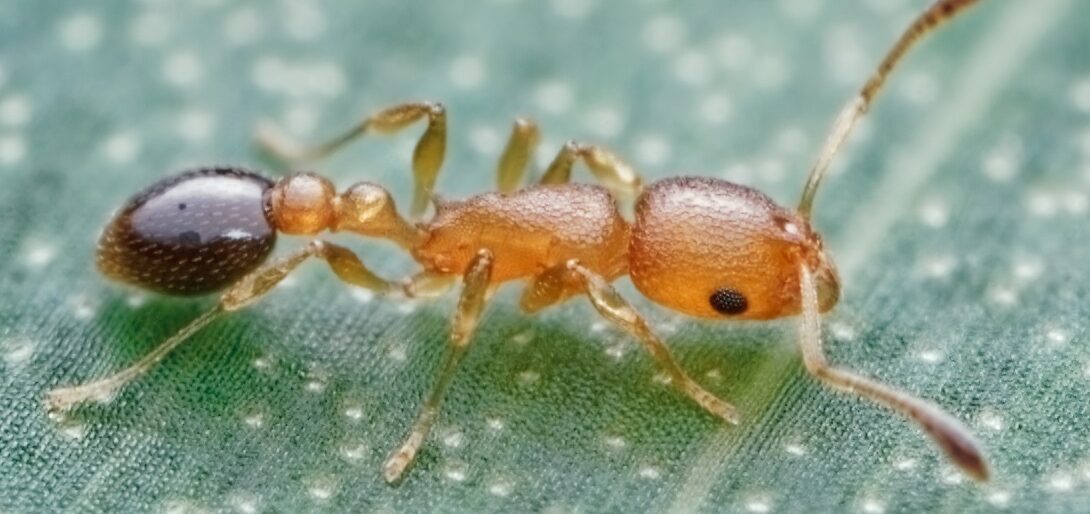
Six species of Cardiocondyla have been recorded in the Hawaiian Islands. Most are more or less terrestrial in habit, though one (Cardiocondyla obscurior) is primarily found in arboreal situations. These ants are all very small and, though common and widespread, are rarely encountered in large numbers. They do not travel in orderly trails like many familiar ants, but instead tend to be seen in ones and twos and threes sneaking around atop, say, a sidewalk, a picnic table or even your arm or shoulder after having fallen out of the tree you’re standing beneath. Their tiny size and low densities are such that these ants aren’t usually noticed unless one is making an effort to find them. At higher elevations one may encounter a colony of Cardiocondyla itsukii by flipping over stones in cow pastures.
Deyrup, Davis & Cover (2000) appear to have been the first to refer to the ants in the genus as “sneaking ants” and this name has stuck (Wetterer 2012). Accurate identification of ants in the genus was muddled for much of the 20th century, due in part to the variability of many Cardiocondyla species. Deyrup (2017) wrote: “ The taxonomy of the group had slowly degenerated into chaos until 2003, when Bernhard Seifert brought order to a major portion of the genus, including the tramp species” – these “tramp species” being the ones we have here in Hawaiʻi.
Some of these ants, especially Cardiocondyla emeryi, thrive in highly disturbed environments. Surveys conducted by Maui Invasive Species Committee suggest that C. emeryi is the most widely distributed Cardiocondyla throughout the populated lowlands of the island. Huddleston & Fluker (1968) reported it to be “abundant at lower elevations and in lower rainfall areas” though Fellers & Fellers (1981) reported finding it as high as 6200 feet at the head of Kaupō Gap.
Some species, notably Cardiocondyla itsukii and C. minutior, can also readily be found at high elevations, such as within Haleakalā National Park. In his introduction to the Fauna Hawaiiensis, Perkins (1913) wrote that Cardiocondyla minutior “is found in the mountains and on the coast alike.” Several authors (Wheeler 1908, Smith 1944, Deyrup 2017) note that Cardiocondyla venustula is commonly found in fields, beaches and other low elevation open areas. However it seems equally at home in the mountains, with Lubertazzi (2019) reporting detections as high as 6700 feet on Hispaniola.
Identification/Description
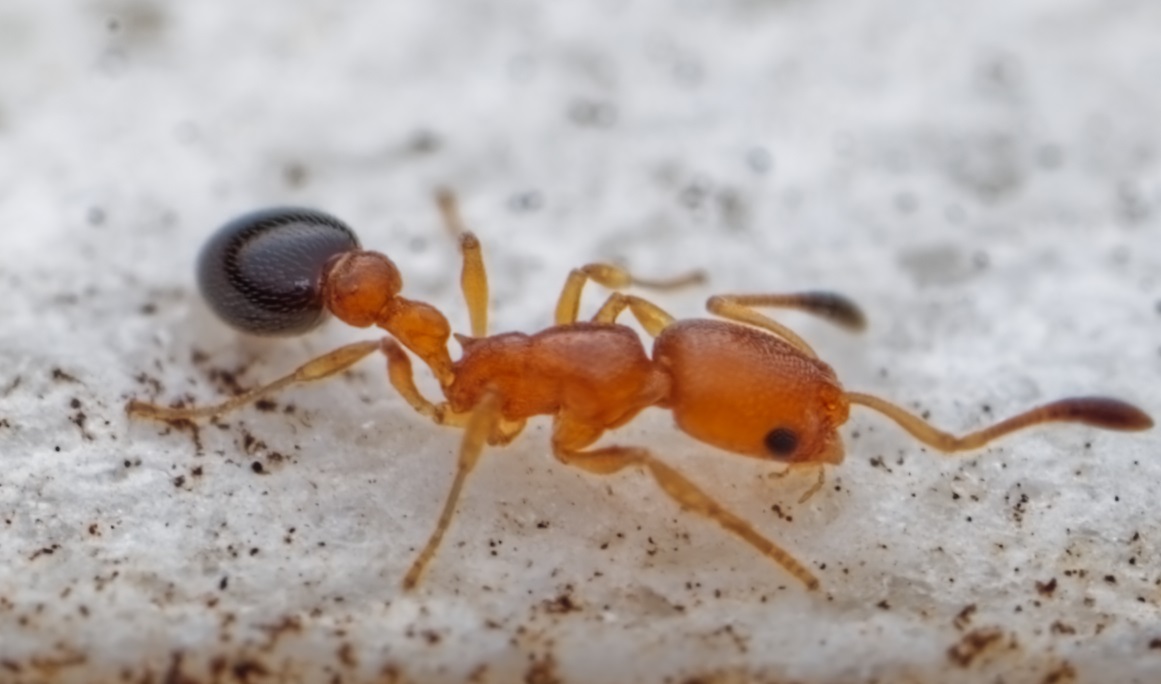
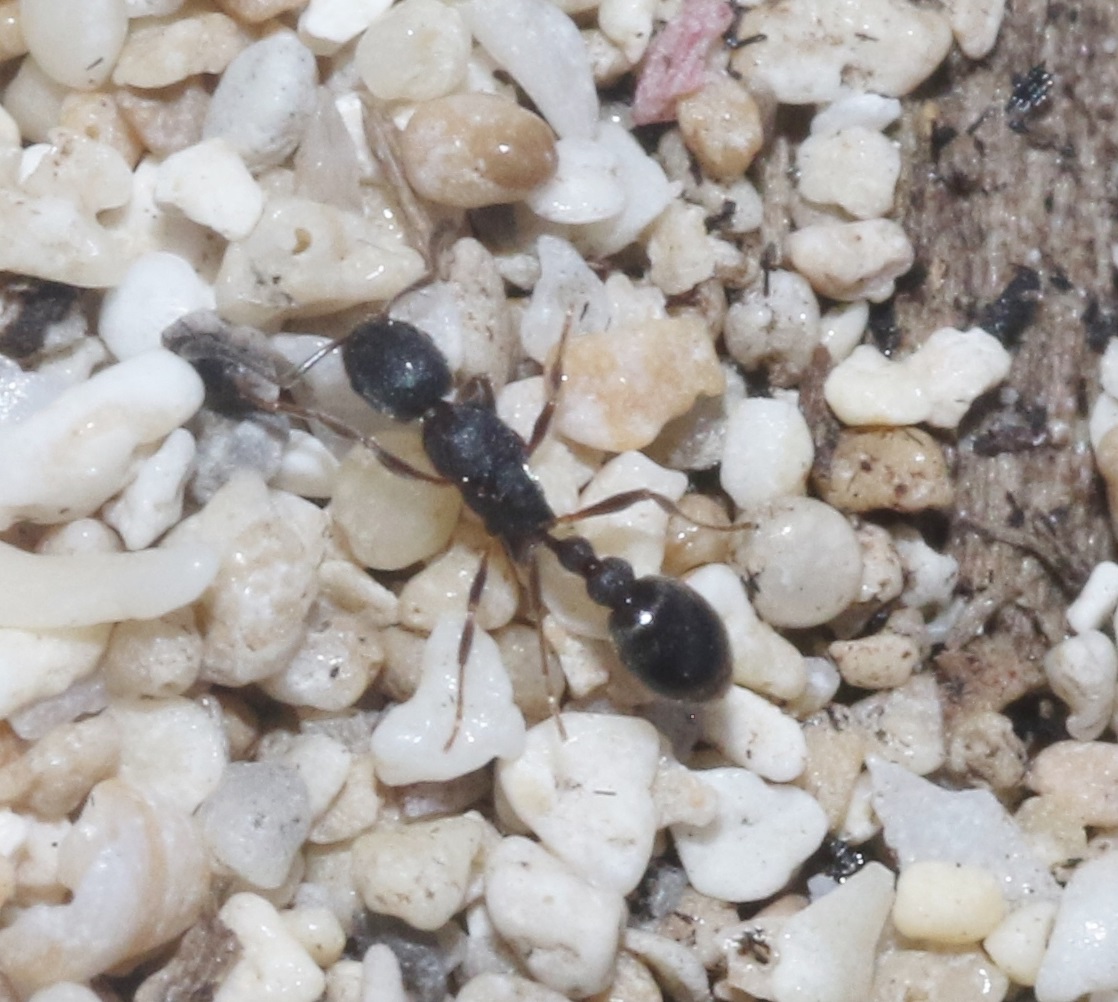
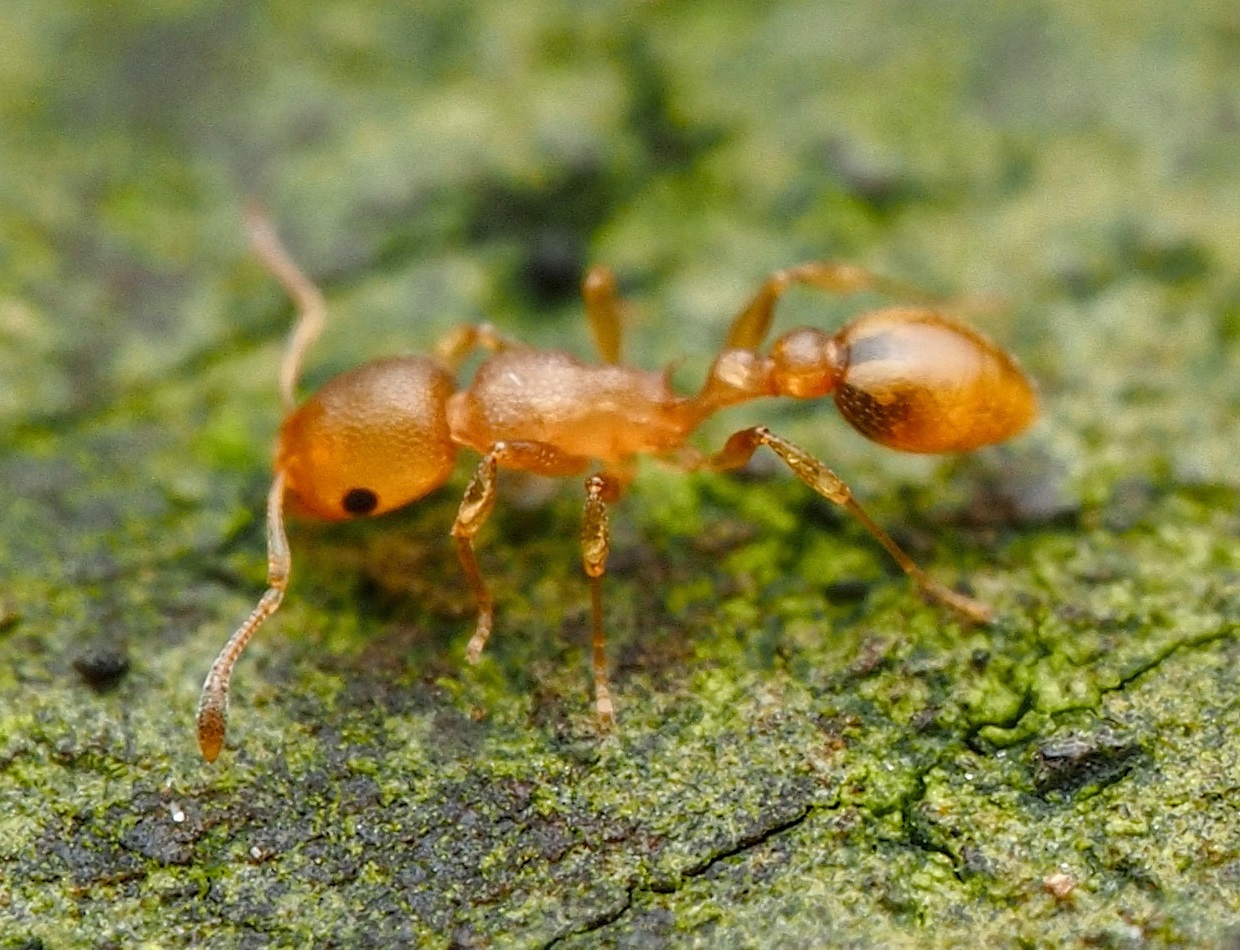
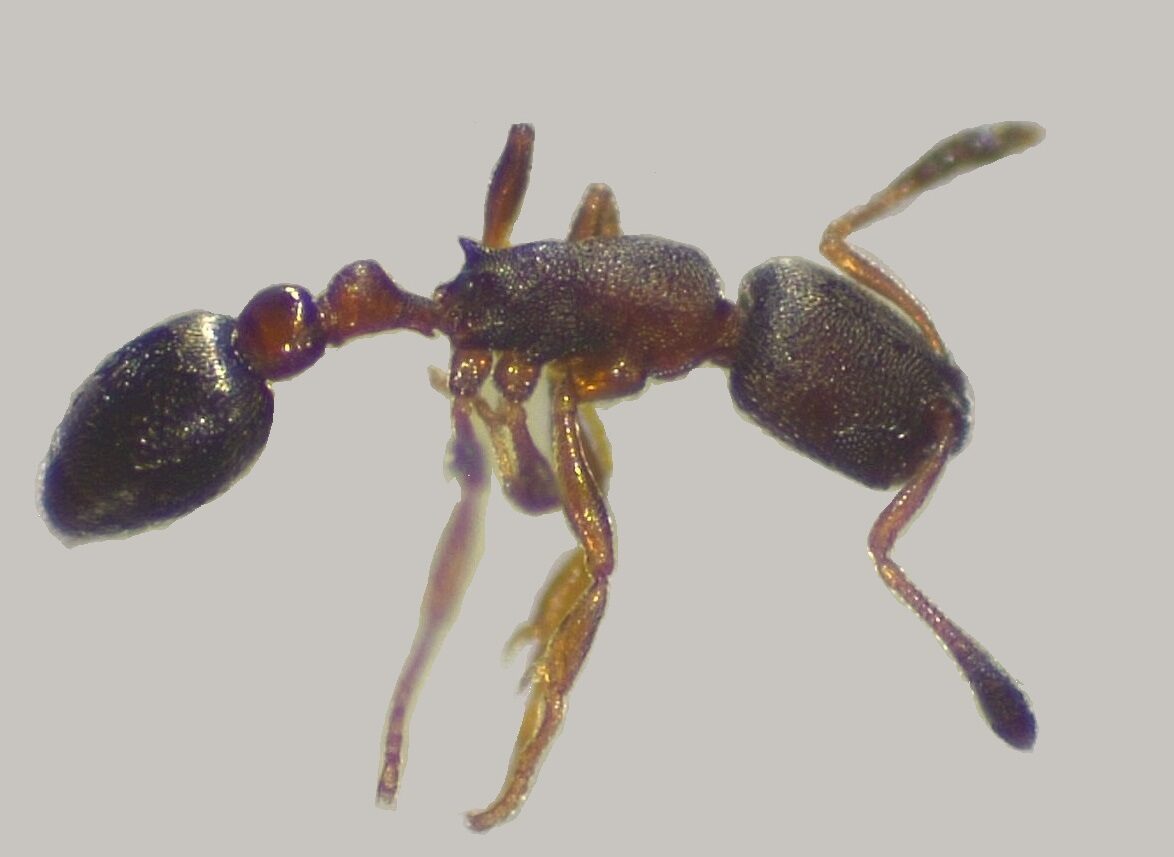
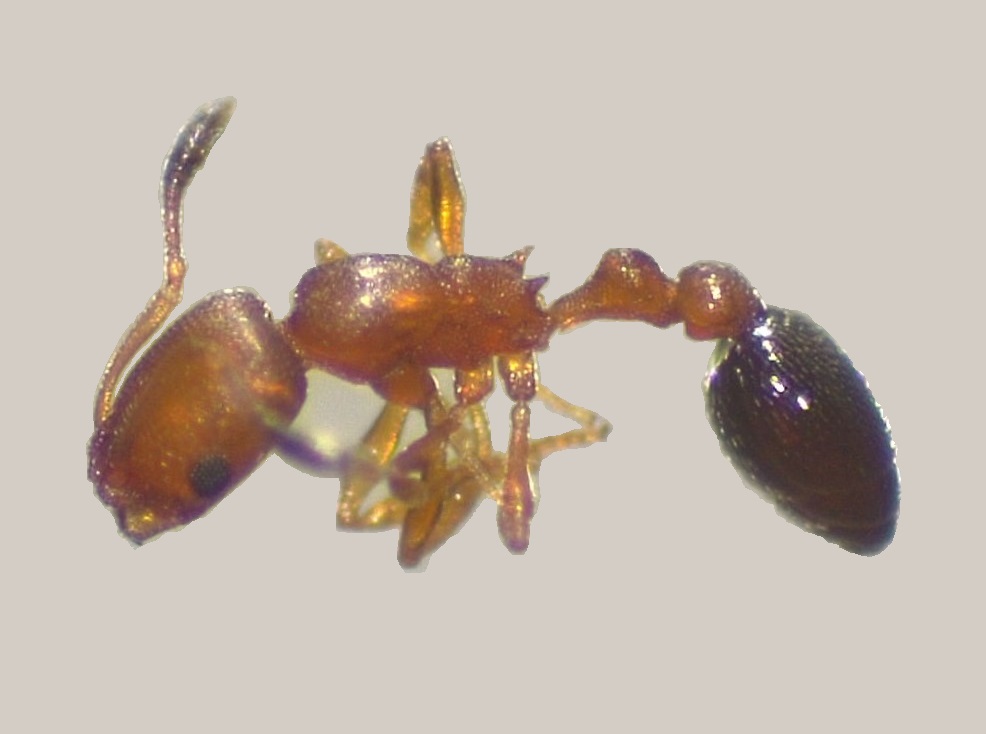
In the field, these ants can be recognized “by their small size; slender, elongate shape; and their characteristic way of moving discretely and singly among other ants, with the body almost touching the ground – hence the name ‘Sneaking Ants’ ” (Deyrup 2017). Although Sarnat & Economo (2012) reported that “Cardiocondyla emeryi has been observed in Fiji forming strong recruiting trails to food baits”, most species of this genus have been observed to be relatively weak recruiters (Wilson 1959, Creighton & Snelling 1974) – that is, you won’t find them mobbing a dropped crumb of food like some of our more familiar and pestiferous ant species.
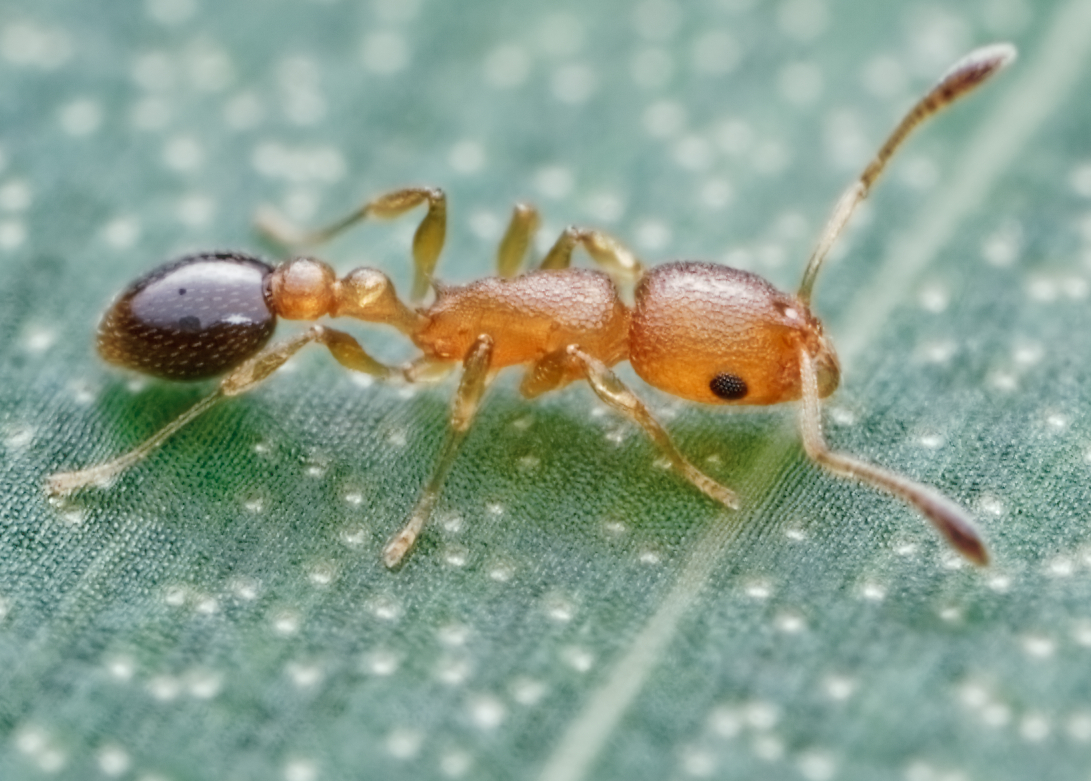
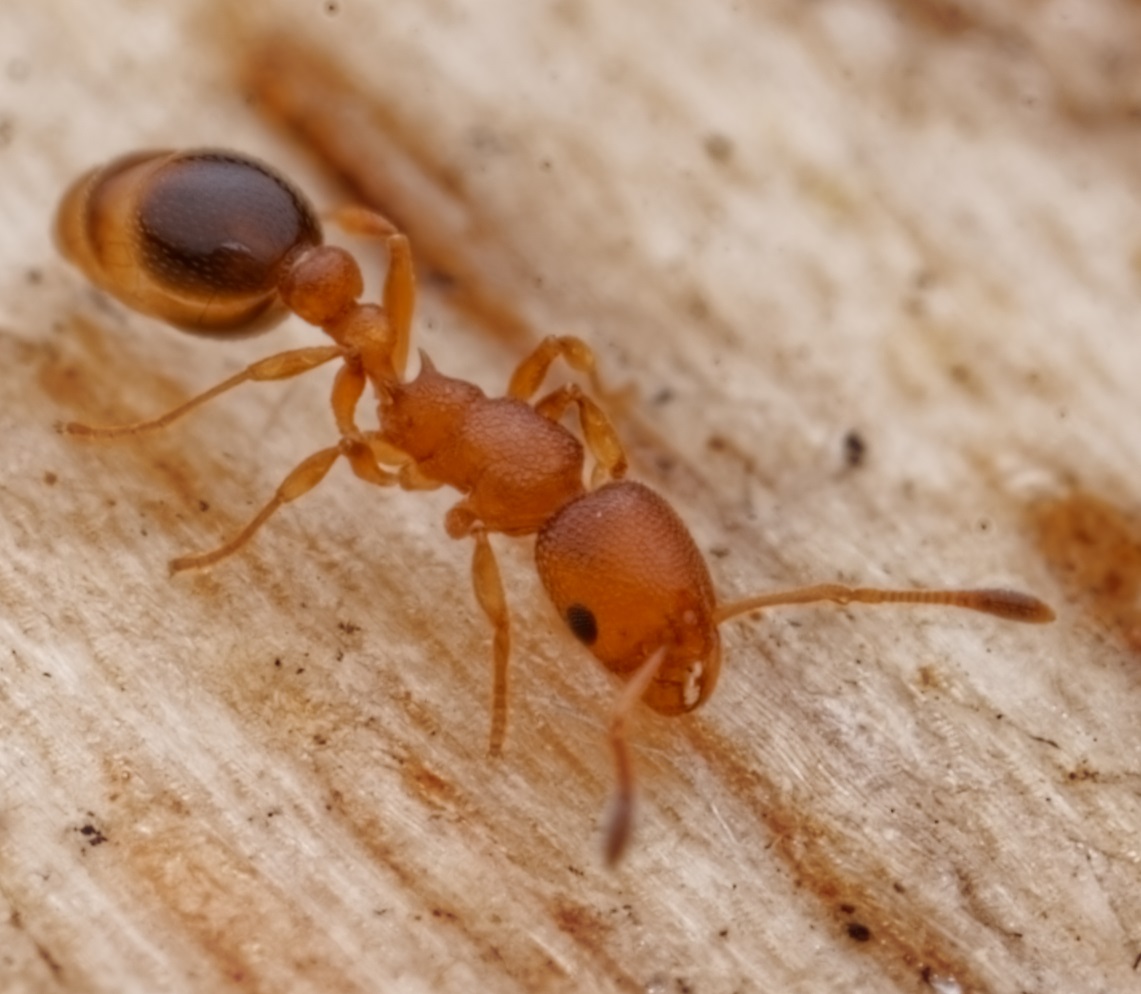
Three of our Carciocondyla are yellow or reddish-yellow in coloration: Cardiocondyla wroughtonii is consistently yellow throughout, while C. emeryi and C. obscurior both tend to have an orangish head and mesothorax with a brownish-black gaster. Our other three Cardiocondyla (C. itsukii, C. minutior and C. venustula) are all quite dark.
.
Impacts
- Sneaking Ants in Hawaiʻi are generally present in low numbers and not considered pests.
- Though some species are readily found in high elevation areas with important conservation value, there is no clear indication whether they pose a risk to native biodiversity.
History
- The earliest records of Sneaking Ants in the Islands (of Cardiocondyla minutior and C. wroughtonii) date to 1893 (ref: Bishop Museum specimens), while the most recent to arrive (C. obscurior) was first recorded in 1994 (Krushelnycky, Loope & Reimer 2005). Due to longstanding difficulties in distinguishing some of the species, our understanding of their distributions amongst the Islands is incomplete (for example: C. itsukii and C. venustula are very difficult to tell apart even under a microscope). In Maui Nui, all six species have been recorded on Maui; all but C. venustula are known from Molokaʻi, and all but C. venustula and C. obscurior have been reported on Lānaʻi. Oddly, no species in this genus have been recorded on Kahoʻolawe.
Resources/References
- Cardiocondyla emeryi – AntWiki – Emery’s Sneaking Ant
- Cardiocondyla itsukii – AntWiki – Itsuki’s Sneaking Ant
- Cardiocondyla minutior – AntWiki – Lesser Black Sneaking Ant
- Cardiocondyla obscurior – AntWiki – Arboreal Sneaking Ant
- Cardiocondyla venustula – AntWiki – Larger Black Sneaking Ant
- Cardiocondyla wroughtonii – AntWiki – Yellow Sneaking Ant
- Creighton, W. S. & Snelling, R. R. 1974. Notes on the Behavior of Three Species of Cardiocondyla in the United States (Hymenoptera: Formicidae). Journal of the New York Entomological Society 82(2): 82–92.
- Deyrup, M. 2017. Ants of Florida – Identification and Natural History. CRC Press, Boca Raton, Florida. 423 pp.
- Deyrup, M., Davis, L. & Cover, S. 2000. Exotic Ants in Florida. Transactions of the American Entomological Society 126(3+4): 293–326.
- Fellers, J. H. & Fellers, G. M. 1981. The Status and Distribution of Ants in the Crater District of Haleakala National Park. University of Hawaii, Department of Botany Technical Report 40: 1–27.
- Huddleston, E. W. & Fluker, S. S. 1968b. Distribution of Ant Species of Hawaii. Proceedings of the Hawaiian Entomological Society 20(1): 45–69.
- Krushelnycky, P. D., Loope, L. L. & Reimer, N. J. 2005. The Ecology, Policy, and Management of Ants in Hawaii. Proceedings of the Hawaiian Entomological Society 37: 1–25.
- Lubertazzi, D. 2019. The Ants of Hispaniola. Bulletin of the museum of Comparative Zoology 162(2): 59–210.
- Perkins, R. C. L. 1913. Fauna Hawaiiensis – Introduction. Cambridge University Press, London. 1(4): 1–228.
- Sarnat, E. & Economo, E. P. 2012. The Ants of Fiji. University of California Press, Berkeley & Los Angeles, California. 384 pp.
- Smith, M. R. 1944. Ants of the Genus Cardiocondyla Emery in the United States. Proceedings of the Entomological Society of Washington 46(2): 30–41.
- Wetterer, J. K. 2012. Worldwide spread of Emery’s sneaking ant, Cardiocondyla emeryi (Hymenoptera: Formicidae). Myrmecological News 17: 13–20.
- Wheeler, W. M. 1908. The Ants of Porto Rico and the Virgin Islands. Bulletin of the American Museum of Natural History 24(6):117–158.
- Wilson, E. O. 1959. Communication by tandem running in the ant genus Cardiocondyla. Psyche: A Journal of Entomology by the Cambridge Entomological Club 66(3): 29–34.