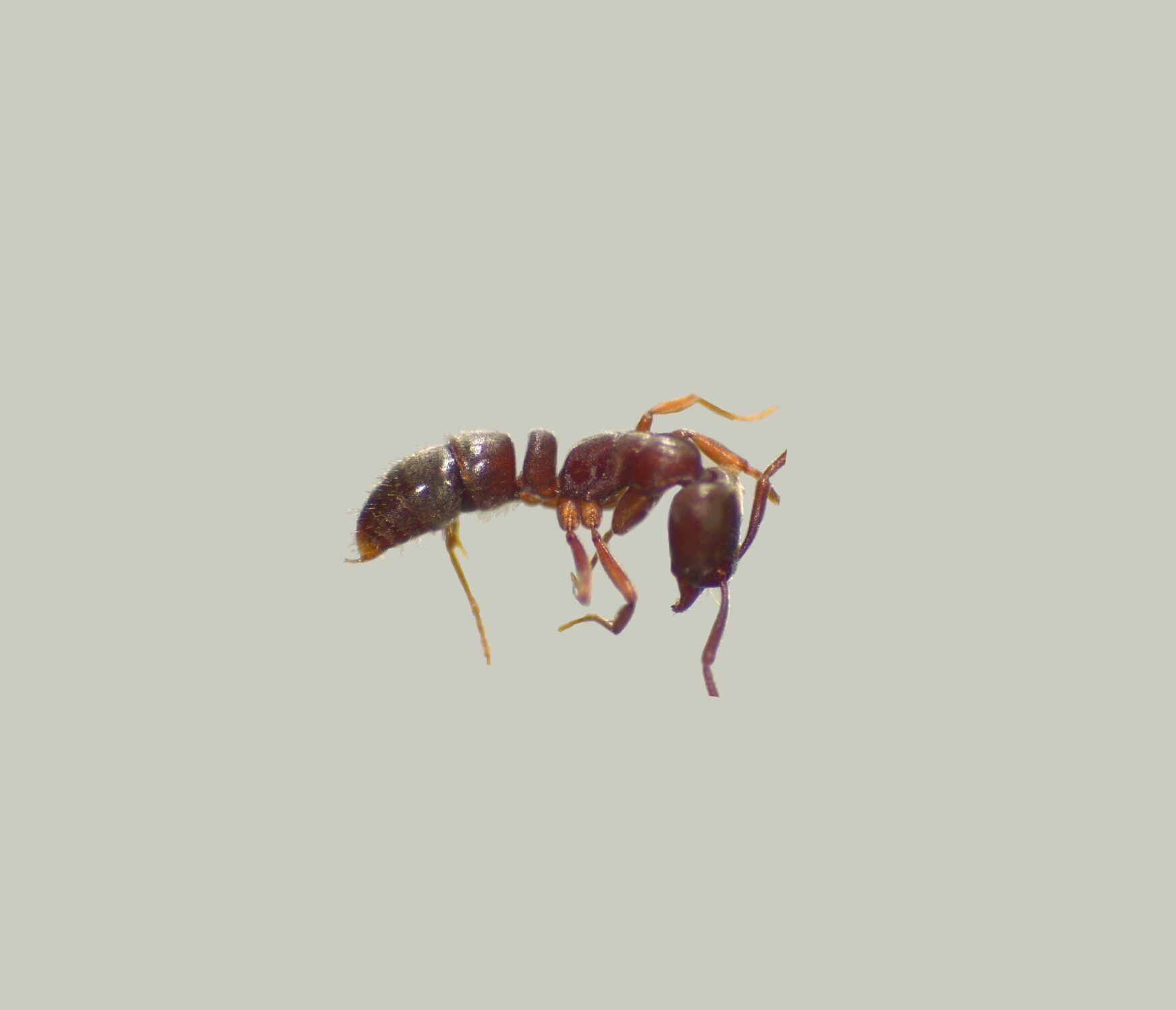
Crypt Ants
Hypoponera opaciceps, H. opacior, H. punctatissima H. ragusai, H. zwaluwenburgi, H. sp HI01
Species Info General
Other common names include: Mini-ponerine Ants
Crypt Ants are small soil dwelling predators of the subfamily Ponerinae, a grouping “composed of the most primitive ants that usually live in comparatively small communities, the queens of which often resemble exactly, and carry on like, an ordinary worker ant” (Williams et al. 1931). One is generally unlikely to encounter them without making a concerted effort – with the exception of the winged queens that sometimes will land on you and inflict an uncomfortable sting. “[T]hey are comparatively inactive, brown to blackish insects that never intrude in [the] house, but live in very small communities in woody places, under stones, bark, the moss on trees, in compost, and occasionally in rotten cane” (Williams et al. 1931).
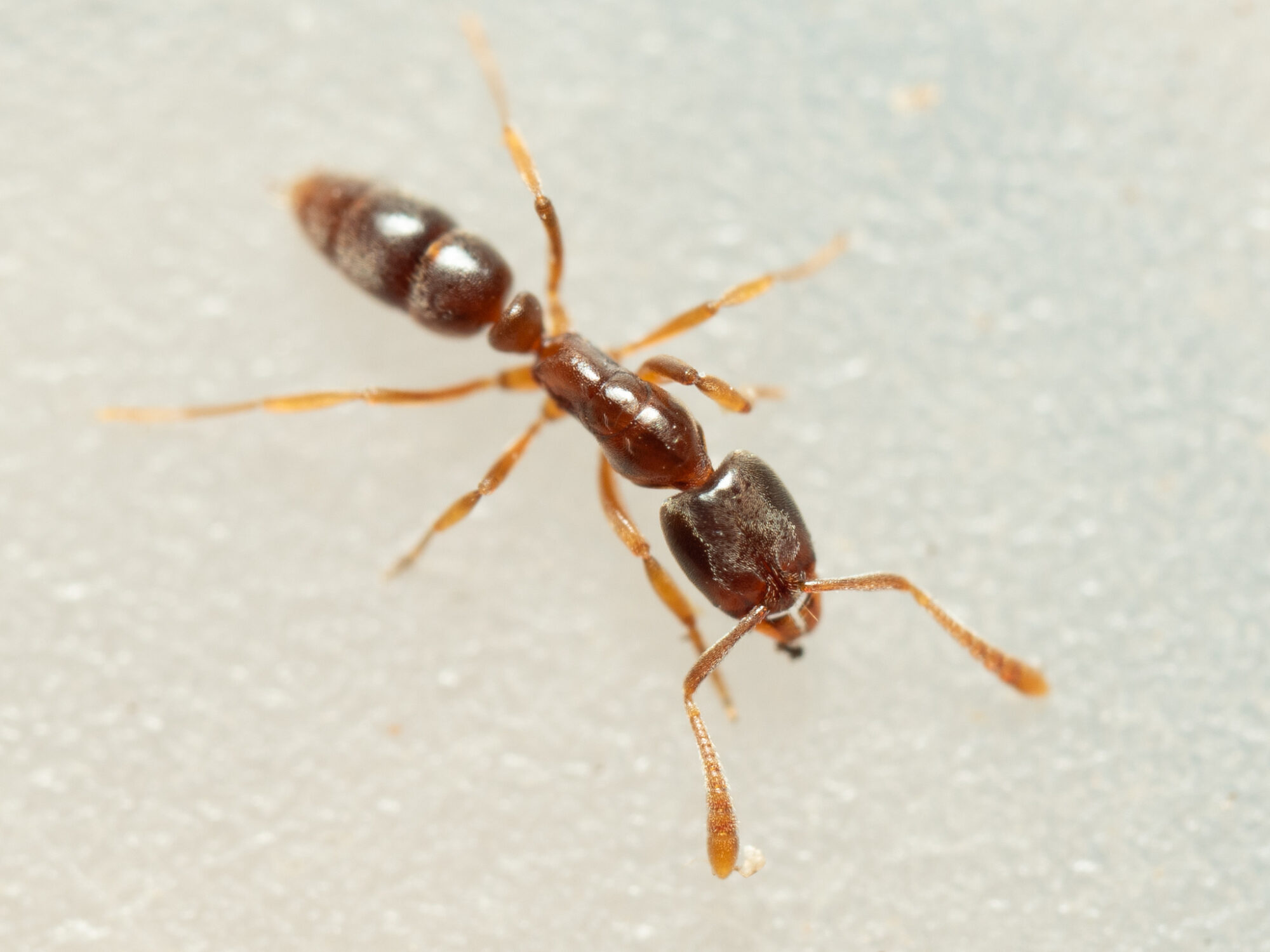
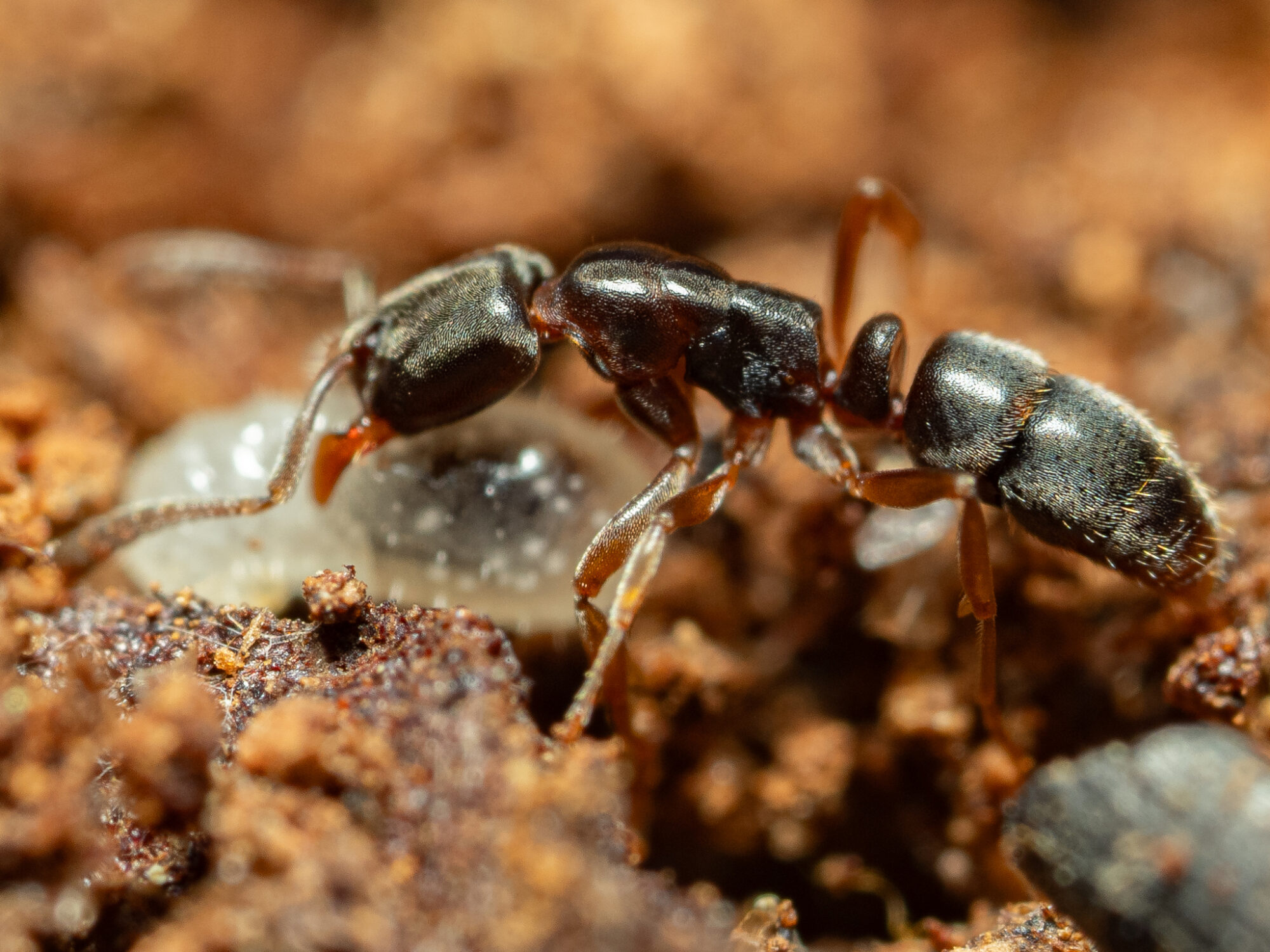
Six or seven species of Hypoponera have been recorded in the Islands. Reimer, Beardsley & Jahn (1990) speculated that H. opaciceps and/or H. punctatissima “could have arrived with the Polynesian voyagers who first populated the islands”, though our present understanding of these two species’ native ranges (Central and South America for the former and Africa for the latter) makes this seem unlikely. A number of Hypoponera species here are relatively common in the right habitats, though two (H. ragusai and H. zwaluwenburgi) are quite scarce and don’t seem to have been recorded here for several decades. Of the habits of the ants in this genus, Kempf (1962) wrote “All species are more or less cryptobiotic, foraging in leaf mold. Their nests are frequently found in rotten wood. Siftings of forest floor cover usually yield a large quantity of specimens.” He also added that “The classification of this group is still primitive.” Bharti et al. (2015) wrote “The small size of the ants, coupled with the morphological monotony has led to the neglect of this genus.” Taxonomic clarity has improved with publications such as Bolton & Fisher (2011). However, the Hypoponera in Hawaiʻi are not widely collected, studied or understood. DNA barcoding is in progress and will hopefully shed some light on the taxonomy of these ants in the Islands (Krushelnycky, pers. comm). In the meantime, the list of Hawaiian Hypoponera should be considered tentative. That is, records of some of the species listed at the top and bottom of this page may eventually turn out to refer to other species.
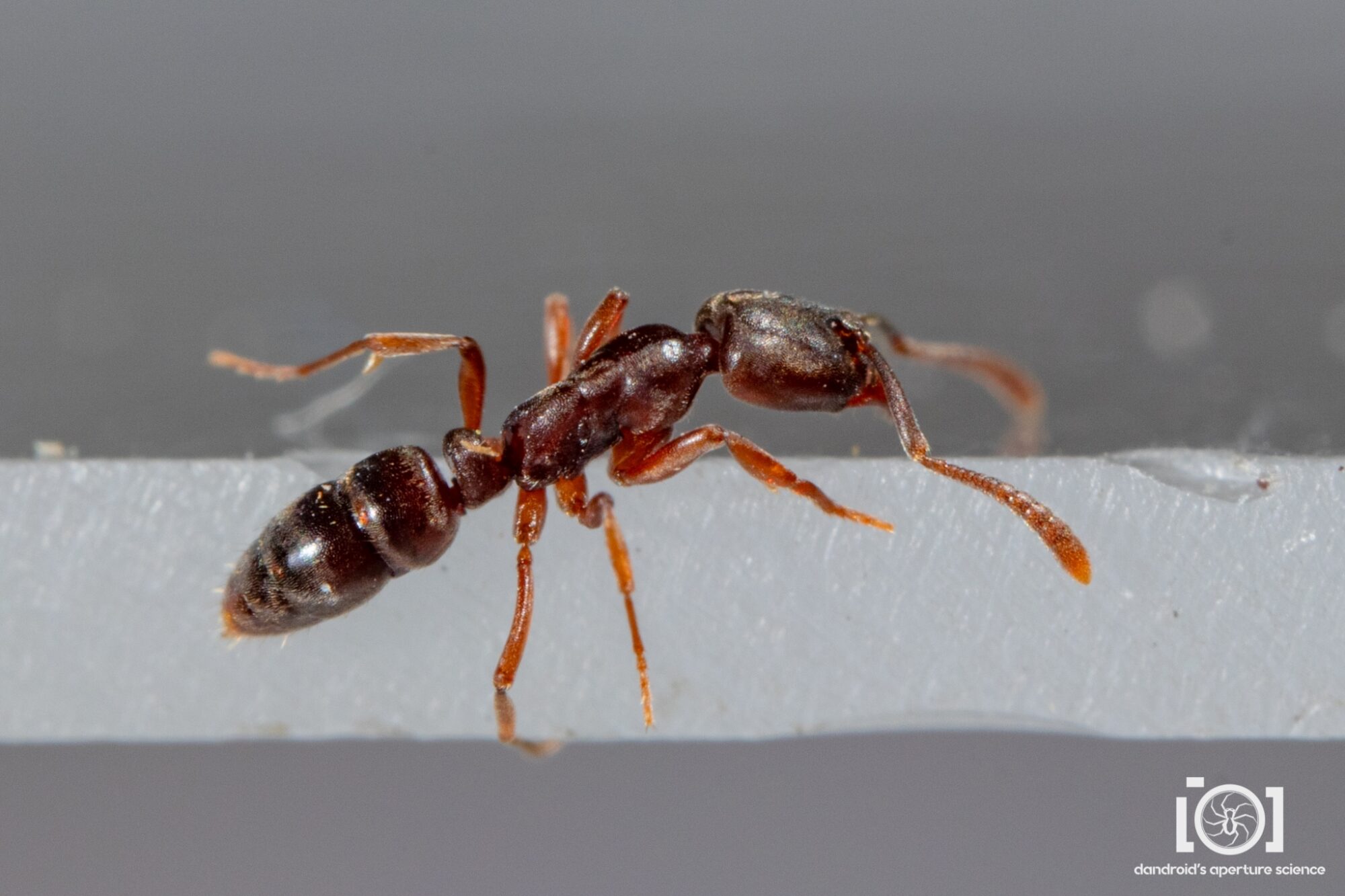
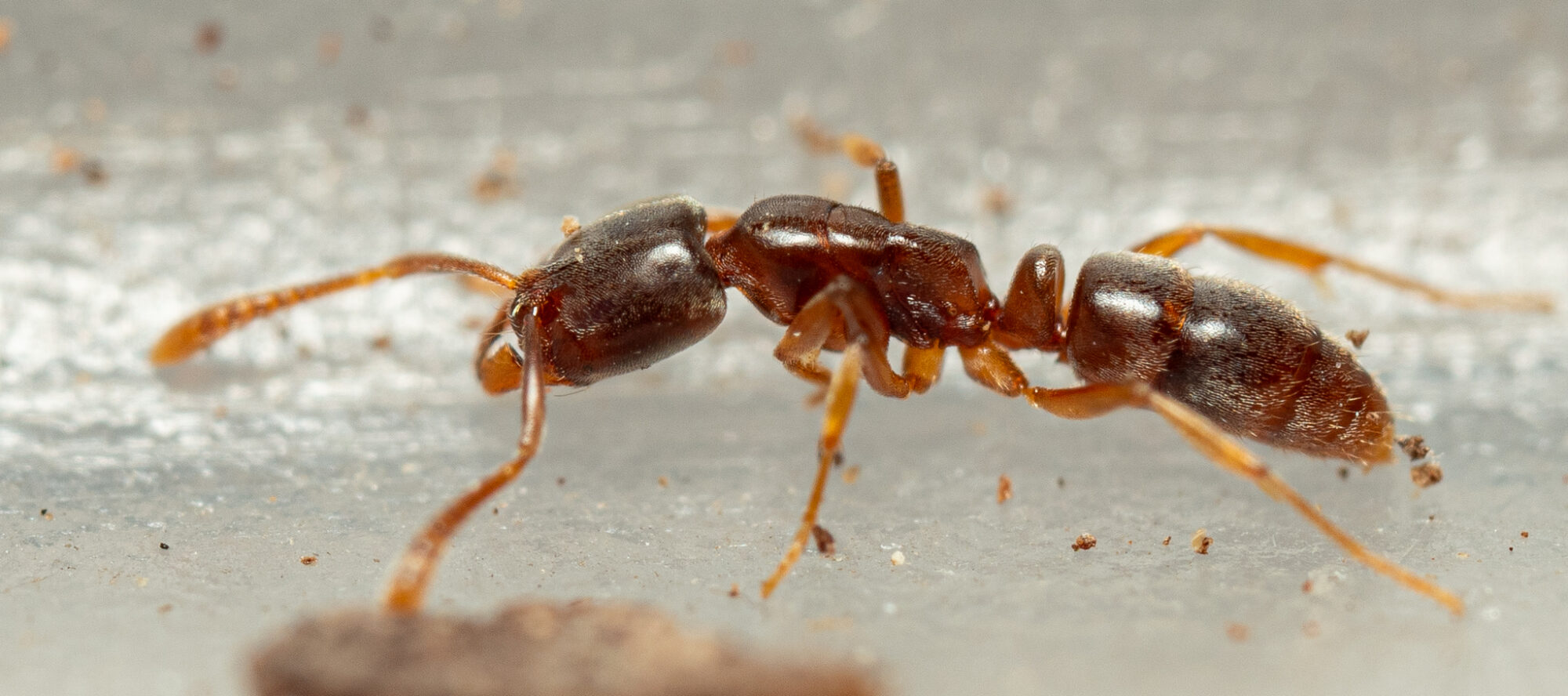
Two of the earliest recorded species in the Islands (Hypoponera opaciceps and H. punctatissima) seem to be on fairly solid ground in terms of their identities. Hypoponera opaciceps is said to be found “[i]n the mountains on all the islands, generally from 2000 – 4000 ft” (Forel 1899). Its widespread high-elevation distribution long led many to think it was a native, and perhaps even endemic, ant species. Perkins (1906) even called it our “single native ant”. As mentioned above, however, its native range actually appears to be Central and South America along with the Caribbean. Fellers & Fellers (1981) found this ant to be common even in the middle of Haleakalā Crater within the national park, while Medeiros, Loope & Cole (1986) found it as high as 9200 feet. How and why this ant found itself nestled so comfortably at higher elevations are interesting if not intriguing questions. Of this ant in Hawaiʻi, Perkins (1913) wrote “the forest-haunting [Hypoponera opaciceps] . . . is rarely found on the lowlands. It lives in very small communities, usually of four or five to a dozen individuals, in woody places, where the ground is covered with dead leaves, or in more open places under logs or stones. It is often common under stones on the edges of the mountain streams. Throughout great areas of forest land, where the fauna is chiefly endemic, it is the sole representative of the Ants.” Deyrup (2017) reports that both H. opaciceps and H. punctatissima “queens can deliver a noticeable sting when they become trapped under clothing or stuck to the skin by sweat.”
Identification/Description
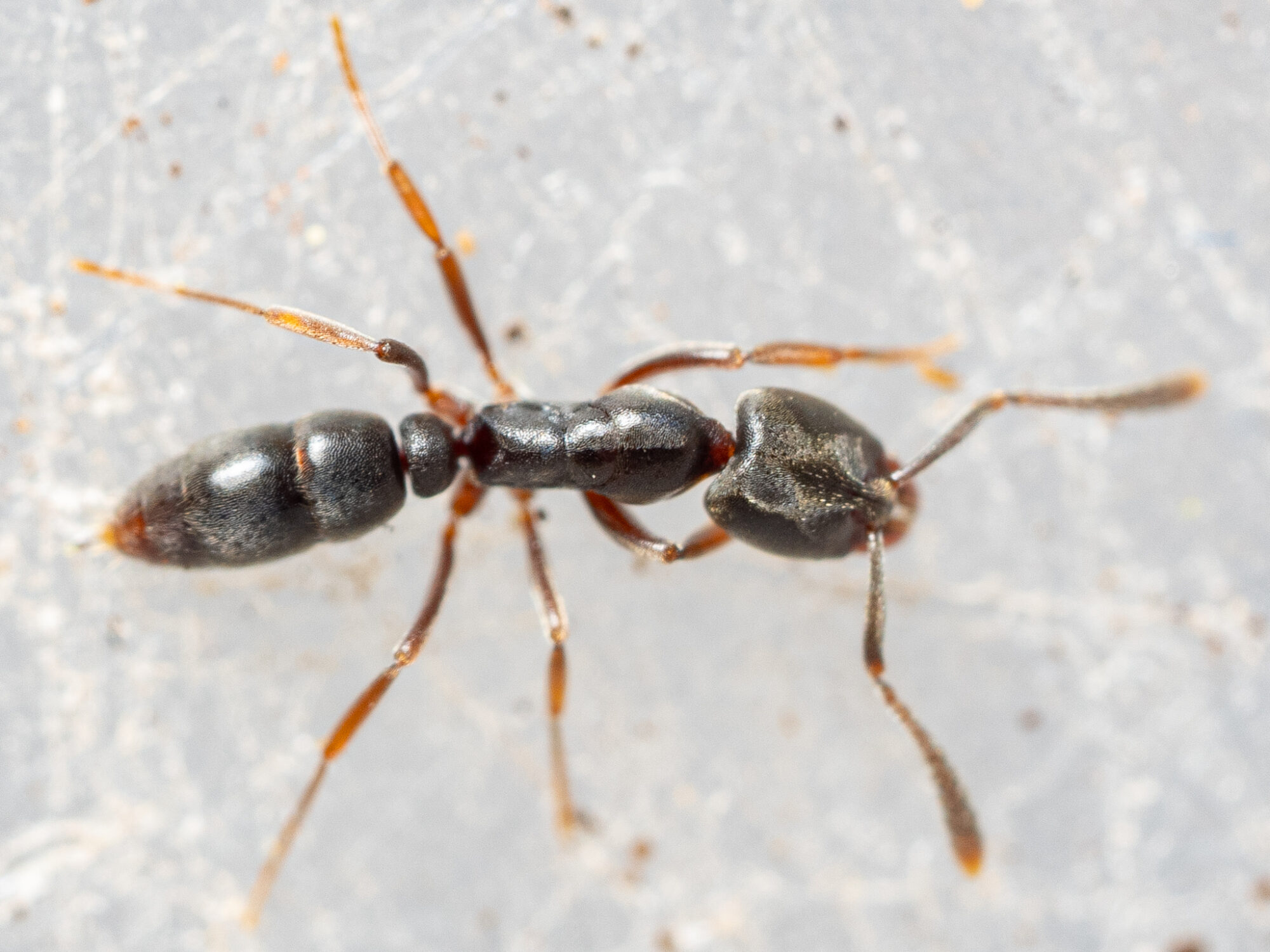
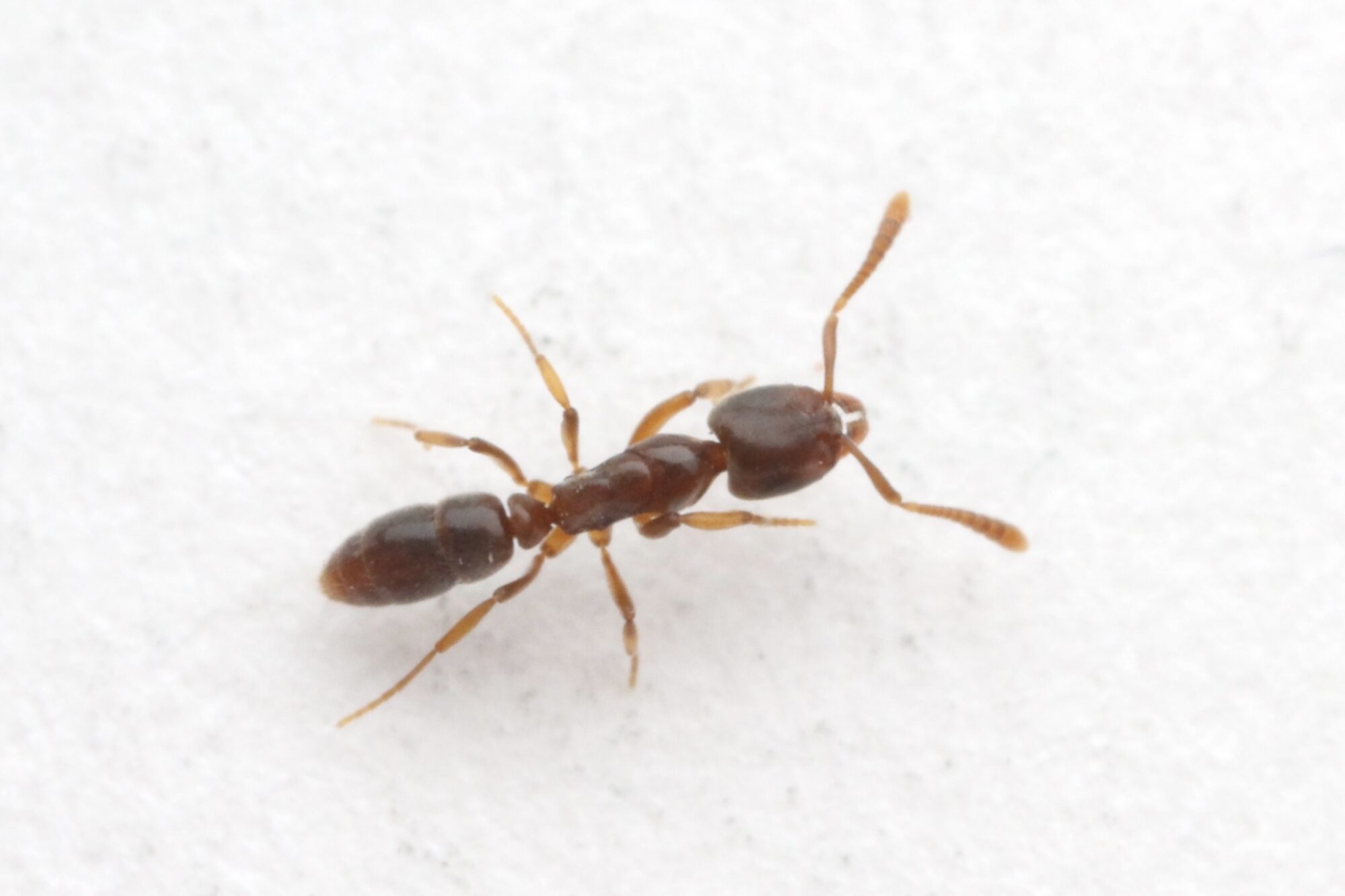
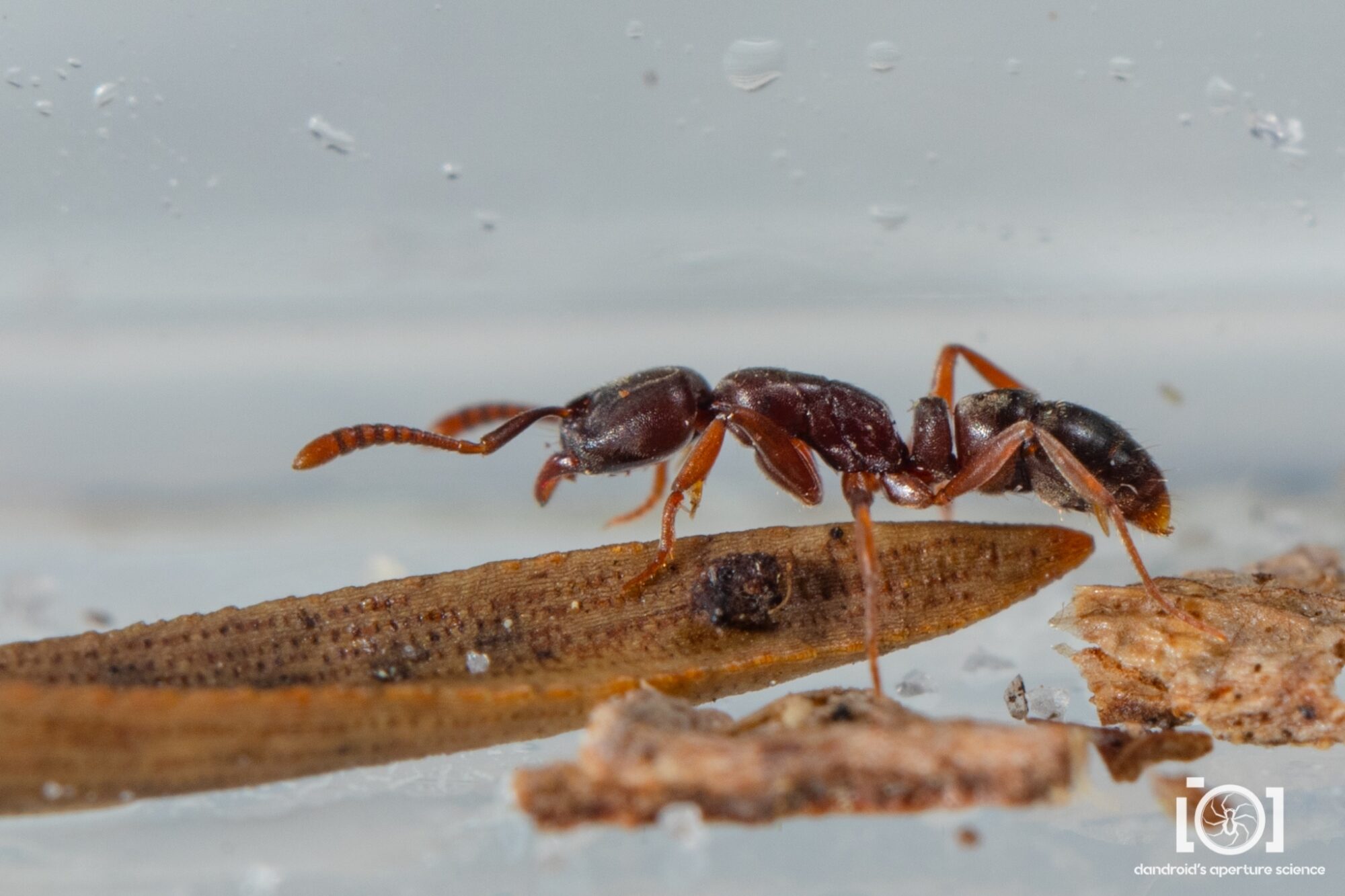
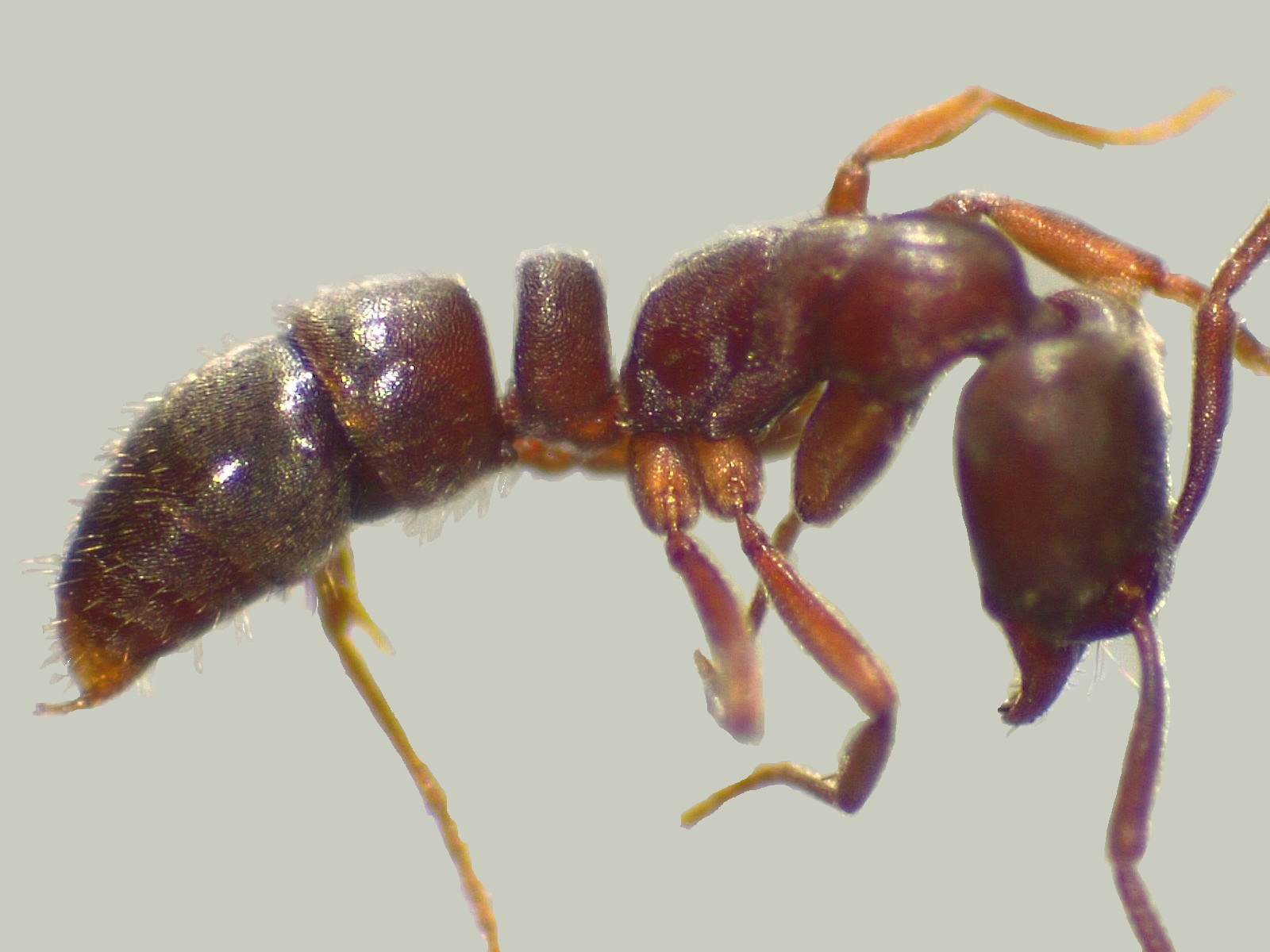
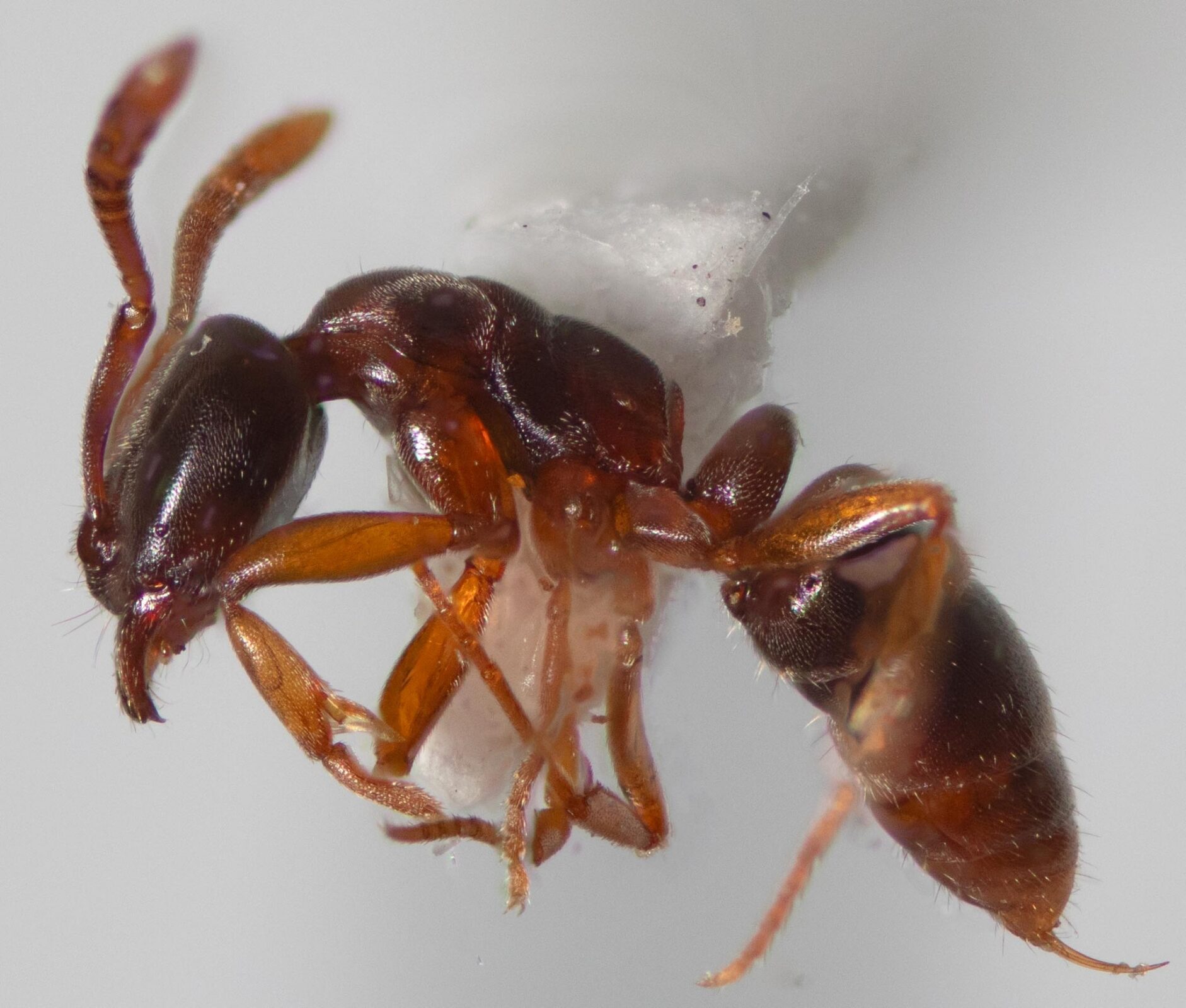
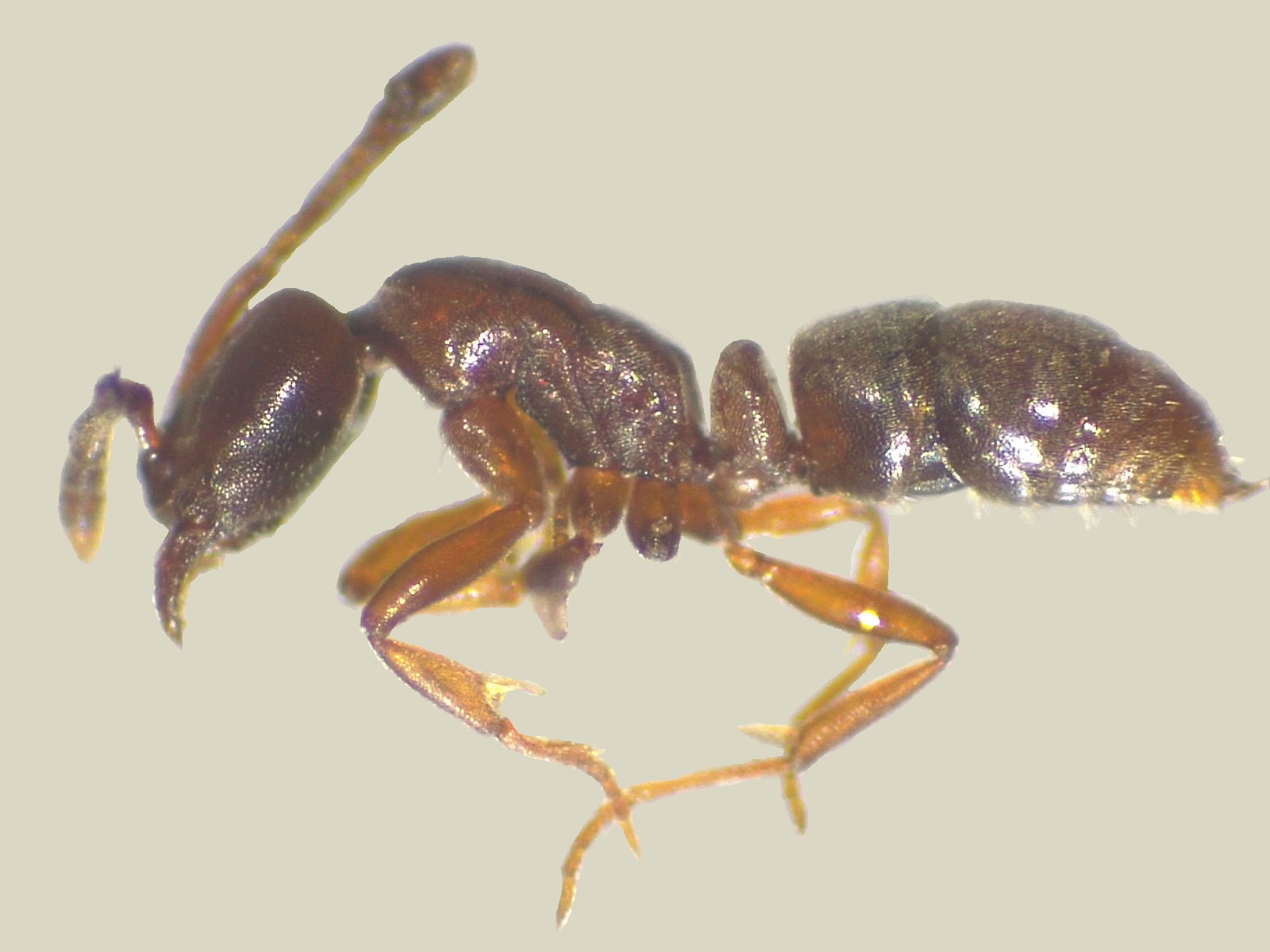
These are small, slow-moving brownish-blackish or reddish-brown ants. Their eyes range from tiny to non-existent. Many have bulky, tall petioles – the short segment between the main body and the gaster (or rear end) – the shape of which can sometimes help determine which species you’re looking at.
.
Impacts
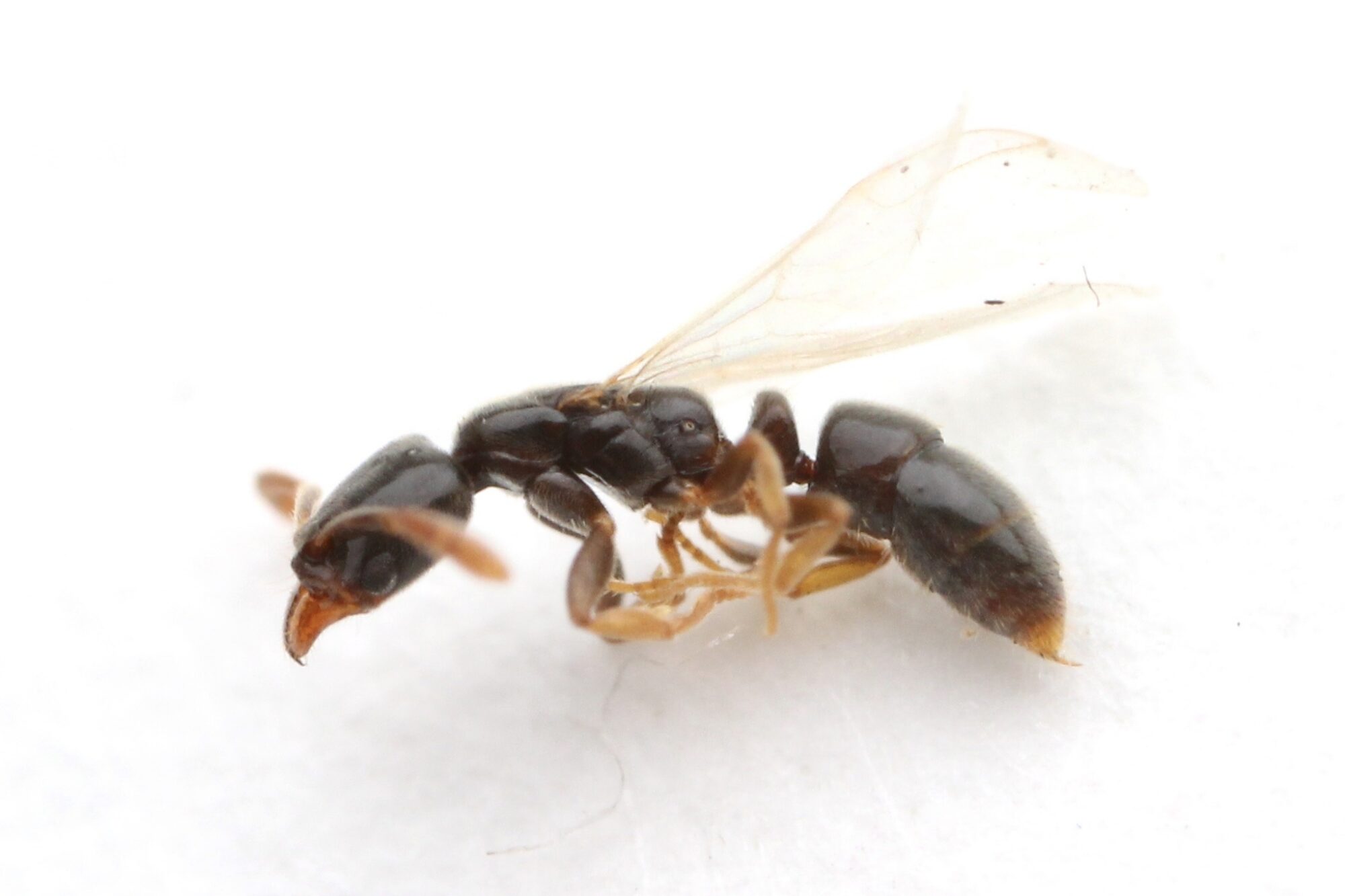
- The queens of some species (particularly H. opaciceps and H. punctatissima) are known to sting. Deyrup (2017) wrote that in Florida H. punctatissima “is a cryptic species whose wide range might not have been documented were it not for the large numbers of queens that emerge to disperse, stinging with relatively little provocation.”
History
- Though their taxonomy was quite muddled in the beginning (and in some cases still is), the earliest records of Crypt Ants in the Islands date back to collections made in the 1870s by the Reverend Thomas Blackburn, an avid amateur entomologist living in Honolulu (Smith 1879). By the time the Fauna Hawaiiensis was published in the first decade of the 1900s three species (H. opaciceps, H. punctatissima and H. ragusai) had been recorded, though mostly under different names that were later sorted out by Wilson & Taylor (1967). H. zwaluwenburgi was added to our list in the 1930s (Wheeler 1933), Hypoponera sp HI01 in 1967 (Huddleston & Fluker 1968, who called it Hypoponera sinensis), and H. opacior in 2001.
- Hypoponera opaciceps and H. punctatissima are both recorded for Maui, Molokaʻi and Lānaʻi (Forel 1899, Nishida 2002). Hypoponera opacior (Antweb.com CASENT0191074) and H. zwaluwenburgi (van Zwaluwenburg 1934, Wheeler 1934) have also been recorded on Maui, and H. ragusai has been recorded on Lānaʻi (Antweb.com CASENT0887908). Oddly, though two Hypoponera species have been found in the Northwest Hawaiian Islands in several places from Necker to Kure, no Hypoponera at all have ever been recorded on Kahoʻolawe.
Resources/References
- Hypoponera opaciceps – AntWiki – Granulate Crypt Ant
- Hypoponera opacior – AntWiki – Common Crypt Ant
- Hypoponera punctatissima – AntWiki– Roger’s Crypt Ant
- Hypoponera ragusai – AntWiki – Ragusa’s Crypt Ant
- Hypoponera zwaluwenburgi – AntWiki – van Zwaluwenburg’s Crypt Ant
- Hypoponera sp HI01 – AntWeb – Unidentified Crypt Ant (Hawaiʻi #01)
- AntWeb. Version 8.114. California Academy of Science, online at https://www.antweb.org. Accessed 18 May 2026.
- Bharti, H., Akbar, S. A., Wachkoo, A. A. & Singh, J. 2015. Taxonomic studies on ant genus Hypoponera (Hymenoptera: Formicidae: Ponerinae) from India. Asian Myrmecology 7: 37–51.
- Bolton, B. & Fisher, B. L. 2011. Taxonomy of Afrotropical and West Palaearctic Ants of the ponerine genus Hypoponera Santschi (Hymenoptera: Formicidae). Zootaxa 2843: 1–118.
- Deyrup, M. 2017. Ants of Florida – Identification and Natural History. CRC Press, Boca Raton, Florida. 423 pp.
- Fellers, J. H. & Fellers, G. M. 1981. The Status and Distribution of Ants in the Crater District of Haleakala National Park. University of Hawaii, Department of Botany Technical Report 40: 1–27.
- Forel, A. 1899. Formicidae of Hawaii – Heterogyna. (Formicidae.), Fauna Hawaiiensis 1(1): 116–122.
- Huddleston, E. W. & Fluker, S. S. 1968. Distribution of Ant Species of Hawaii. Proceedings of the Hawaiian Entomological Society 20(1): 45–69.
- Kempf, W. W. 1962. Miscellaneous Studies on Neotropical Ants (Hym. Formicidae). Studia Entomologica 5: 1–38.
- Medeiros, A. C., Loope, L. L. & Cole, F. R. 1986. Distribution of Ants and Their Effects on Endemic Biota of Haleakala and Hawaii Volcanoes National Parks: A Preliminary Assessment. Haleakala National Park and Colby College (Waterville, MN) Department of Biology : 39–52.
- Nishida, G. M. 2002. Hawaiian Terrestrial Arthropod Checklist (Fourth Edition). Hawaii Biological Survey Contribution No. 2002-005,Bishop Museum Technical Report No. 22.
- Perkins, R. C. L. 1906. The Insects of Tantalus. Proceedings of the Hawaiian Entomological Society 1(2): 38–51.
- Perkins, R. C. L. 1913. Fauna Hawaiiensis – Introduction. Cambridge University Press, London. 1(4): 1–228.
- Reimer, N. J., Beardsley, J. W. & Jahn, G. 1990. Pest Ants in the Hawaiian Islands. In Vander Meer, R. K., Jaffe, K. & Cedeno, A. (Editors). Applied Myrmecology – A World Perspective, Westview Press, Boulder, San Francisco, Oxford. pp. 40–50.
- Smith, F. 1879. Descriptions of new Species of Aculeate Hymenoptera collected by the Rev. Thos. Blackburn in the Sandwich Islands. The Journal of the Linnean Society (Zoology) 14: 674–685.
- van Zwaluwenburg, R. H. 1934. [Notes and Exhibitions]. Ponerine ants new to the Hawaiian Islands. Proceedings of the Hawaiian Entomological Society 8(3): 375.
- Wheeler, W. M. 1934. Revised list of Hawaiian ants. Bishop Museum Occasional Papers 10(21): 2–21.
- Williams, F. X., Muir, F., Van Zwaluwenburg, R. H. & Swezey, O.H. 1931. Handbook of The Insects and Other Invertebrates of Hawaiian Sugar Cane Fields. Advertiser Publishing Co., Honolulu. 400 pp.
- Wilson, E. O. & Taylor, R. W. 1967. The Ants of Polynesia (Hymenoptera: Formicidae). Pacific Insects Monograph 14: 1–109.