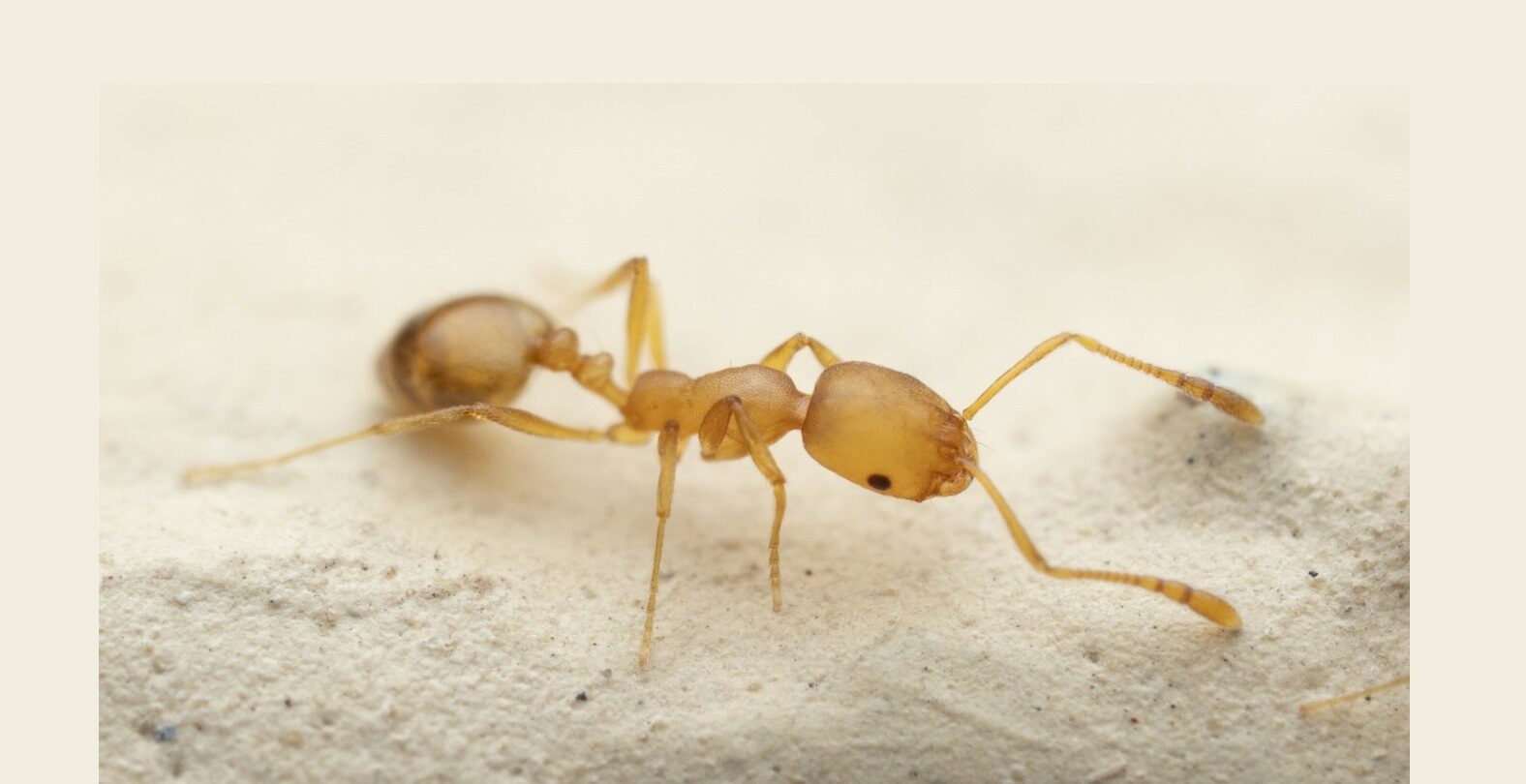
Pharaoh Ant
Monomorium pharaonis
Species Info General
Other common names include: Common House Ant, Little Red Ant, Little Yellow Ant, Hospital Ant, Ship Ant, Red Domestic Ant
Pharaoh Ants are a notorious invasive species, though as will be explained below its impacts in the Islands are rather muted. In their remarkably thorough book on Fiji’s ants, Sarnat & Economo (2012) wrote “This species is one of the most accomplished tramp ants in the world, and has demonstrated a remarkable ability to persist in human habitations, hothouses and food processing plants across the globe.” Fullaway & Krause (1945) wrote of this species: “It is often found on ships, and undoubtedly has been carried about in commerce to the ends of the earth.” E. O. Wilson (1964) called it “perhaps the ant most intimately associated with [humanity]”, while Smith (1965) called it “one of the most common and best known of all house-infesting ants.” Smith went on to say “The Pharaoh ant probably occurs in every town or city of commercial importance in the United States. Although not widely or uniformly distributed in such localities, it is especially common in hotels, large apartment houses, groceries, or other places where food is commercially handled.”
Forel (1901) had these tough words to say about the invasive Pharaoh Ant: “Dieser scheusslichste aller Kosmopoliten kommt von den Kolonialwaarenhandlungen” which roughly translates to “This most hideous of all cosmopolitans comes from the colonial goods trading companies”. This was one of the first tramp ants to travel the globe, with Viehmeyer (1906) writing “hat diese Ameise ziemlich die ganze Erde erobert” or “this ant has conquered almost the entire world.” Reporting on this ant in Germany, Viehmeyer went on to write “It prefers to build its nests in bakeries, bathhouses, and public buildings with central heating – in short, warm places – and its extraordinary rate of reproduction can make it quite a nuisance.” Marlatt (1928) wrote “It has attained a thoroughly cosmopolitan distribution and has been domesticated so long that it is now difficult to determine its exact origin . . . It was originally a soil ant, nesting out of doors in warm countries, and doubtless continues this habit in the Tropics of both hemispheres. In temperate regions it passes its entire existence in heated houses.” Smith (1936) reported that this species “is highly adapted for living in urban areas, where its very populous colonies nest in the woodwork and masonry work of dwellings, stores, etc”. Of this ant in the lower 48 United States, Smith (1965) wrote that “[t]he Pharaoh ant is without doubt the most persistent and difficult of all our house-infesting ants to control or eradicate.”
Perhaps worst of all, however, is the fact that Pharaoh Ants are notorious invaders of hospitals (O’Rourke 1956, Wetterer 2010). Hospitals are structures where the temperature and humidity are kept at a constant level day and night, all year long – conditions that this ant finds very attractive. Aside from the fact that no one in a hospital wants to be further annoyed by ants on top of their other worries, O’Rourke (1956) (referencing Jettmar 1935, Gösswald 1939, and Busvine 1951) reported that this ant is known for spreading disease: “Gösswald (1939) has emphasized that Monomorium pharaonis L. may spread disease in hospitals. This ant is often found feeding on dead bodies, excreta, wet dressings, sputum and on the open sores of patients. . . . The frequency with which this species is found in many hospitals is certainly rather striking. It is liable to enter beds and irritate patients and may even bite small infants and cause them considerable distress.”
Despite this ant’s awful reputation, however, records of it on Maui are extremely limited, and it seems that it has never achieved the invasiveness here (whether in homes or in hospitals) that it shows in other parts of the world. Huddleston & Fluker (1968), writing about this ant in Hawaiʻi, called it “An occasional species collected from widely scattered locations.” As an ant that is mainly pestiferous indoors, the scarcity of records amongst the Maui Invasive Species Committee’s data could plausibly be an artifact of the rural-centric survey priorities utilized by MISC in its island-wide searches for Little Fire Ants. In any case, there have been only a handful of recent records, all from a small area a little west of Hāna. Why this species is not more widely reported poses an interesting question. Ramage (2014), writing about this species in French Polynesia found much the same situation: “This species is rare in French Polynesia and seems very localized. Its somewhat erratic distribution cannot be explained.” In Florida, where the climate mirrors that of Hawaiʻi, Deyrup (2017) wrote that he found “a sparse pattern of distribution, whereas a survey of pest control records would probably blanket the state with distribution points. . . . [T]his is not a species that I can confidently expect to find every time I go to a cheap hotel or restaurant.” Indeed, over the years Maui Invasive Species Committee has fielded hundreds of household complaints and publicly-submitted ant samples from across the island, but never has Monomorium pharaonis been determined to be the pest ant in question. On the other hand, McLelland & Jones (2009) reported this species as being both dominant and quite pestiferous on the NW Island of Laysan.
Identification/Description
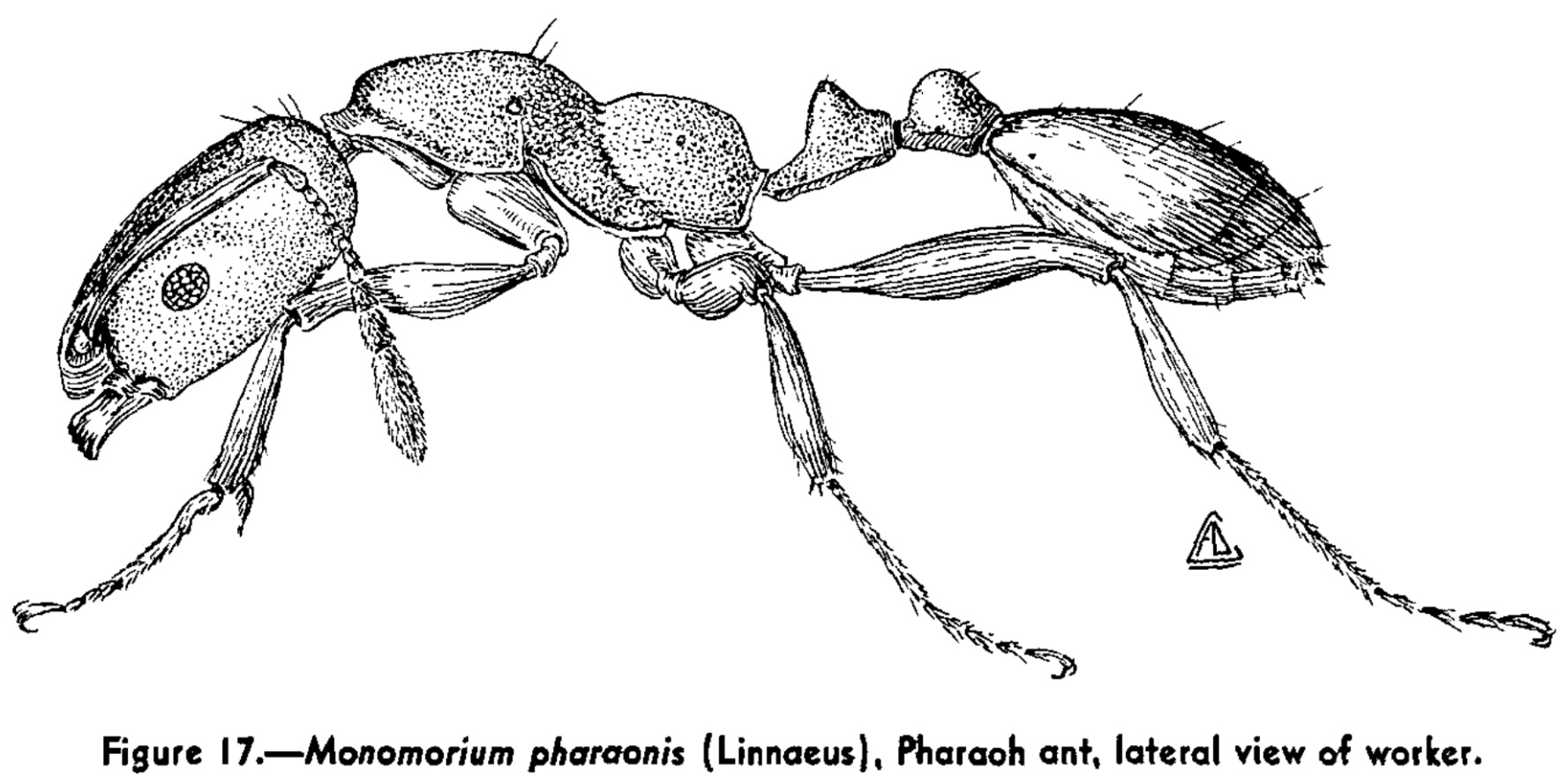
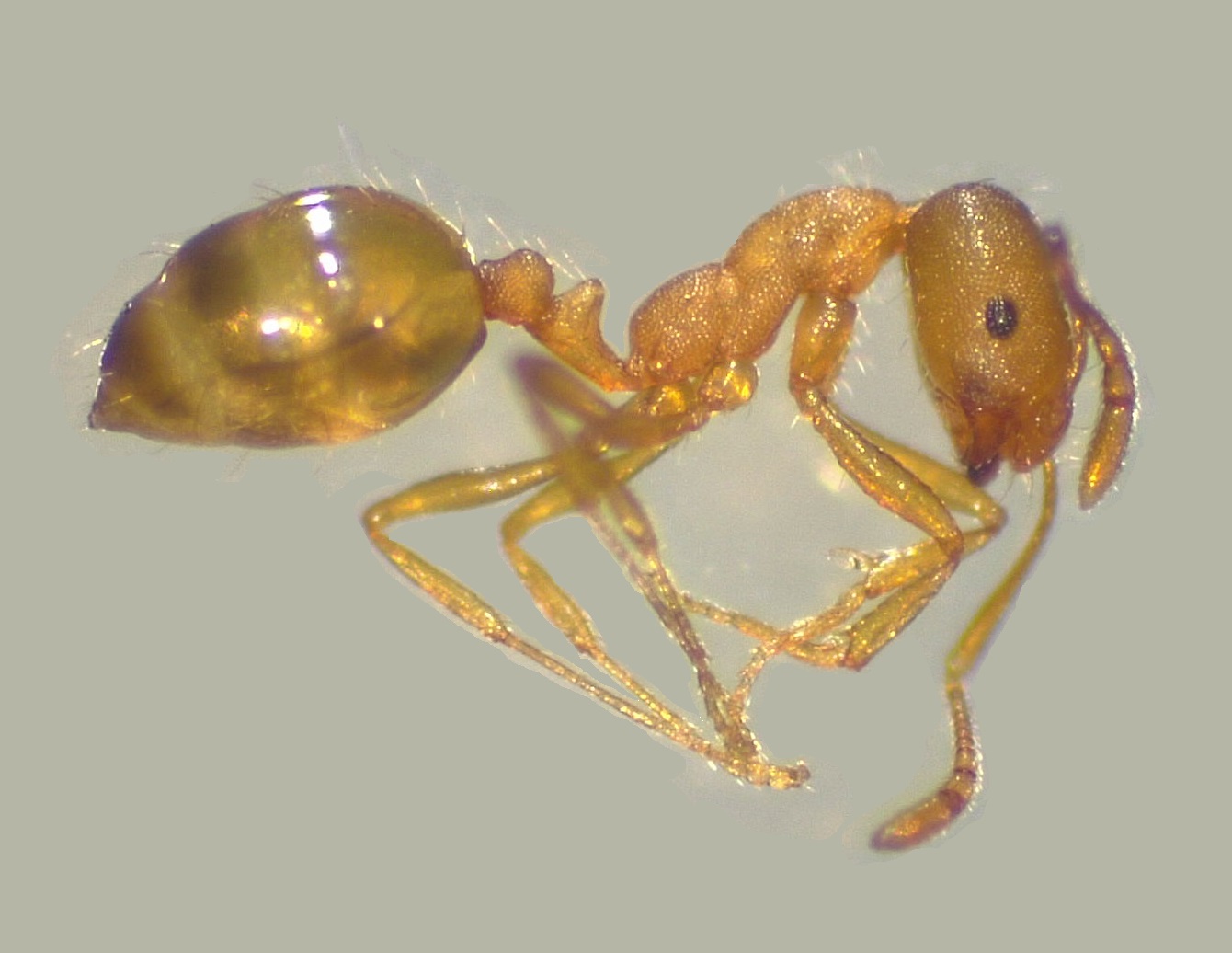
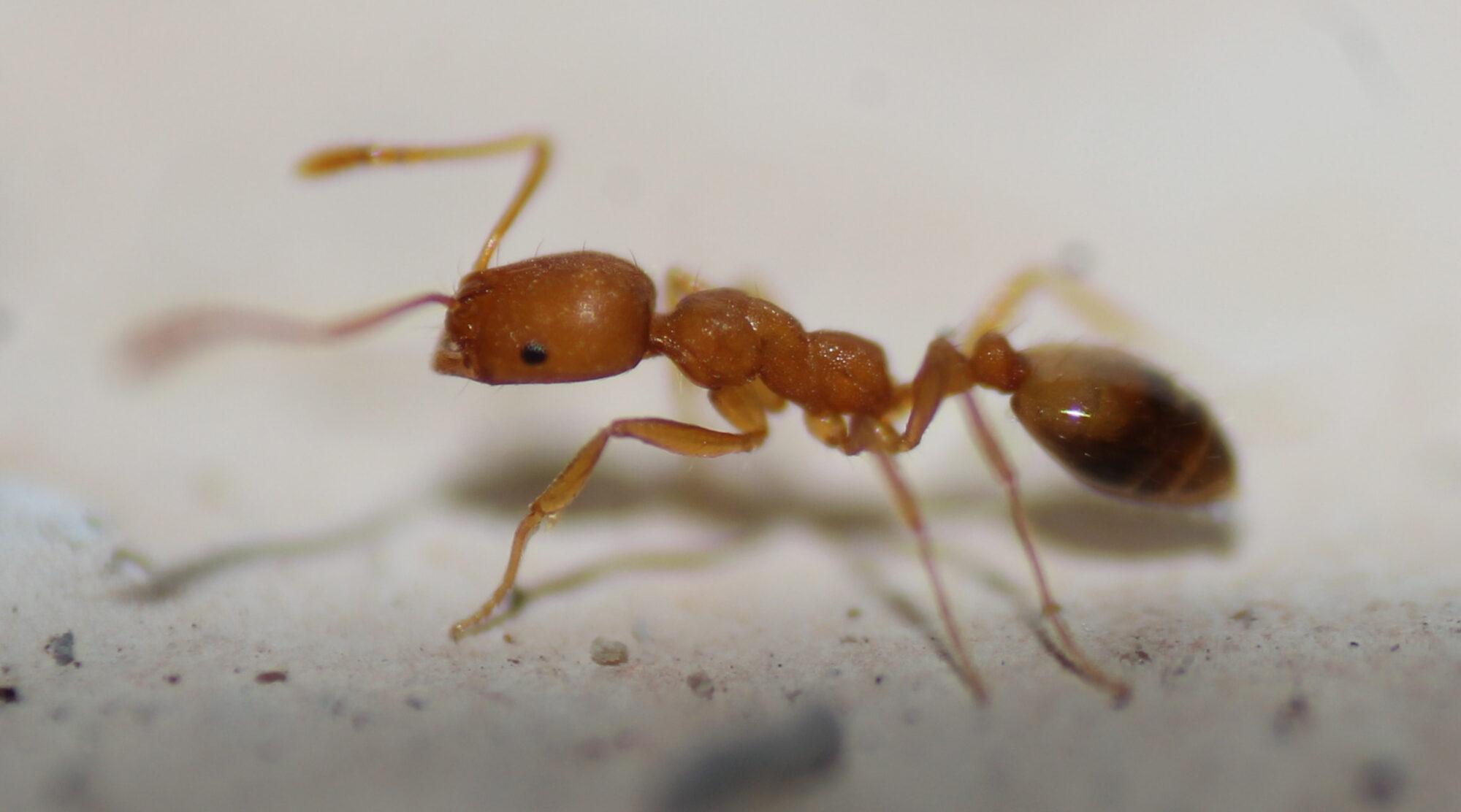
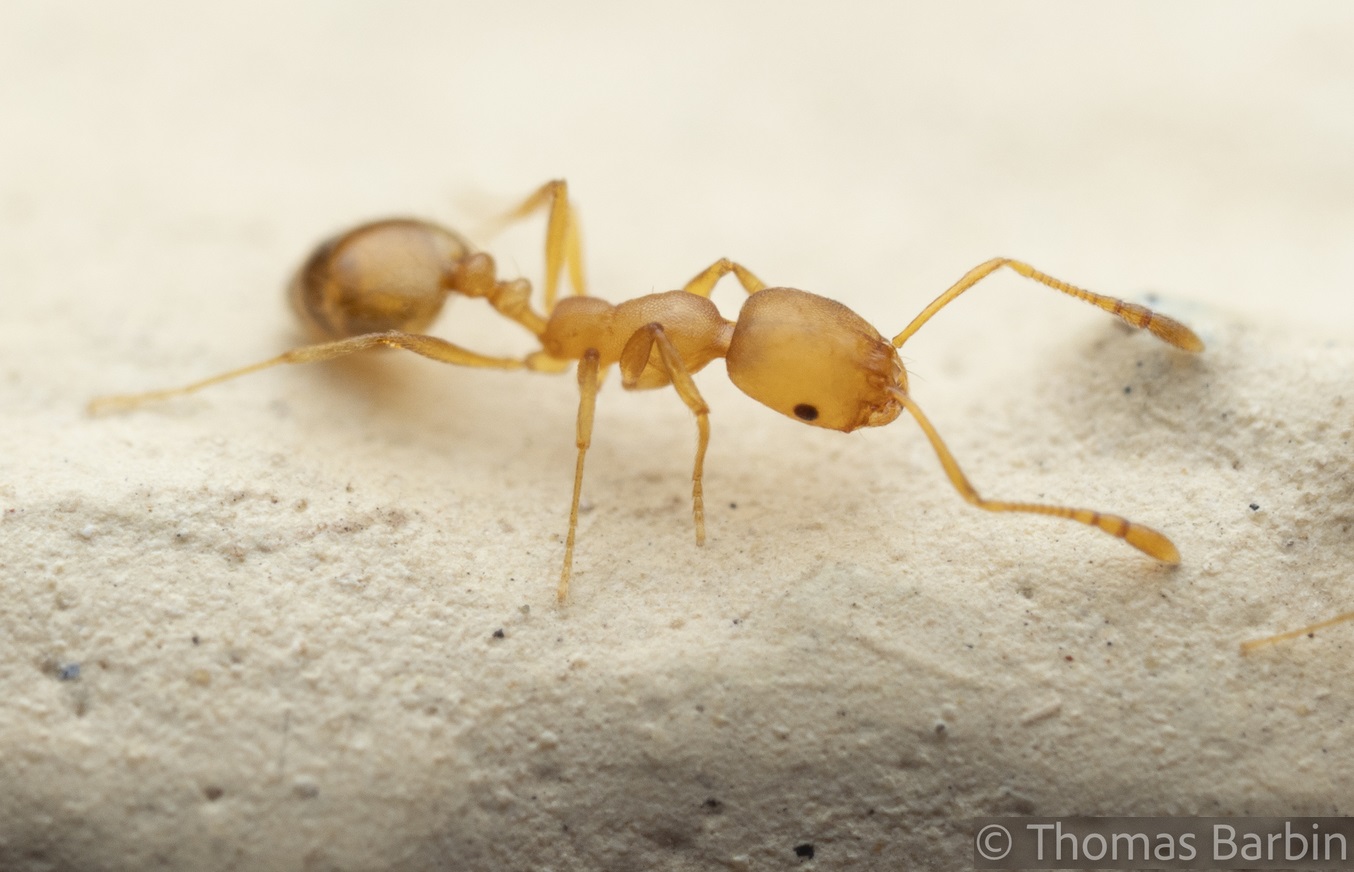
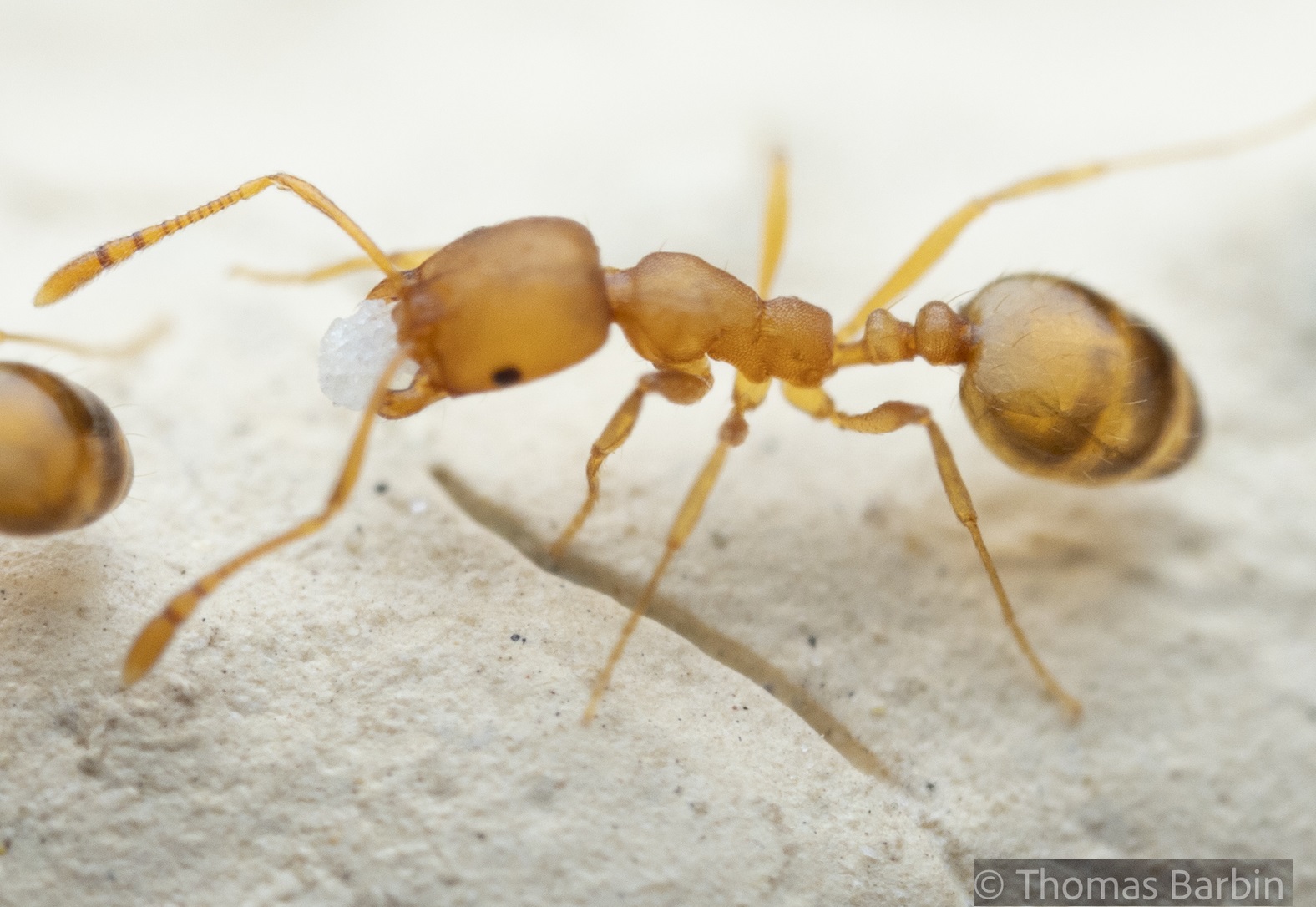
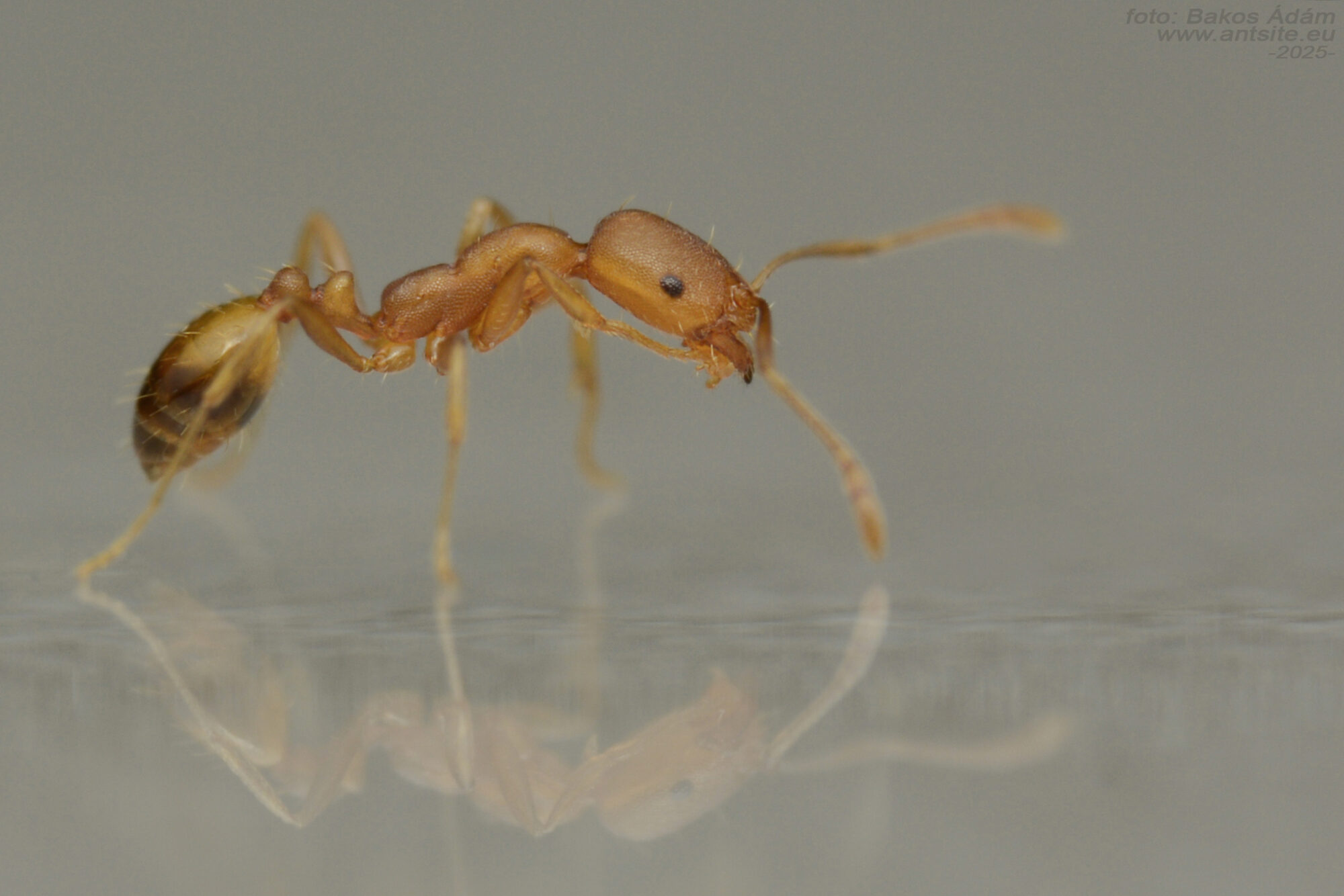
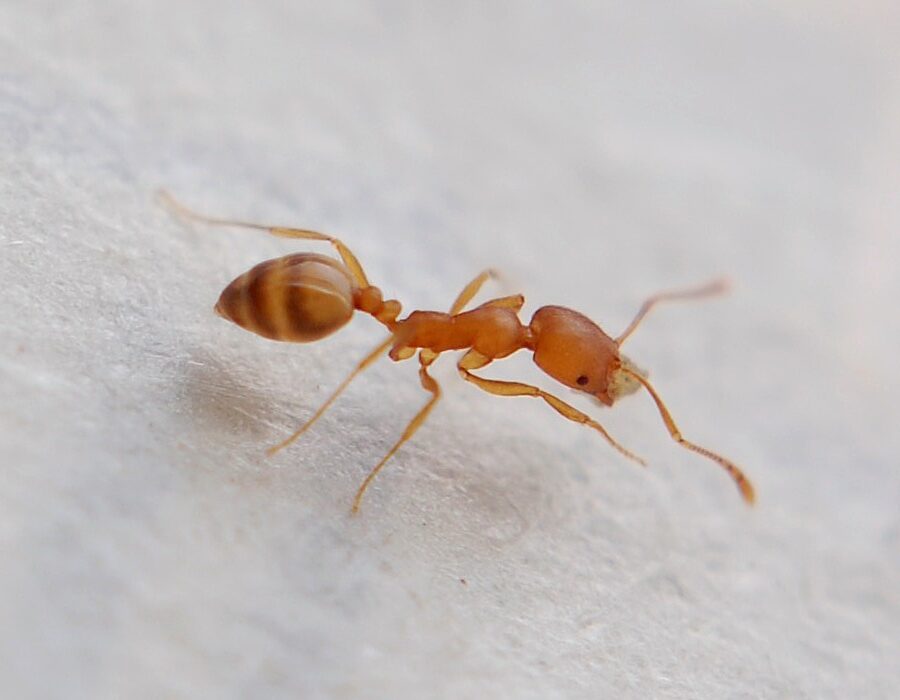
According to Wetterer (2009), “Monomorium pharaonis workers vary in color, even within a single colony, from uniform yellow to yellow with a dark brown rear of the gaster.” It is a very small ant that would likely be regularly mistaken for Little Fire Ants were it not so uncommon.
Impacts
- “This species breeds in cracks in woodwork, old cane-sticks, dead twigs and in soil. It does not roam about much, and is not commonly seen – at least it is not ubiquitous like some of the other [ant] species here [in Hawaiʻi]. It is so seldom seen, one would not consider it much of a pest.” Thus reported Fullaway & Krause (1945), suggesting that this species’ low-profile in the Islands is a long-standing situation.
- “Colonies were abundant in dead tree branches in disturbed native woods, and workers were foraging in the walls of a restaurant far from any native woods.” (Wilson 1964, writing about this ant in Florida).
- “Practically omnivorous, the ants are known to feed on jelly, sugar, syrup, and other sweets, cakes and breads, pies, butter, liver, and bacon. They seem to have a preference for grease, fats, and meats. Workers feed on both dead and live insects. . . . Reports have been received of ants gnawing holes in silk, rayon, and rubber goods.” (Smith 1965).
- Tenorio & Nishida (1995) suggested that Pharaoh Ants in Hawaiʻi routinely both bite and sting people. Though there is a complete absence of recent reports of this nature on Maui, the behavior of this ant in hospitals is worth noting, with Deyrup (2017) writing that although “the sting of this species is weak and of little consequence, the jaws are sharp, and can cause lesions and raw places where the skin is weak or recovering from damage” – as is often the case with hospital patients. Deyrup went on to say “Large numbers of these ants can work their way under casts and bandages, causing intolerable itching by feeding around wounds. Certain ointments can attract enormous numbers to lesions and areas of burned skin. Pharaoh’s ants can gnaw on the skin of newborn babies and sedated or comatose patients. . . . The ants make their way into supposedly sterile cases of surgical instruments and tunnel into glucose bottles and intravenous feeding tubes.”
- Writing about this ant in Florida, Deyrup et al. (2000) wrote, “this is the most persistent of Florida ant pests that breed indoors. . . . Although it rarely stings, it is very annoying in other ways, appearing in huge numbers in kitchens, homes and institutions, and frequently infesting rooms in hospitals and nursing homes. It often gnaws through the packaging of candy bars or breakfast cereal to infest the contents.”
History
- Despite its scarcity here, this ant’s history in the Islands dates back more than a century: the earliest dated museum specimens for this species (Bishop Museum ent54606 – 608) were collected on Oʻahu in 1900. The Bishop Museum contains a specimen (ent54615) collected on Maui in Pāʻia in 1909. The UH Insect Museum contains numerous specimens collected by Reimer on Maui in 1990, including specimens collected at 1600 feet elevation near ʻUlupalakua. Recently, however, MISC staff have only found this ant near Hāna.
- Starr & Starr (2011) reported collecting this ant on Molokaʻi in 2010. More recently, staff of MoMISC collected it at One Aliʻi Beach Park, east of Kaunakakai, Molokaʻi, in 2025. There are no records yet for Lānaʻi or Kahoʻolawe.
Resources/References
- Monomorium pharaonis – AntWiki
- Busvine, J. R. 1951. Insects and Hygiene: The biology and control of insect pests of medical and domestic importance. Butler & Tanner Ltd, Frome and London. 467 pp.
- Deyrup, M. 2017. Ants of Florida – Identification and Natural History. CRC Press, Boca Raton, Florida. 423 pp.
- Deyrup, M., Davis, L. & Cover, S. 2000. Exotic Ants in Florida. Transactions of the American Entomological Society 126(3+4): 293–326.
- Forel, A. 1901a. Formiciden aus dem Bismarck-Archipel, auf Grundlage des von Prof. Dr. F. Dahl gesammelten Materials bearbeitet [Formicidae from the Bismarck Archipelago, based on material collected by Prof. Dr. F. Dahl], Mitteilungen aus dem Zoologischen Museum in Berlin [Messages from the Zoological Museum in Berlin] 2: 1–37.
- Fullaway, D. T. & Krauss, N. H. L. 1945. Common Insects of Hawaii. Tongg Publishing Co., Honolulu. 228 pp.
- Gösswald, K. 1939. Über die Pharao-Ameise Monomorium pharaonis L. und ihre Bekämpfung [On the Pharaoh Ant and its Control], Zeitschrift für Hygiene, Zoologie und Schädlingsbekämpfung 31: 14–129, 161–172.
- Hölldobler, B. & Wilson, E. O. 1990. The Ants. The Belknap Press of Harvard University Press, Cambridge, Massachusetts. 732 pp.
- Huddleston, E. W. & Fluker, S. S. 1968. Distribution of Ant Species of Hawaii. Proceedings of the Hawaiian Entomological Society 20(1): 45–69.
- Marlatt, C. L. 1928. House Ants: Kinds and Methods of Control. U. S. Department of Agriculture – Farmers’ Bulletin 740 (Issued July 8, 1916; revised October, 1928), pp. 1–14.
- McClelland, G. T. W. & Jones, I. L. 2009. The Invasive Ant Fauna (Hymenoptera, Formicidae) of Laysan Island, Hawaiian Islands National Wildlife Refuge. Proceedings of the Hawaiian Entomological Society 41: 37–46.
- O’Rourke, F. J. 1956. The Medical and Veterinary Importance of the Formicidae. Insectes Sociaux 3(1): 107-118.
- Ramage, T. 2014. Les Fourmis de Polynésie française (Hymenoptera, Formicidae). Bulletine de la Société entomologique de France 119(2): 145–176.
- Sarnat, E. & Economo, E. P. 2012. The Ants of Fiji. University of California Press, Berkeley & Los Angeles, California. 384 pp.
- Smith, M. R. 1936. The Ants of Puerto Rico. The Journal of Agriculture of the University of Puerto Rico 20(4): 819–875.
- Smith, M. R. 1965. House-Infesting Ants of the Eastern United States: Their Recognition, Biology, and Economic Importance. Agriculture Research Service, U.S. Department of Agriculture. Technical Bulletin No. 1326: 1–105.
- Starr, F. & Starr, K. 2011. New arthropod records from Maui Nui.Bishop Museum Occasional Papers 109: 35–42.
- Tenorio, J. M. & Nishida, G. M. 1995. What’s Bugging Me? University of Hawaii Press, Honolulu. 184 pp.
- Viehmeyer, H. 1906. Beiträge zur Ameisenfauna des Königreiches Sachen [Contributions to the ant fauna of the Kingdom of Saxony]. Abhandlungen der naturwissenschaftlichen Gesellschaft ISIS in Dresden [Proceedings of the ISIS Natural Science Society in Dresden] 2: 59–71.
- Wetterer, J. K. 2009. Worldwide spread of the destroyer ant, Monomorium destructor (Hymenoptera: Formicidae). Myrmecological News 12: 97–108.
- Wetterer, J. K. 2010. Worldwide spread of the pharaoh ant, Monomorium pharaonis (Hymenoptera: Formicidae). Myrmecological News 13: 115–129.
- Wilson, E. O. 1964. The Ants of the Florida Keys. Breviora 210: 1–14.