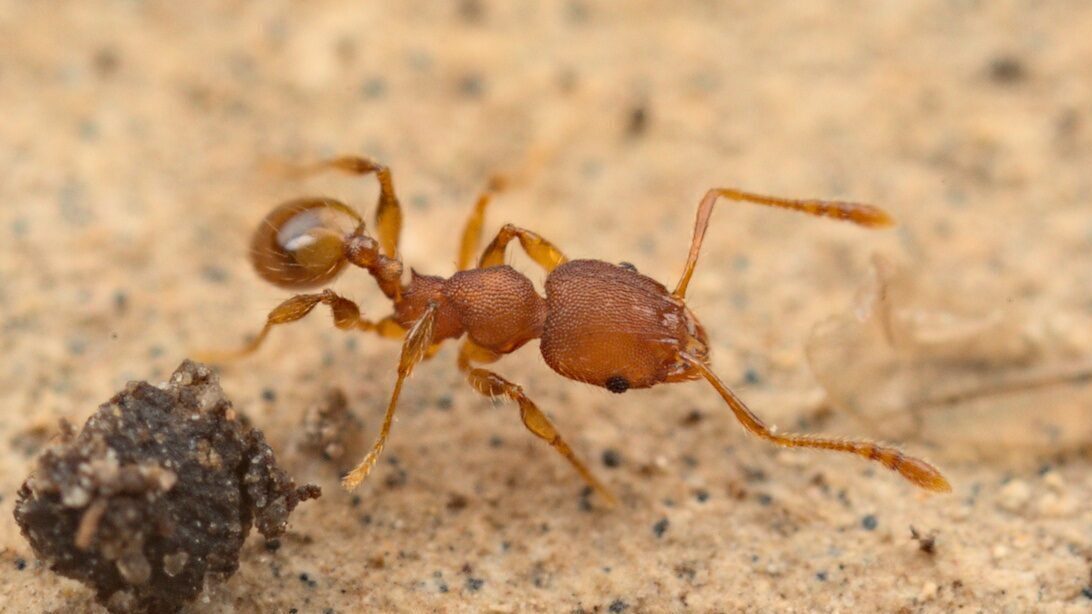
Navigating Big-headed Ant
Pheidole navigans
Species Info General
Other common names include: Wandering Big-headed Ant
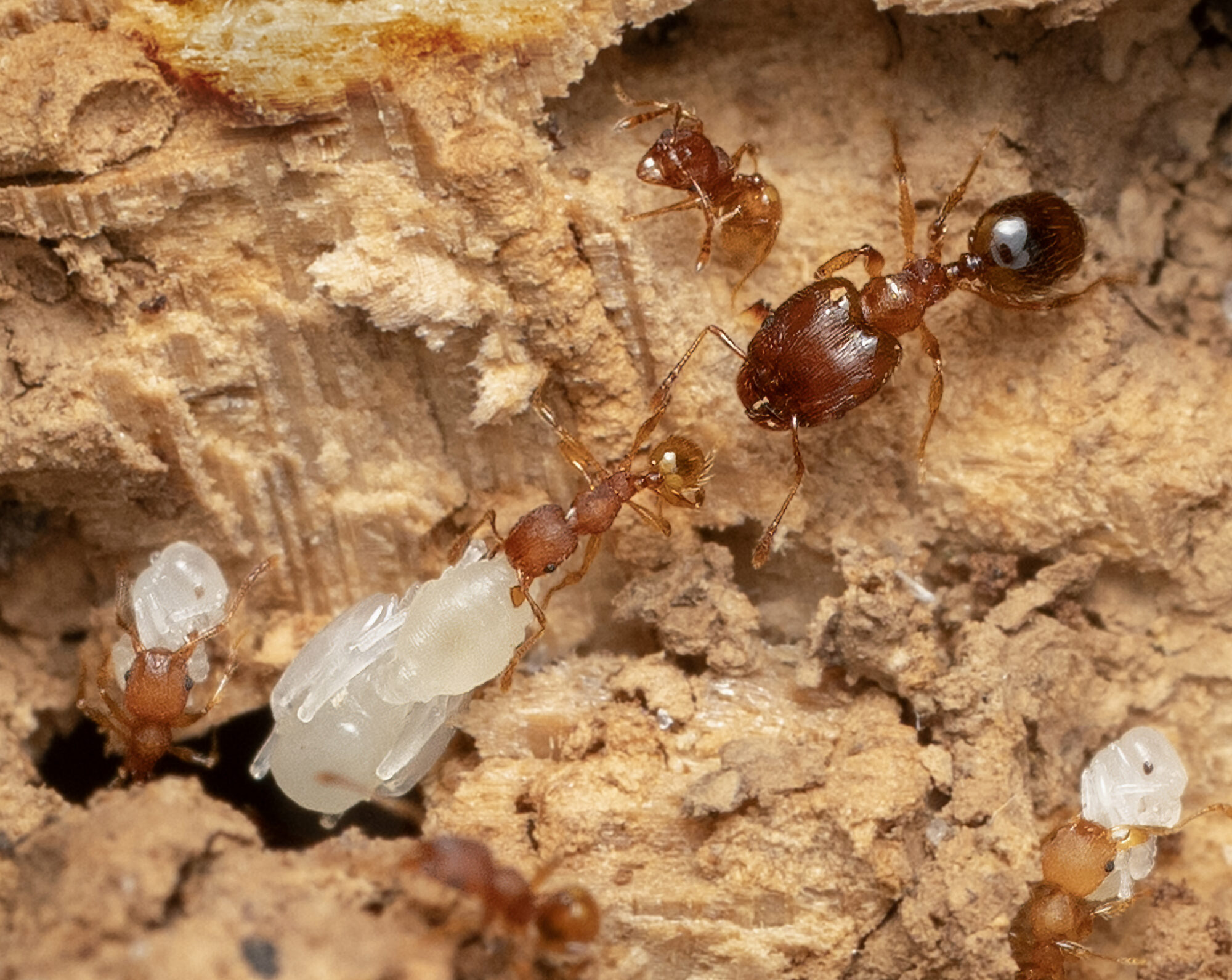
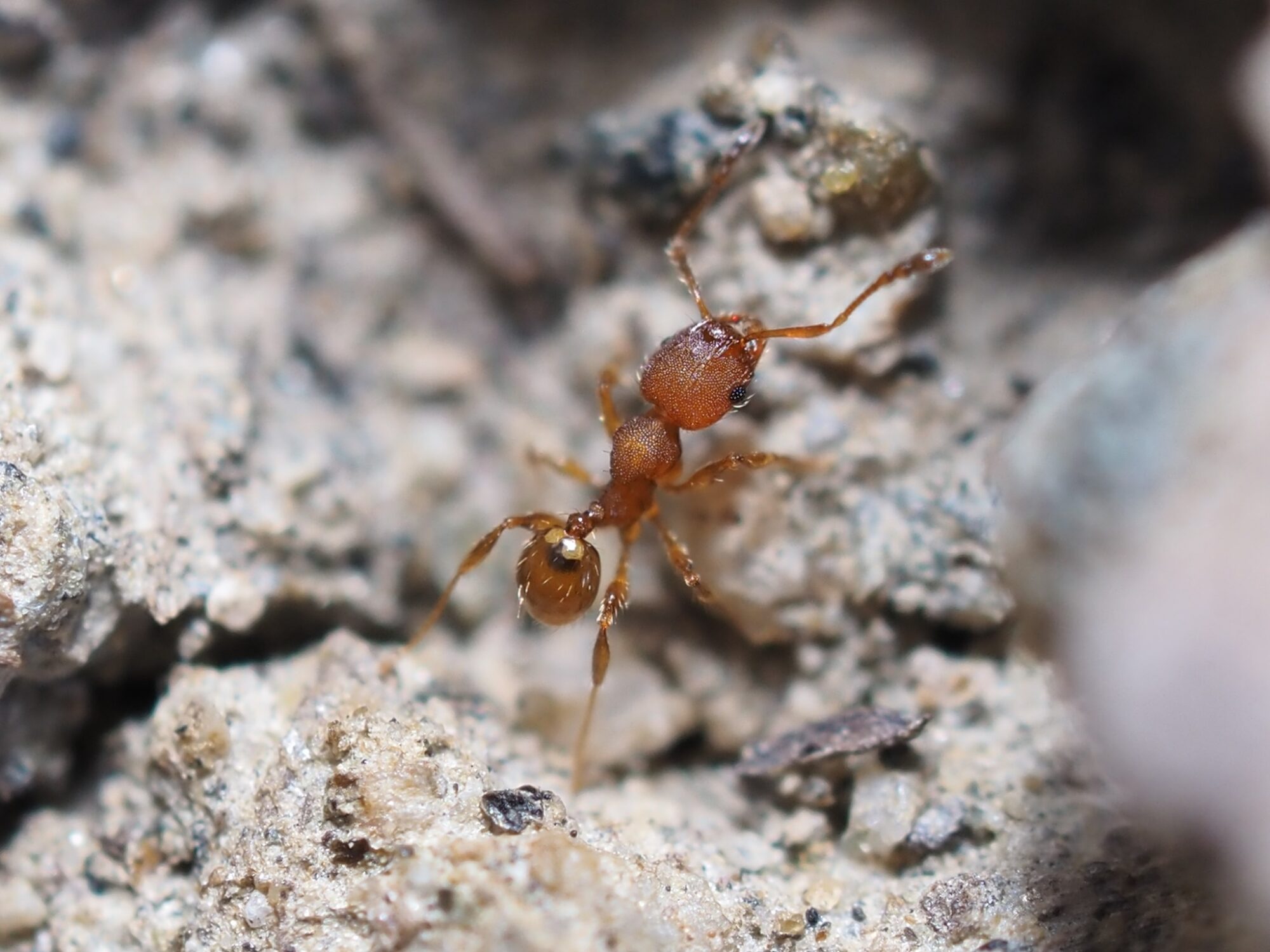
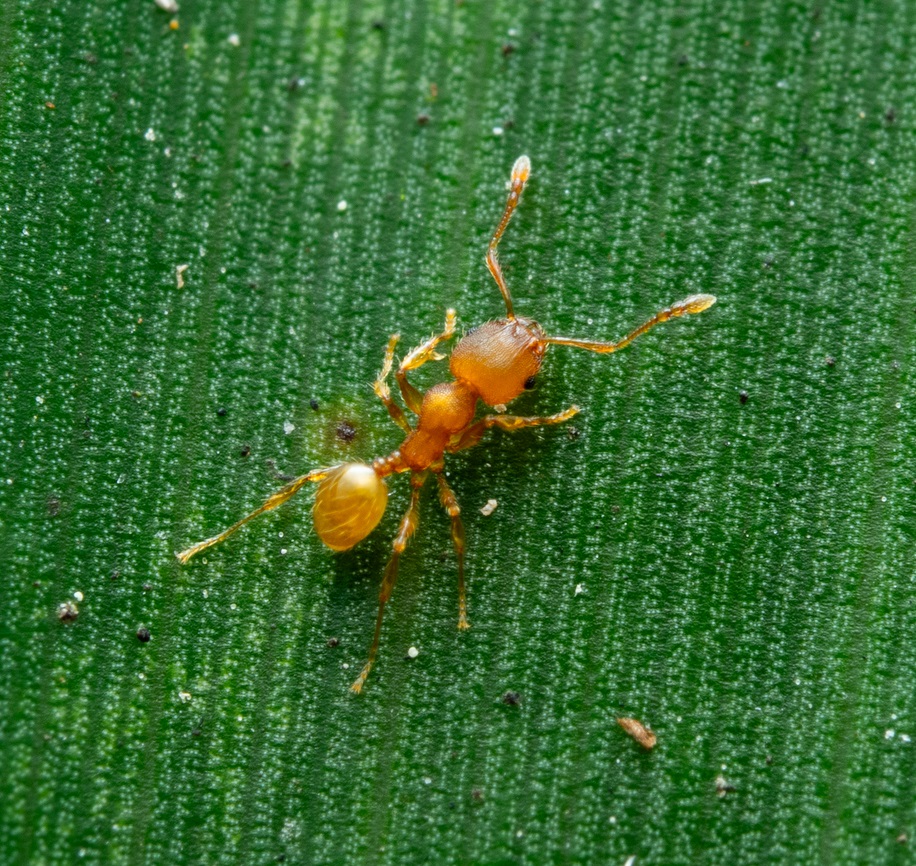
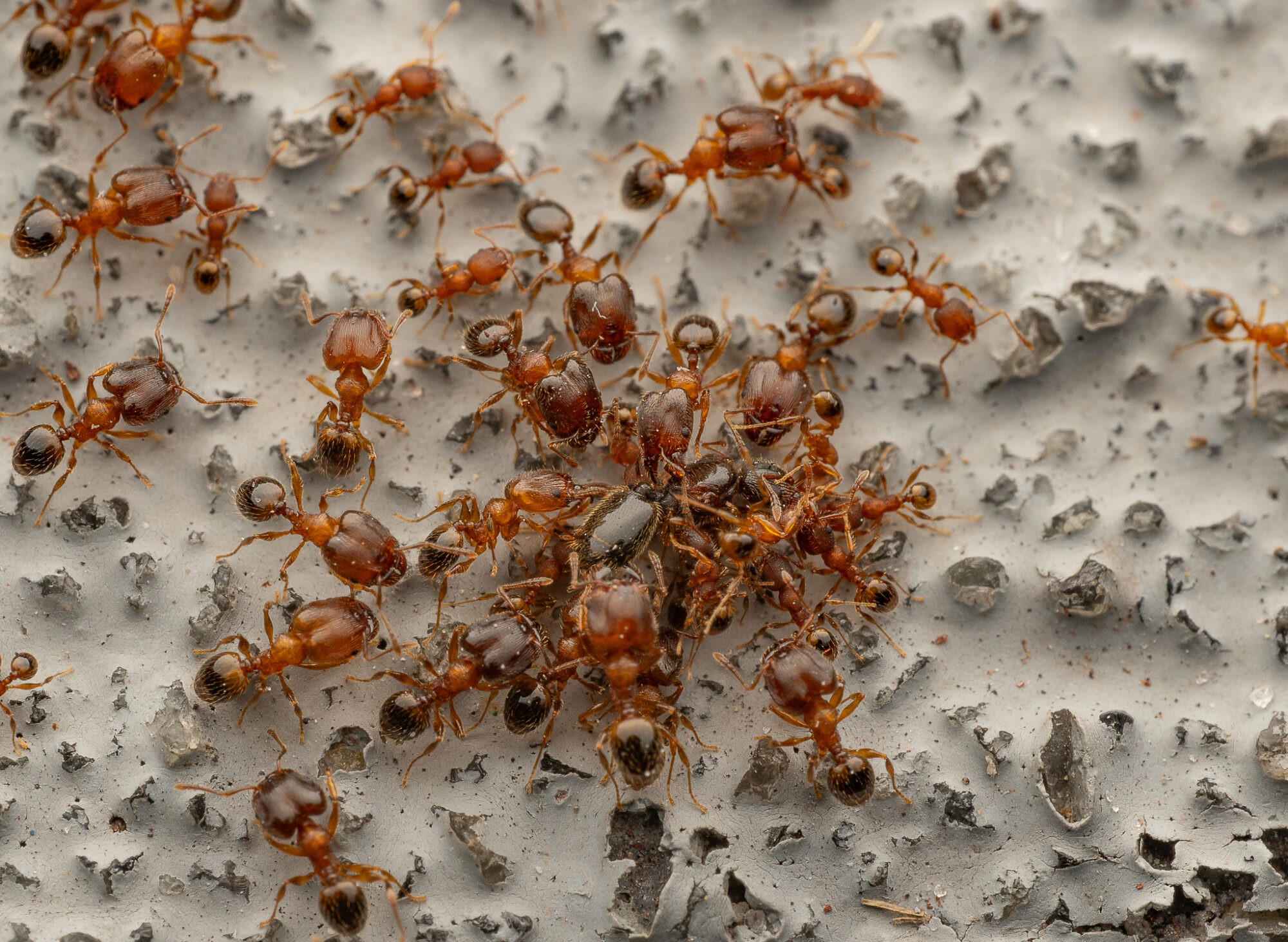
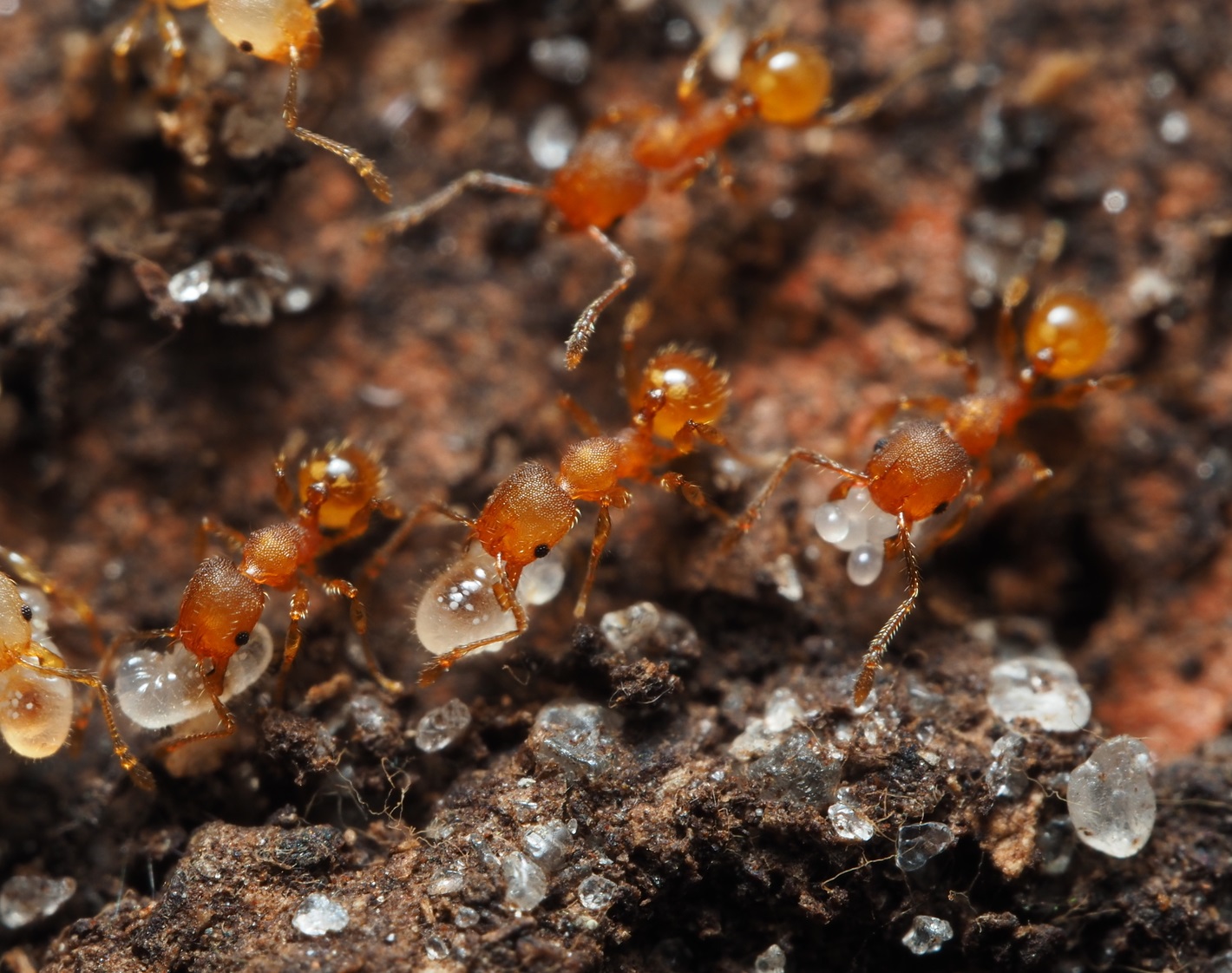
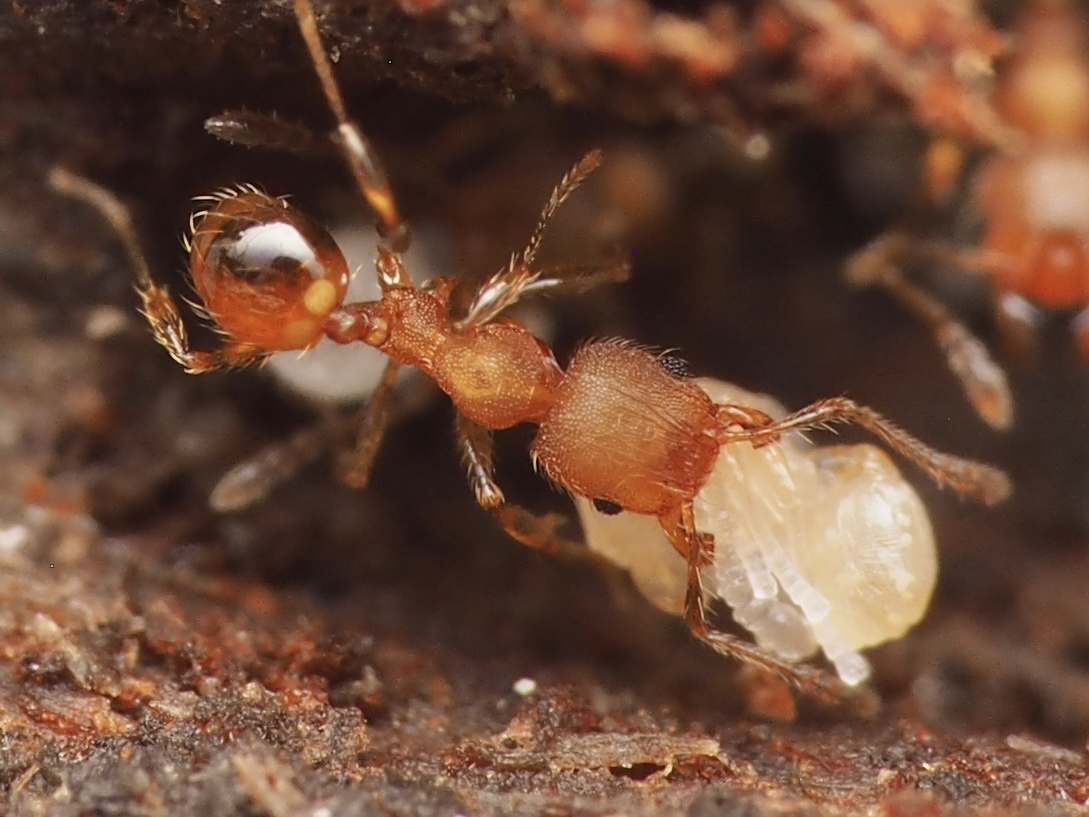
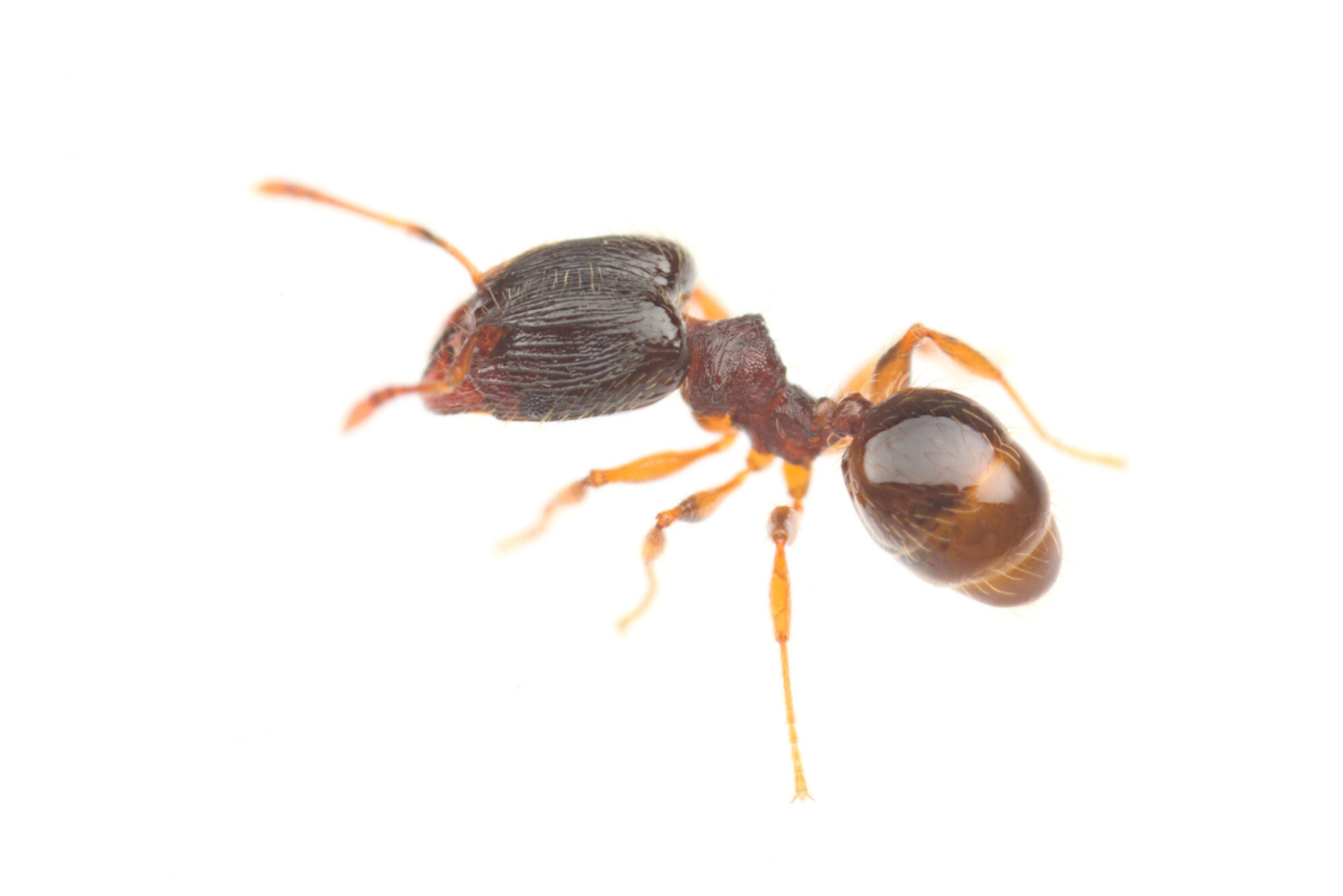
Despite being a relative newcomer to the state, with the first detection in 2000, the Navigating Big-headed Ant has quickly become an abundant and widespread species. In ant surveys conducted by Maui Invasive Species Committee it is one of the ten most commonly detected species on the island. Because it shows little inclination towards being an indoor pest, however, it isn’t widely encountered by the general public. As a “big-headed ant”, a small percentage of the workers in a given colony sport outsized heads – these individuals are referred to as “majors” or “soldiers”. The “minors” on the other hand have quite normal proportionately-sized heads. As a tiny, reddish ant, these minors bear a strong resemblance to Little Fire Ants (Wasmannia auropunctata), so they are referred to as “LFA lookalikes”, especially if seen without any of their big-headed sisters around. Since an LFA colony does not include any big-headed soldiers, the presence of the occasional big-headed individuals in a line of ants should be enough to reassure you that you are merely dealing with this LFA lookalike.
Deyrup, Davis & Cover (2000) reported that this ant “[o]ccurs in both disturbed areas and mesic or moist woods. Nests are in rotten wood, hollow twigs and nuts, and in leaf litter; occasionally arboreal. The diet appears to be small arthropods and scavenged human food. This species rarely enters houses.” Naves (1985), wrote that “[t]his species was found nesting in various places such as under boards, at base of oak trees and fence posts, along roots, under palm leaves, inside wall crevices, and rarely in the ground”, adding that “[t]hey feed on seeds and scavenge and prey on small dead or live arthropods. They forage very close to the nesting sites . . .”.
Identification/Description
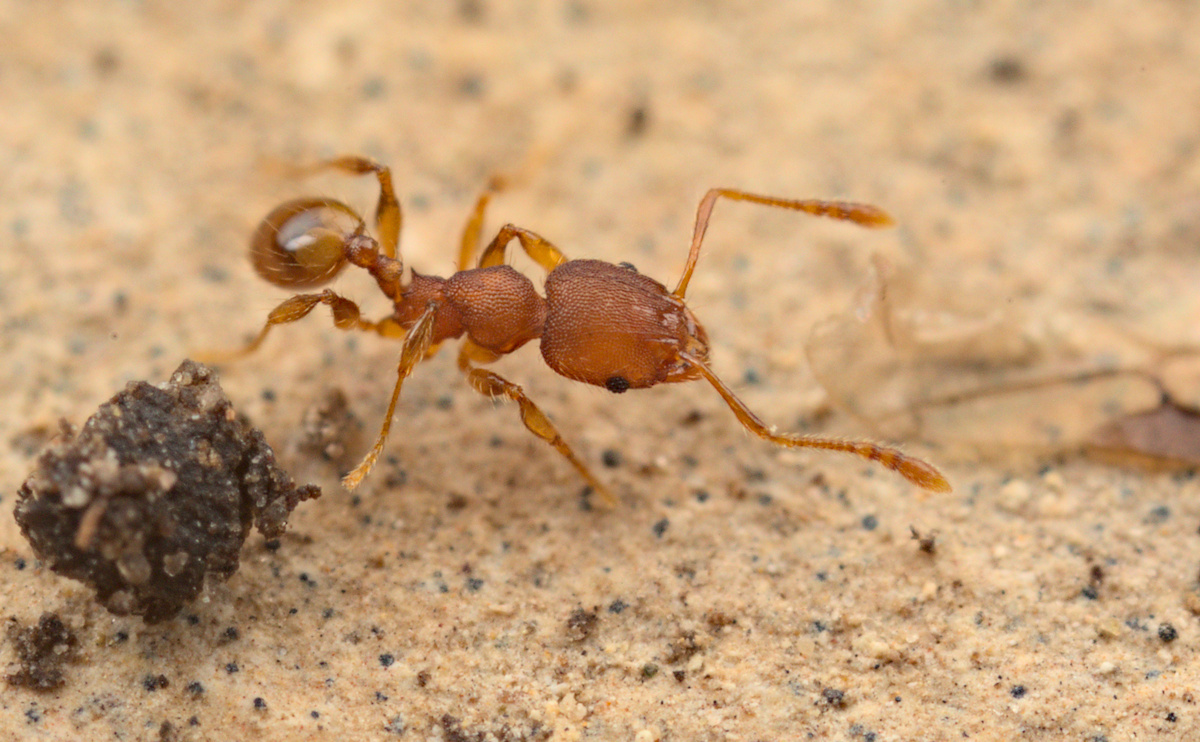
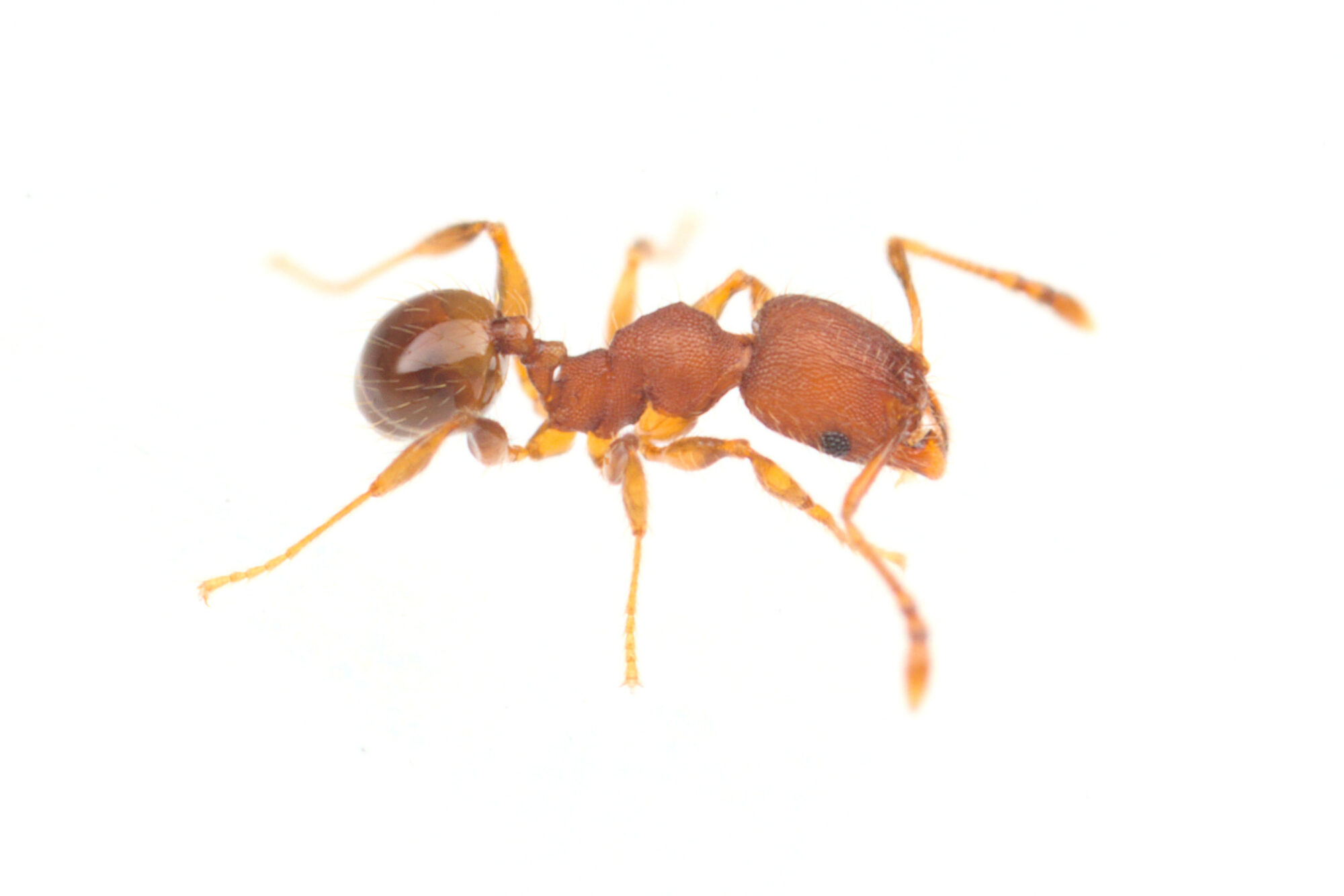
This is a small concolorous reddish-brown ant common in disturbed forests and wet areas. It is a dimorphic species, and when encountered in high numbers there will typically be a small fraction of individuals sporting disproportionately large heads. Other ant species in the Islands with large-headed soldiers are generally much larger – of note are African Big-headed Ant (Pheidole megacephala), Fiery Big-headed Ant (Pheidole fervens), and Tropical Fire Ant (Solenopsis geminata).
Impacts
- Some ants in the genus Pheidole are notorious for wreaking havoc on native biodiversity (see African Big-headed Ant, Pheidole megacephala), but whether Navigating Big-headed Ants will do the same here in the Islands is as yet unknown. Sarnat et al. (2015) wrote that “this species is not considered a major pest”. Still, not much research has been conducted on Navigating Big-headed Ants, and as a relatively recent arrival in the Islands we do not yet have much information about their potential impacts.
History
- Navigating Big-headed Ants were first detected in the Islands on Hawaiʻi in 2000, as reported by Gruner, Heu & Chun (2003), who suggested at that time that this ant “is not predicted to be a major new complementary pest or a high priority for containment or eradication.” The first detection on Maui was in 2011 (Starr & Starr 2013), and it was found on Molokaʻi in 2025 (MoMISC, unpublished data). There are no records yet for Lānaʻi or Kahoʻolawe.
Resources/References
- Pheidole navigans – AntWiki
- Deyrup, M., Davis, L. & Cover, S. 2000. Exotic Ants in Florida. Transactions of the American Entomological Society 126(3+4): 293–326.
- Gruner, D. S., Heu, R. A. & Chun, M. E. 2003. Two ant species (Hymenoptera: Formicidae) new to the Hawaiian Islands. Bishop Museum Occasional Papers 74: 35–40.
- Naves, M. A. 1985. A monograph of the genus Pheidole in Florida (Hymenoptera: Formicidae). Insecta Mundi 1: 53–90.
- Sarnat, E. M., Fischer, G., Guénard, B. & Economo, E. P. 2015. Introduced Pheidole of the world: taxonomy, biology and distribution. ZooKeys 543: 1–109.
- Starr, F. & Starr, K. 2013. New Insect Records from Maui. Bishop Museum Occasional Papers 114: 69.