By Thomas Giambelluca
Anecdotal evidence suggests that, besides impacting biodiversity, the invasive tree Miconia calvescens is causing landslides and other soil erosion problems in Tahiti, where it has displaced native forest. As miconia takes hold in Hawai‘i, local scientists and environmental organizations have voiced concerns about its potential hydrological impacts: increased flooding, diminished groundwater supply, loss of topsoil, and siltation of coral reefs.
Miconia invasions lead to dense, monotypic stands with little or no ground-covering vegetation. Miconia’s large, dark leaves reduce light levels beneath the canopy, thereby inhibiting the germination and growth of other plant species. Large leaves also produce relatively large throughfall drops during and after rain events.
“Throughfall” refers to rainwater that reaches the forest floor. Some throughfall consists of raindrops that fall through the forest canopy without hitting any leaves or branches. The rest comes from drops that splash or drip from wetted vegetation. Water that drips from the leaves of tree canopies can be much larger than raindrops. If falling from a great enough height, these large drops can reach kinetic energy levels that exceed that of natural rainfall in open areas. Because these large drops hit the ground with greater force, they can result in greater impacts to the soil.
The soil surface, exposed due to the lack of ground cover, is vulnerable to higher rates of “detachment,” the breakup of clumps of soil into small particles. Mobilized by large, high-energy throughfall drops, these particles can clog soil pores and reduce rates of infiltration. This leads to overland flow during rainfall events, a process unlikely to occur on undisturbed soils of native forests on Pacific Islands.
In a pilot study funded by the U.S. Fish and Wildlife Service we were able to verify that light levels under miconia stands in Onomea on Hawai‘i Island are very low.* Based on a limited survey, we also observed ground cover to be very sparse under miconia, with very little live vegetation and meager leaf litter. Most studies have shown that runoff and soil erosion become severe as ground cover declines below fifty percent, as was the case for the Onomea miconia stands.
Using laser disdrometers, Japanese researcher Dr. Kazuki Nanko helped us measure the size and velocity of throughfall drops under miconia and other tree canopies at Onomea and nearby field sites. Dr. Nanko found that miconia produced throughfall drops up to seven millimeters in diameter, much larger than typical two-millimeter diameter rainfall drops and significantly larger than throughfall drops under native trees.
The next step in this research is to observe runoff and erosion processes at miconia plots and control sites. Due in part to the effectiveness of miconia eradication efforts in Hawai‘i, we have not been able to find stands large enough and in proximity to appropriate control sites to do the research in Hawai‘i. It is therefore likely that further study of hydrological impacts of miconia will be based in French Polynesia, where the miconia invasion is much more advanced.
Thus far, our studies indicate that in areas invaded by miconia, the effects of sparse ground cover, high-impact throughfall, and overland flow could combine to produce excessively high rates of soil erosion. Accelerated soil erosion removes topsoil, depriving native plants of access to nutrients and water and leading to siltation of streams and the near-shore marine environment.
Thomas Giambelluca is a professor at the University of Hawai‘i at Mānoa, where he has been conducting research on the climate and hydrology of Hawai‘i and other tropical areas for nearly 30 years.
*Dr. Ross Sutherland, professor and chair of the Geography Department at the University of Hawai‘i (UHM); Ryan Mudd, UHM graduate assistant; and Dr. Alan Ziegler, Singapore National University, contributed to this study.
Originally published in the Summer 2010 edition of the Maui Invasive Species Committee’s newsletter Kia‘i i Nā Moku o Maui Nui. The full newsletter is posted at hear.org/misc/newsletter/
In Maui County contact the Maui Invasive Species Committee at 573-6472 to confirm and control infested plants. Always get banana plants locally (like from your neighbor!) to minimize risk of spreading BBTV to an uninfested area.
Achieving balance–in your workplace, at home, on your surfboard, or with your checkbook—makes life manageable. Natural environments depend upon balance as well.
Invasive pests have been disturbing the natural balance of Hawaiian ecosystems for centuries, ever since the arrival of the rat with early Polynesian explorers. Bringing invasive species into better balance with the environment is nothing new here in Hawai‘i. An effective biological control, or natural predator, can transform a devastating invasive species into a mild pest.

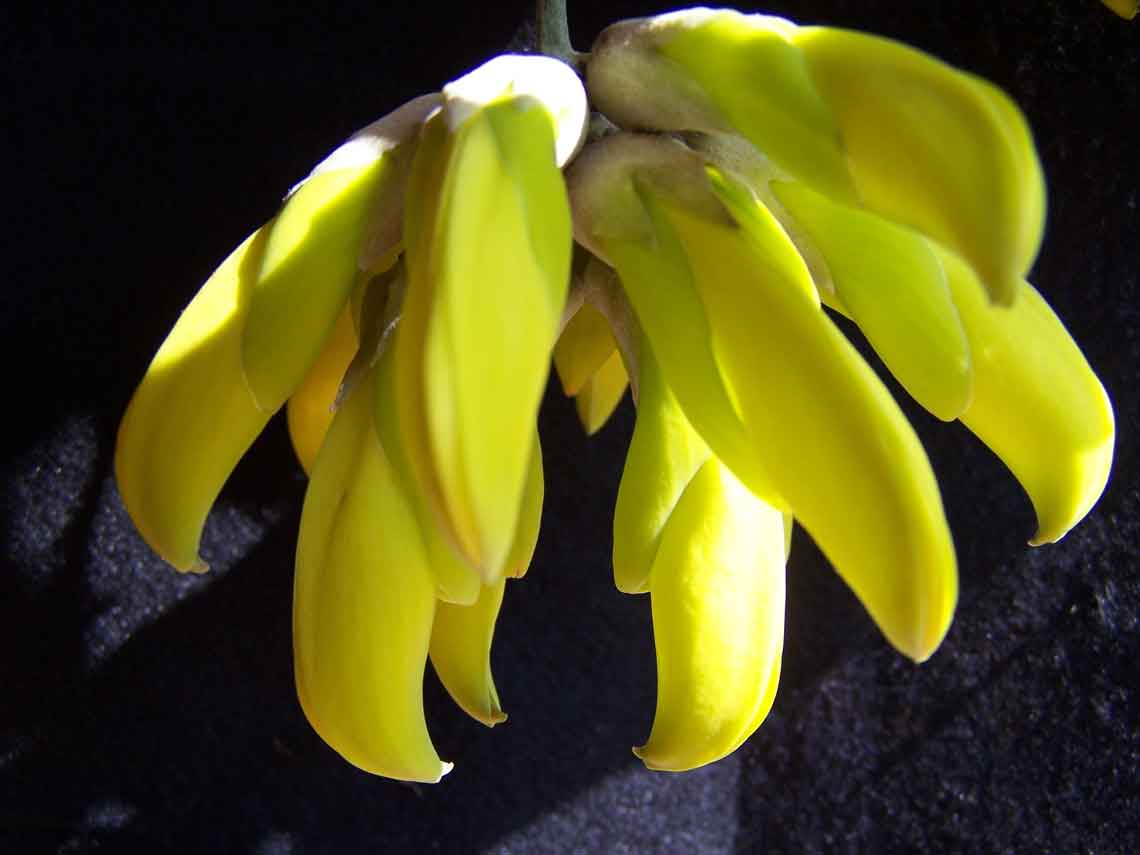
The invasive Erythrina gall wasp that threatened the native wiliwili trees, such ans this one, was brought into balance by a parasatoid wasp.
The vast majority of biological control efforts in Hawaii have been successful: pānini cactus that once choked pasture land is now checked by three predatory insects and a plant fungus; white loosestrife or pāmakani is continually attacked by two insects and another plant fungus; and recently, the Erythrina gall wasp, that wiped out ornamental coral trees and threatened the native wiliwili with extinction, was leveled by a parasitoid wasp.
Yet, just as impulsive actions sabotage balance in our own lives—think diet fads and over-exercising–the same kind of recklessness results in greater instability in our environment.
Such is the case with the small Indian mongoose, Herpestus javanicus. In 1872, a sugar planter released nine mongoose on Jamaica with the hope it would control rats in cane fields. The planter considered it successful and published a paper about it. Mongoose populations grew and offspring were sold to plantations throughout the Caribbean, Cuba, and Puerto Rico. In 1883, Hawai‘i plantation owners jumped on the mongoose bandwagon. With little regard for potential impacts, the now defunct Hilo Planters Association released seventy-two mongoose from Jamaica in Hilo. Another batch of mongoose from eastern India was brought to the Hāmākua coast in 1885. Subsequent offspring were released on Maui, O‘ahu, and Kaua‘i. For an unknown reason the crate delivered on Kaua‘i was kicked off the dock. To date mongoose have not established on Kaua‘i, though a single female was found killed by a car in 1972.

The mongoose is an opportunistic predator, introduced to Hawaii in 1883 with little regard to potential impacts on species other than the rat. Today, a potential biological control goes through years of testing to ensure it will have no unanticipated impacts.
Mongoose do eat rats, in Hawai‘i and elsewhere, but mongoose are opportunistic predators eating primarily insects, with birds, eggs, and a handful of plants mixed in. Additionally, mongooses are active during the day, rats at night. The introduction of the mongoose further tipped the balance of the environment in the wrong direction: now both mongoose and rats threaten populations of native birds, particularly ground-nesting species like nēnē and petrels.
The mongoose introduction was not an example of classical biological control; it was an impulsive, untested whim. Today, when researchers look for biological controls for a particular pest, they survey the pest’s native habitat for species that counteract the pest’s invasive characteristics. Before any new organisms are introduced in Hawai‘i, they are subjected to intensive testing in quarantine to determine potential impacts on any other species.
Successful candidates for biological control have evolved over millennia alongside their target; some are dependent solely on the target species for survival. For example, the Eurytoma wasp that saved the wiliwili will die without access to Erythina gall wasps. Consequently, Eurytoma populations will stop short of entirely eliminating the Erythrina gall wasp. Rather it will restore balance, keeping the pest wasp in check.
When mongoose were brought to Hawai‘i, there were no restrictions on plant and animal imports. Impacts on other species were an afterthought, if considered at all. It wasn’t until King David Kalākaua enacted the “Laws of the Hawaiian Islands” that any regulation existed to limit the introduction of new species to Hawai‘i.
Government-led pest management didn’t begin until ten years after sugar growers introduced the mongoose. The provisional government appointed Albert Koebele as the chief entomologist, the first of many tasked with preventing new and controlling existing pest populations
Biological control has a long and successful history in Hawai‘i. In fact, California and Hawai‘i lead the world in successful releases of natural predators. Ever since testing of biological controls began, there have been no incidences of “host-jumping” or biological controls attacking other species. Yes, the infamous mongoose ran amok, but it arrived during an “anything goes” era in Hawaiian history. The mongoose–or any opportunistic predator–would never be considered suitable for introduction by today’s standards. Biological controls are an important tool—sometimes the only tool—that can restore balance in Hawaiian ecosystems.
Originally published in the Maui News, April 8th, 2012 as part of the Kia‘i Moku Column.
You can find all the articles in the Kia‘i Moku series http://www.hear.org/misc/mauinews/

Check for "J-hooks" along the midrib of the of the banana leaf. This is a symptom of BBTV infection. Photo Courtesy of Scott Nelson, UH-CTAHR.
In the spring of 2009, Angela Kepler found a diseased banana plant on her neighbor’s property. “It really freaked us out! As soon as we found out we ran next door and sprayed for aphids.” The neighbor’s banana plant was infected with banana bunchy top virus (BBTV). “BBTV is the worst,” Kepler explains. “Now we help check everyone in the neighborhood.”
Angela Kepler and Frank Rust study bananas. Of the 32 different kinds on their property, most are rare Polynesian bananas collected from the wild or someone’s backyard. They photograph and observe each plant from keiki to fruiting to learn the key characters that make each type unique. Kepler and Rust are writing a book on how to identify different types of bananas. They know what BBTV can do.

The plant on the left is infested with BBTV. Note how the new growth is bunched together, a symptom that gives the disease its name. Photo courtesy of Scott Nelson, UH-College of Tropical Agriculture and Human Resources
BBTV is the most serious known disease of bananas. Infected plants produce shrunken, malformed leaves and distorted fruit—if they fruit at all. BBTV eventually kills all plants in an infected mat (root mass)there is no cure for the disease. Removing infected plants and preventing spread is the only control for BBTV—a necessary precaution if bananas are to continue being grown in Hawaii. BBTV threatens the banana industry, backyard farmers, and rare, culturally significant banana varieties, such as those grown and collected by Kepler and Rust. “We’ve seen a tremendous demise in the last 10 years,” says Kepler.
BBTV is spread between plants by banana aphids. The virus is passed from an infected plant to the aphid and transmitted when the aphid feeds on a healthy plant. People then spread BBTV great distances when they transport infected plants. Anyone who moves or harbors infected plants puts their neighbors’ plants at risk.
Banana bunchy top virus is widespread in Southeast Asia, the Philippines, Taiwan, the South Pacific, and in parts of India and Africa. It was first discovered in Hawaii in 1989. BBTV is widely established on O‘ahu and has been detected on Hawai‘i Island, Kaua‘i, Maui, and Moloka‘i. “We haven’t been able to collect bananas from other islands, or share ours due to BBTV,” says Kepler.
On Maui, backyards in Kīhei and Pukalani suffer the densest infestations of the disease. Banana farms in Kula and, most recently, central Maui have been wiped out. Not surprisingly, BBTV thrives in Lahaina as well; drier climates are better aphid habitat. Scattered infestations of BBTV have been found in Ha‘ikū and Huelo as infested material has been brought into the area. To date, Hāna, Ke‘anae, and Kipahulū are free of BBTV.

Another indication of BBTV infection is a sporadic dark green streaking, as if in a Morse-code pattern along the leaf sheath. MISC file photo.
Controlling and preventing the spread of BBTV is everybody’s business. If you have banana plants check them regularly for symptoms of the disease. Initial signs of infection are: 1) dark “Morse code” streaks along the leaf stem named for the irregular pattern of dashes and dots along the veins, 2) “J-hooks’ where the leaf veins along the blade of the leaf curve into the midrib. As the infection becomes established, new leaves emerge with difficulty, giving the plant the appearance of having the “bunchy top” that the disease is named for. New leaves are narrow and lance-shaped, often with yellowing around the leaf edges. Plants will stop producing fruit after infected and any keiki from the infected mat are severely stunted.

Check for "J-hooks" along the midrib of the of the banana leaf. This is a symptom of BBTV infection. Photo Courtesy of Scott Nelson, UH-CTAHR.
Controlling the spread of BBTV requires control of the vectors: aphids and movement of infected plants. Regularly spraying your plants with soapy water controls the banana aphid and can help prevent infection. The Maui Invasive Species Committee can help you identify infected plants and will control them for you. Infected plants should be killed on site and left standing until completely dead, typically within six months of treatment. Removing infected plants reduces spread of BBTV; aphids won’t feed on infested plants. Healthy bananas can be replanted in the same place after the mat has completely died.
If you suspect your banana plants are infected with BBTV and live in Maui County, call the Maui Invasive Species Committee at 573-6472. Due to the risk of BBTV, banana plants should not be moved between communities. “We all want to share bananas. People want to give each other plants, but don’t bring bananas from O‘ahu, Hawai‘i Island, or Kaua‘i,” cautions Kepler. “And whatever you do, don’t take bananas to the Hāna and Kipahulu area.”
Article by Lissa Fox Strohecker
Originally published in the Maui News, February 13th, 2011 as part of the Kia‘i Moku Column.
You can find all the articles in the Kia‘i Moku series http://www.hear.org/misc/mauinews/
From March 9th, 2012 press release
HONOLULU — Hawai‘i theater goers enjoying the new movie, “Dr. Seuss’ The Lorax,” and its theme of protecting local tree species can help honor that message by supporting the use of native Hawaiian plants rather than non-native species.
To that end, the Department of Land and Natural Resources (DLNR) worked with local IHOP managers and the IHOP corporate headquarters in California last week to voluntarily discontinue the distribution of promotional bookmarks embedded with seeds at Hawai‘i IHOP locations.

‘A‘ali‘i, or Dodonaea viscosa, is one of the Hawaiian plants being offered in exchange for pine-seed laced bookmarks. ‘A‘ali‘i range in size from shrubs to small trees such as this one at Maui Nui Botanical Gardens. Photo by Forest and Kim Starr
“Thanks to the quick action of DLNR and others involved, we have turned a potentially negative situation into a positive one by expanding on the movie’s underlying message of being better stewards of our natural environment,” said Governor Neil Abercrombie. “The collaborative effort to discontinue the distribution of spruce seeds engages those who may not be aware of the importance of the ‘right plant in the right place.’ Our forests will thrive with more native flora and that benefits all of us.”
The bookmarks are part of a promotional campaign for Universal Pictures’ new movie release, “Dr. Seuss’ The Lorax,” in which IHOP customers are being encouraged to help the Lorax by planting trees. The bookmarks are embedded with Engelmann spruce seeds, which are native to parts of the U.S. mainland but not to Hawai‘i.
IHOP in Hawai‘i has voluntarily discontinued distribution of seeds, and the DLNR and the Coordinating Group on Alien Pest Species have partnered with native Hawaiian plant nurseries to create an exchange program so that any Hawai‘i resident IHOP customers who may already have received a seed-laden bookmark can exchange their spruce seed bookmark for a free native Hawaiian plant.
While the specific species included in the bookmark may not pose a high risk to Hawai‘i’s native plants, other species of spruce trees have been observed to be invasive in parts of the Pacific, where they replace native plants and the animals that depend on them.
IHOP’s corporate office demonstrated its commitment to protecting the environment by also discontinuing this promotion in Puerto Rico and the U.S. Virgin Islands, where Engelmann spruce is also a nonnative species.
“We want to be responsible caretakers of our environment. When we learned that the trees in question would not be the best choice for Hawai‘i, we responded quickly. We hope our guests will take advantage of this exchange opportunity,” stated Patrick Lenow, spokesman for IHOP Restaurants.
First published in 1971, Dr. Seuss’ The Lorax is a fictional story of a pristine environment where truffula trees provide food, clean air, and habitat for a community of unique animals. As they are overharvested to extinction, the Lorax tries to point out the environmental importance of the trees, but to no avail. The animals leave and the environment is left in ruins. However, the end of the story is one of hope: replant the truffula trees to restore the environment.

A close-up of ‘a‘ali‘i fruit showing their distinctive shape and color. Photo by Forest and Kim Starr
“Updating the message of The Lorax to include the value of native species is key for the next generation of conservationists to understand the problems facing our environment,” said Joshua Atwood, coordinator for the interagency Hawai‘i Invasive Species Council housed at the DLNR.
“An important part of The Lorax story is that the truffula trees grow nowhere else, and the Lorax is there to protect that limited resource. Similarly, many of Hawai‘i’s native plants and animals only exist on these islands, and we need to do what we can to protect them. That includes planting native, rather than nonnative, species whenever possible.”
One of the nurseries providing plants for the exchange is Hui Ku Maoli Ola, the largest native Hawaiian plant nursery in the state. “We believe in the importance of perpetuating our native flora as a part of our unique culture and environment,” said Matt Kapaliku Schirman, Hui Ku Maoli Ola co-founder. “This is a great opportunity to help protect and restore the Hawaiian environment.”
DLNR also thanks the Native Nursery and Big Island Plants or Ku ‘Oh‘ia Laka, whose exchange agreements were facilitated by the Maui and Big Island Invasive Species Committees.
IHOP customers who received a Lorax bookmark can exchange the seed-embedded bookmark for a native Hawaiian plant free of charge through the end of April, 2012 at the following participating nurseries:
O‘ahu:
Hui Ku Maoli Ola Native Plant Nursery
46-403 Haiku Rd, Kane‘ohe, HI, 96744
Hours: Monday-Friday 7:30 a.m. – 4 p.m., Saturday 7:30 a.m. – noon, closed Sunday
Contact: (808) 235-6165, www.hawaiiannativeplants.com
Maui:
Native Nursery and Ho‘olawa Farms, exchange facilitated by the Maui Invasive Species Committee (MISC)
Contact MISC at (808) 573-6472
Hawai‘i Island:
Big Island Plants or Ku ‘Oh‘ia Laka, exchange facilitated by the Big Island Invasive Species Committee (BIISC)
Contact: BIISC at (808) 933-3345
In anticipation of “The Lorax” movie opening March 2, a national restaurant chain has been giving away bookmarks with seeds of blue-spruce and Canadian white pine.
A press release dated February 21st 2012 explains the program: “In keeping with the animated adventure’s theme that one person can make a difference, IHOP is distributing three million limited-edition bookmarks embedded with seed paper that can be planted to flourish across a range of climates and forest condition.”
It’s great to encourage kids to plant trees. Unfortunately these aren’t the Truffula trees that the Lorax fought to protect. Planting alien trees in Hawai‘i can be tricky. The characteristics of the bookmark trees that allow them flourish across a range of climates and forest conditions can also help them invade and outcompete native species. In Hawai‘i pines have a reputation of escaping cultivation into high-elevation ecosystems. Think twice before planting these pines in our forests. As the voiceover from the movie trailer says when the boy receives the last seed of the Truffula tree, “It’s not about what it is, it’s about what it can become.”
After concerns were raised, distribution of the seeds was discontinued in Hawaii.
Make the Lorax proud and plant a tree that is regionally appropriate to the area. Find suggestions of native Hawaiian plants here: www.nativeplants.hawaii.edu
And on a final note: ever notice how a lehua blossom on an ‘ōh‘ia looks a bit like a Truffula tree?
National Invasive Species Week is February 26 to March 3. While it’s great to pay attention for the week, here are a few simple actions, one for each month, to help make a difference on the invasive species front:
*Note: This list was originally published in the January 8th edition of the Maui News.
January—check backyard first. Take a look in your own yard to see what invasive species you might be harboring– then remove ‘em! Backyards are often the source for plants and animals that escape to wreak havoc in our environment. If the plant or animal is a target for the Maui Invasive Species Committee, such as pampas grass or coqui frogs, call us and we’ll give you a hand.
February—be pest-savvy. The last week of February is National Invasive Species Awareness week. Take part by learning about a new invasive plant or animal and how to control or report it. Start at mauiisc.org, mauiinvasive.org, reportapest.org, or check for monthly editions of this column, then share what you know.
March—buy local—Maui local. Many pests are limited to just one island, but they spread when potted plants, cut flowers, equipment, even produce is moved between islands. Support Maui’s economy and protect our island by bringing home locally grown products. Avoid ordering seeds on the Internet as some plants may be invasive in Hawaii.
April—clean your gear. Headed out diving, snorkeling or hiking? Give your gear a thorough rinse or

Clean your gear-boots, fins, packs, and cars-regularly to prevent the spread of hithchiking invasive species.
scrub to remove any hitchhiking seeds (check the tongue of your boots), algae, or insect eggs before you head out. And don’t neglect to check your car periodically, both the underside as well as the inside.
May—volunteer. You will meet interesting people and learn more about Maui. Many groups have weekend volunteer trips where you can lend a hand removing invasive species or planting native species. Find an organization at hear.org/volunteer/maui/
June—survey your yard for the little fire ant. This tiny ant often arrives unnoticed, but it can become a huge problem. Currently no known infestations exist on Maui, but there is a high likelihood they will arrive again. Surveying is as easy as peanut butter and a chopstick. Learn more at lfa-hawaii.org
July—travel smart. Check twice before you bring something interisland. Plants and plant cuttings must be inspected by the Hawaii Department of Agriculture before being taken interisland to ensure there are no unwanted pests or diseases riding along.
August—take a hike, but with new eyes. Public reports are one of the best ways we learn about new invasive species. So cruise around the neighborhood, or go for a walk in the forest. See a bird you’ve never seen before or a new plant that looks like it’s taking over? Take a photo and let someone know.
September—be neighborly. Some invasive species problems are too big to tackle alone, but left unchecked will become everyone’s problem. Offer to help out your neighbors with an invasive species in their yard.

Landscaping with native species, like this ālula, will also help save water. Photo by Forest and Kim Starr.
October—go native in your yard. Hawaiian plants have never been more available for landscaping. In addition to being a unique addition to your landscape, these species won’t be invasive and offer habitat for native animals. Another plus – these plants evolved to survive on rainfall, so when selected to match your climate, they can help you save water.
November—eat an invasive. The season of eating offers plenty of edible invasive species, from axis deer to pigs to. Make a meal, or part of a meal, in the spirit of removing invasive species. For more information (and recipes) check out invasivore.org.
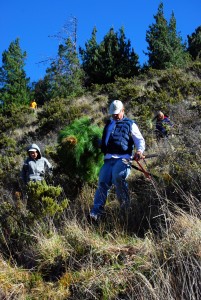
December—celebrate in holiday style with an invasive pine tree. Each year Friends of Haleakala National Park and The Nature Conservancy lead December trips to remove invasive pines from areas in and near Haleakala National Park. Find details for the Friends trip at fhnp.org and for the TNC trip by calling 572-7849. Other trips may be listed in the newspaper.
This year make a resolution to help address invasive species— just one simple activity a month can add up to make a big difference in our community.
Article by Lissa Fox Strohecker
Originally published in the Maui News, January 8th, 2012 as part of the Kia‘i Moku Column.
You can find all the articles in the Kia‘i Moku series http://www.hear.org/misc/mauinews/
How does a two-person team control 850 invasive trees? If you’re MoMISC, you ask for permission first—from the landowner, the ancestors, and the trees themselves.
When Lori Buchanan of the Moloka‘i/Maui Invasive Species Committee (MoMISC) learned that albizia trees were invading a steep gulch in Nā‘iwa, she started strategizing. Native to the Indonesian archipelago, albizia rapidly monopolizes disturbed mesic and wet forests in Hawai‘i, and can rise to over 120 feet tall with wide, interlocking canopies. Because albizia trees fix nitrogen in the soil, they alter Hawaiian forests to favor non-native plants.
The Nā‘iwa discovery was the only albizia population on Moloka‘i—making it a good candidate for eradication. But controlling the trees would be a huge project, requiring the cooperation of many stakeholders.
First Buchanan approached the landowner, who granted access to the site. Land and air surveys revealed a fifteen-acre patch of mature trees, some with trunks measuring seven feet in circumference. Before rounding up extra hands to help with control work, Buchanan consulted kumu Mikiala Pescaia, who has genealogical ties to the area.
“It’s a good idea to ask permission before you do anything,” says Buchanan. “Every place is sacred, or has some history, and so it’s always a good idea to consult the indigenous culture.
“Nā‘iwa is makahiki and hula grounds. The crew needed to know why it’s special before working there.”
Pescaia agreed to ask her ancestors to bless the project and to share the importance of the site’s numerous platforms and heiau with the crew. She explained how killing during the makahiki season would be inappropriate, since it was a time of peace and rest.
“She took us to the edge of Kalaupapa and said, ‘This is where the spirits leap off,’” says Buchanan. “After that, the crew was hyped. We knew we were going to sweat and work our butts off, but people would appreciate what we were trying to do. It put our work in a whole new light.
“Mikiala sees all her cultural sites being taken over by invasive species. Our work is important to her, to her ancestors, and to future generations. It’s a step in restoring a whole genealogy.”
Mikiala Pescaia asked her ancestors for permission before entering the work site. She outlined appropriate behavior for the crew to observe while working: no swearing, negative thoughts, smoking, or removing anything from the area.
Then, says Buchanan, “She went to the edge of the gulch and said to the trees, ‘You guys have to go. Thank you for what you’ve provided—oxygen, shade, etcetera, but you have to go. Lori and MoMISC are going to come and take you out.’”
Actually, it was Lori, MoMISC, and a small army. Kamalani Pali, the other half of MoMISC, helped organize crews from The Nature Conservancy, Maui Invasive Species Committee, and U.S. Fish and Wildlife Service. John Neizman from the Department of Land and Natural Resources assisted with clearing the access road. Two retired foresters volunteered to cut and treat trees. The U.S. Department of Agriculture Plant Materials Center donated ninety pounds of native kāwelu, ‘a‘ali‘i, and ‘āweoweo seed mix. Before controlling the trees, Pescaia and the crew spread the seeds throughout the site, to repopulate the forest with native plants and suppress albizia regrowth.
Scientists and cultural advisors agreed that the best time to start work was the first week of March, after makahiki had passed. The crew girdled massive trunks, scraping the bark off with chainsaws to get to the heartwood and swabbing the cuts with small amounts of herbicide. Despite the heavy labor—three days of wielding chainsaws and rappelling to reach cliff-side trees—no one was injured.
Local businesses pitched in, too. Moloka‘i Community Federal Credit Union and Ron Kimball of Kamehameha Schools helped feed the workers. Mac Poepoe and Kanohowailuku Helm, local fishermen who have published a Hawaiian moon calendar, gave a pau hana workshop on how to be a pono fisherman. Realtors Diane and Larry Swenson accommodated visiting crews in their roomy warehouse.
A year later, only four of 850 albizia trees required re-treatment. The project brought together community members, field staff, and cultural practitioners. Work crews valued the opportunity to practice traditional protocols while working to free the island’s native forests from invasive pests. There’s no arguing that involving the community and asking for permission resulted in resounding success. The lessons learned during the albizia project will be applied to future control efforts on Moloka‘i and Maui.
“So many components had to come together. Everybody had to be on board,” says Buchanan. “But that’s our job: to make it easy for people to help us.” •
By Shannon Wianecki
MISC Editor and Curriculum Writer
This article originally appeared in the Winter 2010 edition of Kia‘i i Nā Moku o Maui Nui, the newsletter of the Maui Invasive Species. Find the full newsletter at www.hear.org/misc/newsletter/.
‘Tis the season, and tradition calls for pine trees to decorate Maui residents’ homes, although there are many palms decorated in Christmas lights as well. Most Christmas trees are shipped in, but there’s a history of growing pines in Hawai‘i. Ralph Hosmer, Hawai‘i’s first forester, came on the job in 1904. At the time, forests throughout Hawai‘i were in a sorry state. Since Polynesian times, people have greatly altered lowland forests, initially for settlement and taro cultivation, then for sugar cane and pastureland. Feral pigs, goats and cattle escaped into intact forests, trampling shallow-rooted plants and browsing slow-growing plants. Honolulu, prospering from the sugar boom, was exceeding existing water supplies by the 1870s. Recognizing the need to protect and restore vital watersheds, everyone from sugar cane barons to King Kalākaua began fencing out animals and planting trees, some of which were pines.

Mexican weeping pine (Pinus patula) creeps into the native forest of the Waikamoi preserve. Forrest and Kim Starr photo
Hosmer helped turn sentiments about forest protection into cohesive action. He established the first forest reserves in Hawai‘i, beginning in 1906 when Alexander & Baldwin ceded management of acreage on Maui to the territorial government. With newly acquired land, Hosmer accelerated efforts to fence out cattle and goats and planted fast-growing hardy trees. The goals were three-fold: to stop erosion, restore the watershed and provide for Hawai‘i’s timber needs. Hosmer’s experimental plantation high on the slopes of Haleakalā now bears his name, “Hosmer’s Grove.” He planted species familiar from his Mainland forestry background: redwood, ash and pines. For years to come, foresters continued planting non-native species. These trees did prevent erosion on overgrazed lands, but some escaped cultivation to invade nearby ecosystems and crowd out native species.
Three species – Monterey pine (Pinus radiata), Mexican weeping pine (Pinus patula) and maritime pine (Pinus pinaster) – are particularly invasive. They persistently threaten Haleakalā National Park and The Nature Conservancy’s Waikamoi Preserve, transforming native stands into pine forests. Pines grow fast, up to one foot per year and reach maturity quickly, producing seeds within six to eight years. A massive amount of tiny seeds spread easily on the wind, help these pines colonize new areas. Removing pines has proven essential to maintaining the shrub-land and alpine habitat of Haleakalā.
Over the years, crews at Haleakalā National Park have stopped a veritable woodland of pines. Bill Haus and the crew he works with have removed 87,920 pines from the park and surrounding areas since 1982. According to Natural Resource Program Manager Steve Anderson, “Without control, the slopes of the subalpine shrub land would be a pine forest.” Subalpine shrub land is critical habitat for a native plants and animals; conversion to a pine forest would turn this rare Hawaiian ecosystem into a biological desert – no native plants like māmane, pūkiawe, ‘ōhelo or ‘a‘ali‘i; no native birds like the ‘i‘iwi and ‘amakihi.

Monteray pine (Pinus radiata) growing inside Haleakalā crater alongside silverswords. There have been a flush of pine seedlings inside the crater in the last few years. Forrest and Kim Starr photo.
Pines threaten the crater as well. Haus and his crew have removed more than 1,500 pines from inside the crater, with a peak of 778 in 2010.
Anderson said: “I wouldn’t have thought it was possible (for the crater to become a pine forest) several years ago, but it’s clear that potential exists now.”
The recent flush of pine could be the result of the 2007 Polipoli fire. Pines, including those invading Haleakalā Crater, are serotinous, meaning certain pine cones are coated with a waxy substance. These cones stay closed until the heat of a fire melts the coating to release seeds. As an ecological adaptation, it helps pines take advantage of the ash-fertile conditions following a fire. But in Hawai‘i, this adaptation may offer a unique seed-scattering advantage. The Polipoli fire possibly spurred a huge seed release and associated winds carried the seeds into the crater. Pine seedlings are even growing alongside silverswords.
You can help protect the crater from pines, and take home a pine tree! Several organizations will be working with volunteers to remove pines in time for the holidays. Friends of Haleakalā National Park leads efforts to remove pine trees from the crater. Check out their website at fhnp.org for more information.
The Nature Conservancy will be working below Hosmer’s Grove on Dec. 17. Call or email Pat Bily at 856-7665 or pbily@tnc.org for details and to confirm attendance. Both trips are free and open to the public. Dress for wintery weather and bring rain gear, water, tools and rope to bring home your tree or wreath making supplies. Participants also may bring food. Eggnog is optional.
By Lissa Fox Strohecker
Originally published in the Maui News, December 11, 2011 as part of the Kia‘i Moku Column. Check out all of the MISC articles in the Kia`i Moku series at: www.hear.org/misc/mauinews/

The rubber vine may appear to be a beautiful plant but it is actually poisonous. The vines will also creep up trees and into their canopies and foul up streams. (Photo by MISC)
When the crew from the Maui Invasive Species Committee (MISC) arrived on Moloka‘i in February of 2005, they soon realized this was not going to be just another week at work. They were assisting the Moloka‘i/Maui Invasive Species Committee (MoMISC) in controlling a large infestation of rubber vine plaguing the Kamalō and ‘Ualapu‘e areas. The pest had invaded over five acres, forming impenetrable thickets that made it difficult to control. Just looking at the vast amount of area conquered by this one invasive plant made the MISC crew realize why the two-person MoMISC team called in reinforcements.
Controlling the large population was a daunting task and, at first, overwhelming. But one by one, vine by vine, the crew attacked the rubber vine as if they themselves were an invasive species, quickly devouring everything in their path. By the end of the week, the once dark forest of rubber vine blanketing the treetops was transformed into a more open area with sunlight. By helping to initially suppress the pest, MISC was making it manageable for MoMISC to monitor and treat it in the future.
Here on Maui, we are fortunate that we do not have such large rubber vine populations. Instead, we have limited infestations growing in residential areas. There is hope that we can eradicate this invader before it affects our natural and agricultural areas as well as quality of life.
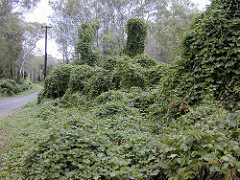
Rubber vine (Cryptostegia grandiflora on Maui, C. madagascariensis on Moloka‘i) are vigorous climbing vines from Madagascar that can scramble their way 30 meters up a tall tree or grow as an unorganized shrub-like clump of vines one to two meters tall. The plant invades waterways forming dense, impenetrable thickets that smother riparian vegetation and decrease biodiversity. Rubber vine can also impact ranching operations by restricting livestock access and lowering pasture productivity.
This invasive plant is extremely poisonous; it contains cardiac glycosides, chemicals that interfere with heart function in humans and animals when the plant is ingested. Contact with the plant’s milky sap can cause burning rashes and blisters. When the vine is dry, a powdery dust emerges that can cause violent coughing, swelling of the nose, and painful blistering of the eyelids.
Rubber vine has large, showy pinkish-purple flowers with five petals arranged like a funnel. Its shiny, dark green leaves, directly opposite each other, range from two to four inches long. The distinctive triangular seed pods average three to four inches in length and grow in wing-like pairs. Approximately 200 days after formation, the seed pods dry out and split open. Seeds with silky hairs are released into the wind and waterways. Approximately 95% are viable – increasing the potential for rubber vine to rapidly spread.
In addition to natural dispersal, rubber vine can be introduced to an area by animals or humans. Livestock can carry seeds long distances through agricultural fields. Contaminated vehicles and machinery transport seeds from one worksite to another. Cultivation of rubber vine as an ornamental plant makes the problem much worse, especially since a plant may live for up to 80 years. Rubber vine is widely available to the public through Internet seed companies, few of which describe the plant’s noxious qualities.
In order to prevent the spread of rubber vine, areas downstream and downwind from known infestations must be inspected. Do not import, purchase, or plant this toxic species in your yard. If you have rubber vine on your property, call MISC and give permission to control it. If you see rubber vine growing or for sale, call MISC at 573-MISC. Encourage friends and family not to buy this or other pest plants so nurseries will stop selling them.
We are happy to report that since MISC assisted MoMISC in February 2005, the five-acre rubber vine population has been significantly reduced and eradication of this pest is within reach for the Friendly Isle. Inclusion of rubber vine on the Hawai‘i State Noxious Weed List is currently under consideration. Until it is listed, it is up to residents and visitors to protect Maui from this aggressive pest so that we can avoid dealing with large populations such as that once found on Moloka‘i.
By Joylnn Paman
Originally published in the Maui News, January 13, 2008 as part of the Kia‘i Moku Column. Check out all of the MISC articles in the Kia`i Moku series at: www.hear.org/misc/mauinews/
It starts with a spot, a tiny dot of orange on a leaf bound for Hawai‘i. It could be on cut foliage destined for a florist or on a tree fated for a Hawai‘i yard. The miniscule speck of orange grows, produces spores, and covers the plant. Hawai‘i’s moist climate creates the perfect habitat for the little orange organism, a type of fungus known as a rust that attacks plants—often fatally. The trade winds spread the rust spores to more hosts and within months trees across Hawai‘i have turned brown, lost their leaves, and begun to die.
In 2005 the rust attacked an invasive tree in the myrtle family–rose apple, but the rust grows on many

If a new strain of this fungus rust arrives in Hawaii it could devastate ohia forests. Orange rust fungus covers the leaves of a rose apple tree. FOREST & KIM STARR photo
myrtaceae species, including ‘ōhi‘a. The Hawai‘i Department of Agriculture identified the rust as Puccinia psidii and named it “‘ōhi‘a rust” in recognition of its impact on ‘ōhi‘a. If a new strain of the rust arrives there is a very real chance that it will attack ‘ōhi‘a and cause the same level of damage as it did to rose apple. This could be devastating: ‘ōhi‘a makes up 80% of our native rainforest and is the keystone species in the watershed. In an effort to protect ‘ōhi‘a and our rainforest–the source of our water–the Hawai‘i Department of Agriculture is proposing a ban on the import of plants that could carry a new variety of the rust.
In 2008 HDOA implemented an interim rule, a temporary ban on the import of ‘ōhi‘a, but it was only active for one year. This new rule will protect ‘ōhi‘a as well as other, commercially important myrtle species, such as eucalyptus and ornamental trees.
‘Ōhi‘a covers nearly 1,000,000 acres in Hawai‘i, provides food for ‘i‘iwi, ‘apapane, ‘ākohekohe, and other rare birds; shelter for their nests; and habitat for native insects, snails, and other species.
Like a flu or a cold, there are different strains of rust. The strain of ‘ōhi‘a rust currently in Hawai‘i does kill ‘ōhi‘a seedlings, but very few. However, the impact could be much higher. To evaluate the rust’s threat, Hawaiian ‘ōhi‘a seedlings were grown in Brazil, the home range of the fungus. Researchers exposed the seedlings to various strains of the rust, some which proved deadly. These tests showed that a new rust strain is a potent threat to the Hawaiian forests and watersheds.
The ban will stop the import of plants and foliage of myrtle family that hitchhike into Hawai‘i from out-of-state or international sources. This material is commonly used in flower arrangements, but after the interim ban, many florists quit using eucalyptus as cut greens in flower arrangements. Local sources of eucalyptus can still be used, and in doing so, local jobs are protected along with ‘ōhi‘a. If growers want to import a myrtle species into Hawai‘i, they can do so after obtaining a permit and agreeing to quarantine the plant for one year.
Before the ban goes into effect HDOA will hold public hearings throughout the state. Buy local–support florists who use locally grown flowers and foliage, or use locally grown flowers and foliage yourself. By making this choice you are helping to protect ‘ōhi‘a and our forests. Visit www.hear.org/species/puccinia_psidii/ to learn more.
Article by Lissa Fox Strohecker
Originally published in the Maui News, October 9th, 2011 as part of the Kia‘i Moku Column.
You can find all the articles in the Kia‘i Moku series http://www.hear.org/misc/mauinews/

Pampas grass plumes were once so popular they even decorated parade fl oats, such as this 1st prize winner in a parade in Colorado at the turn of the century. Photo courtesy of Denver Public Library, Western History Collection.
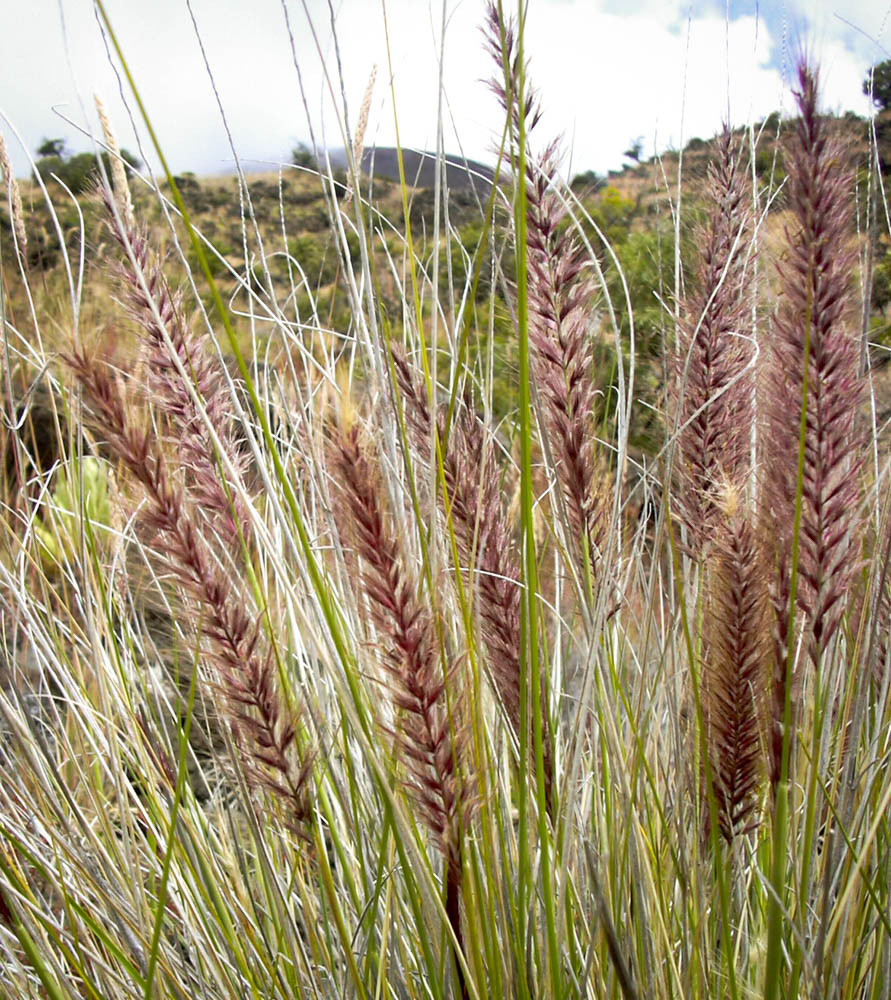
In the early 1870s an enterprising nurseryman in Southern California imported a tall, clumping grass with distinctive feathery plumes to his ranch. Over the next several decades he created an entire industry for the plumes of the plant called pampas grass. At the height of the plume boom, he was exporting 500,000 plumes a year throughout the United States and Europe, influencing Victorian-era fashion. By the close of the 19th century, pampas plumes were dyed different colors to fill vases, decorate women’s hats, and cover parade floats. Eventually the trend ended, but pampas has been used in landscaping ever since.
This invasive grass is anything but fashionable. Now, rather than topping hats and decorating parade floats, the ten-foot-tall feathery plumes top clumps of razor sharp leaves throughout California. Pampas grass blocks beach access, fuels wildfires, and invades native ecosystems. Introduced to Maui in the 1920s, pampas has proven invasive here as well.
There are two species in Hawaii known as pampas grass, Cortaderia selloana and Cortaderia jubata. Both species of pampas grass have been planted widely in landscaping throughout California; now every backyard population has become a seed source for this invasive plant. Both species are also found on Maui and jubata has become extremely invasive. It finds a foothold in any bare soil or disturbed areas, and has invaded many different ecosystems from the dry rocky soil in Haleakala Crater, to the boggy rainforest of East Maui, and the eroded cliffs of West Maui. Control of jubata first began in 1989 by staff of Haleakala National Park and is continued by Maui Invasive Species Committee (MISC). Field crews attack pampas any way they can, hovering along cliffs with helicopters, camping in the rainforest for weeks, knocking on doors, and lining up across the slopes of Haleakala to search for the distinctive plumes.
But efforts to control the invasive Cortaderia selloana have been stymied by a confusion that began in California in the 1970s. When pampas grass was first recognized as being invasive, scientists thought C. selloana was only slightly weedy, whereas its cousin, Cortaderia jubata, was deemed to be an immediate and serious threat based on its ability to reproduce.

This stand of Cortaderia jubata plant, or pampas grass, was found in Haleakala Crater and removed in 2008. Pampas grass is an invasive species, and a variety thought not to be a local threat at one time has turned out to be one. Maui Invasive Species Committee photo.
A single jubata plant can readily produce fertile seed with no need for pollination. The downy light seeds float on the wind and jubata quickly escapes garden plantings. The selloana plant, however, requires both a male and female plant to produce fertile seed. Resource managers thought that only female plants were on Maui, making selloana a safe landscaping alternative to jubata because it wouldn’t be able to spread. But C. selloana turned out to be a wolf in plume’s clothing. A keiki selloana was found on Maui in 2006; the identification was confirmed by genetic analysis of a sample sent to the University of California-Davis, establishing that selloana is reproducing here.
Given evidence from California we can expect that selloana will be an even more aggressive invader than jubata. Over the past 60 years in California, the selloana population has expanded twice as fast as jubata. Selloana is increasingly able to invade native vegetation.
What was the “good” pampas in Maui backyards is now recognized as an invader lurking on the horizon. Please do not grow any kind of pampas grass on Maui. If you know of a population of pampas grass, or have it on your property, please call MISC (573-MISC) to have it removed free of charge.
Article by Lissa Fox Strohecker
Originally published in the Maui News, September 12th, 2010 as part of the Kia‘i Moku Column.
You can find all the articles in the Kia‘i Moku series http://www.hear.org/misc/mauinews/
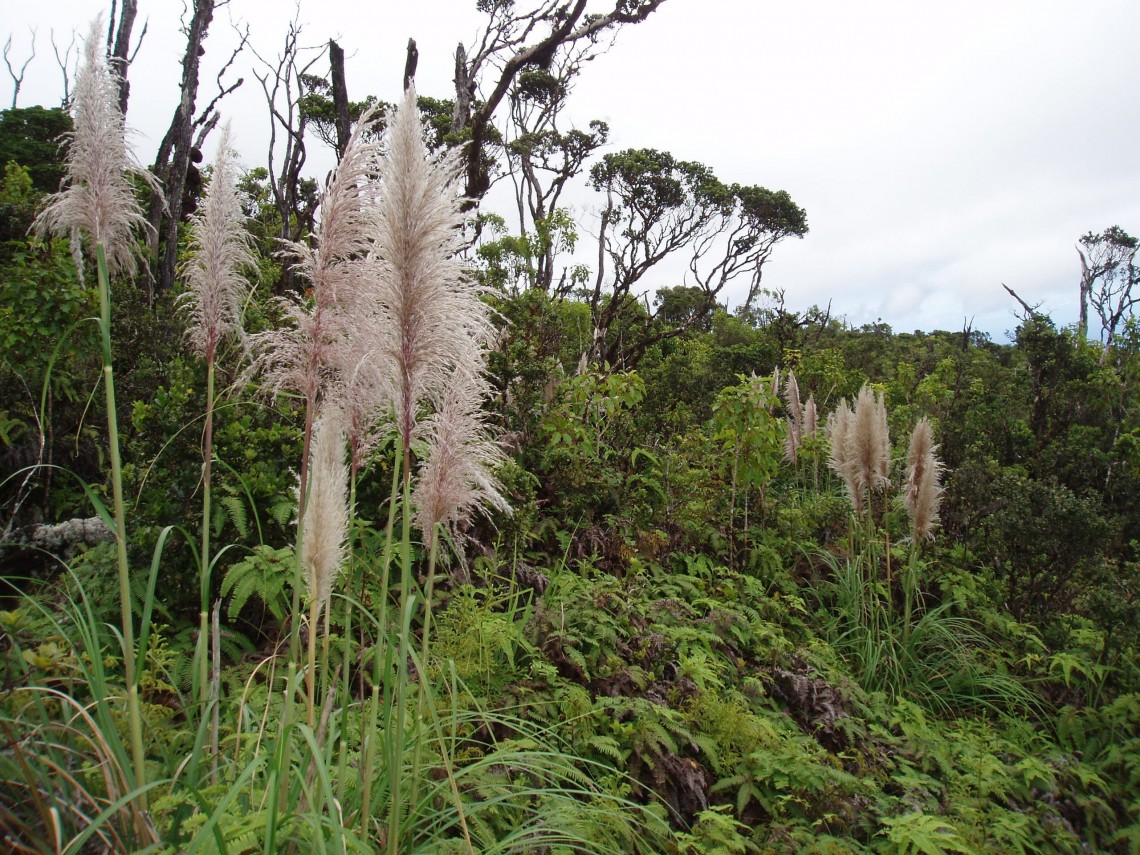
In the final installment of the “Pampas Gone Wild” series, we’ll cover some of the key identification features of pampas grass that differentiate it from the native sedge, Carex. These features can also be used to identify immature pampas in other habitats.

Another key feature of pampas is the razor sharp serrated leaf edges, shown clearly in this photo. This feature is easy to find by running your finger carefully along the edge, even on very young seedlings.

This series was brought to you with the help of the above members of the MISC field crew, Summer 2011: Paul Gonzalez (SCA), Brooke Mahnken (GIS and Data Specialist), Chris Radford (Crew Leader), Matt Fairall (SCA), Frank Ritenour (SCA), and Abe Vandenberg (Field Crew and Outreach). Thanks for your good and muddy work out there!
If you think you have seen a pampas grass in Hawaii, please contact your local Invasive Species Committee. Many Mahalos!
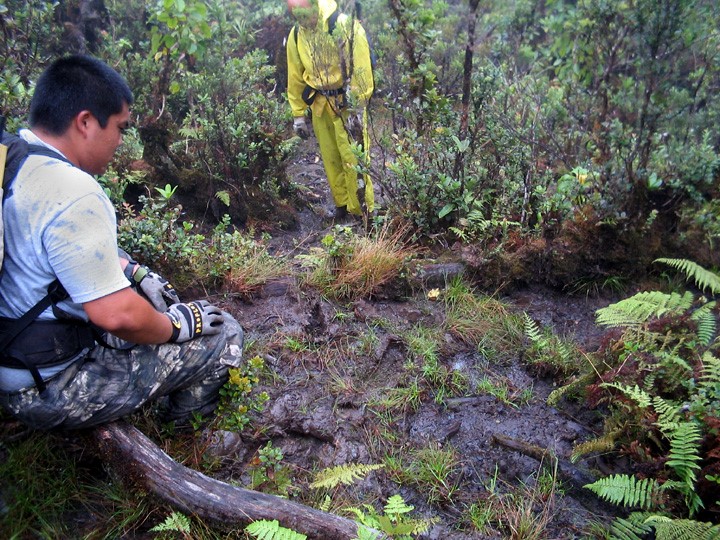
Here’s a young, but mature, pampas grass in a mostly native rainforest…pulling this guy up will leave a big hole in the groundcover, a hole means a foothold for another invasive species, in many ways doing more harm than good.
But if we leave the plant alone we’ll continue to loose our watershed and native species to this high-threat invasive plant. How can we remove it? Keep reading…
2. Tie the pampas in a knot. this is what we refer to as the “ponytail” method; bringing all the pampas leaves together makes it easier to treat and marks the plant as one we’ve treated.
3. Bury the seed-heads deep within the plant. This keeps the seeds from dispersing on the wind, likely how this plant arrived here in the first place.
4. With the seed-heads tucked away and the plant tied together crews can apply a low-concentration herbicide directly to the plant (another benefit of the ponytail method-no over-spray). Within a month the plant will be dead and beginning to decompose and native vegetation will be intact and poised to reclaim this patch of invaded rainforest. The location of each plant we control is recorded with a GPS so it can be monitored in the future to ensure no seedlings have germinated.
There you have it-how to control invasive pampas grass a native rainforest on Maui.
Stay posted to learn how to spot a pampas grass.
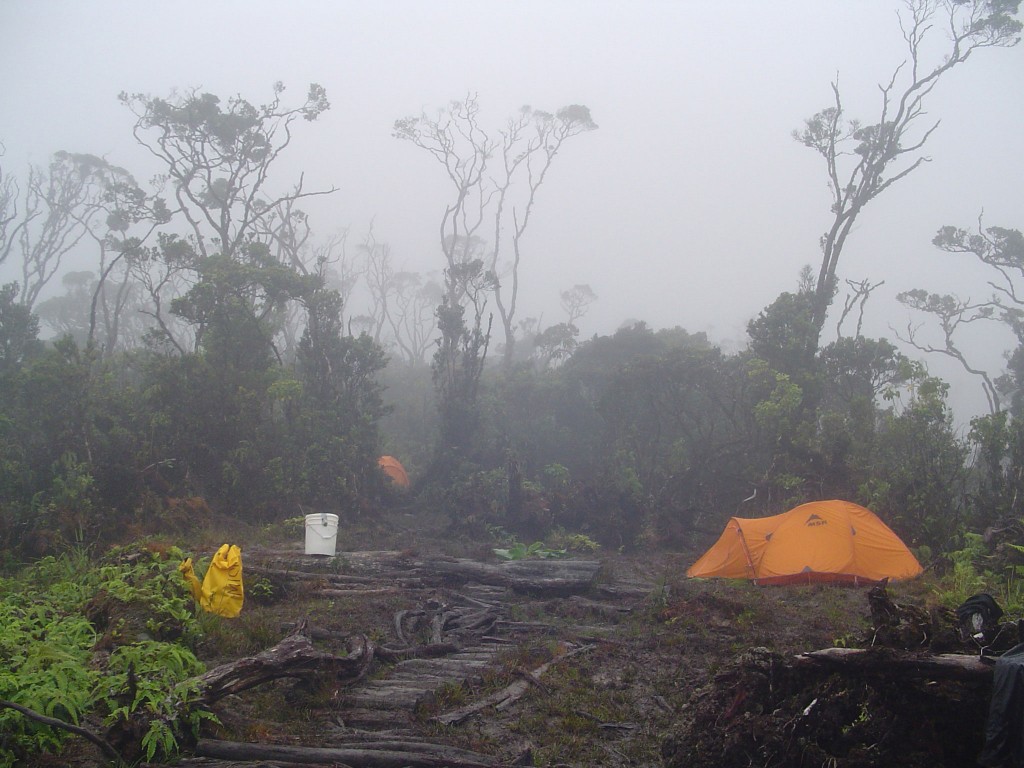
Pampas grass or Cortaderia jubata with it’s wind-dispersed seeds readily escapes cultivation. Tackling established populations far from civilization takes some work…check out the work in one of our remote field camps–Haipua‘ena.

Helicopters bring the gear and materials out for both the crew and for building a new platform out of the mud.
Check back to see how we treat pampas grass in this kind of environment!